

Summary
28 items · 20-40 minutes to review; tasks spread across all four seasons
Why Seasonal Maintenance Makes or Breaks Container Gardens
Container gardening is one of the most accessible ways to grow plants-no large yard required, and you can move things around as your needs change. But because plants in pots can't draw moisture or nutrients from the surrounding soil, they depend entirely on you. That dependency makes a seasonal rhythm not just helpful, but essential.
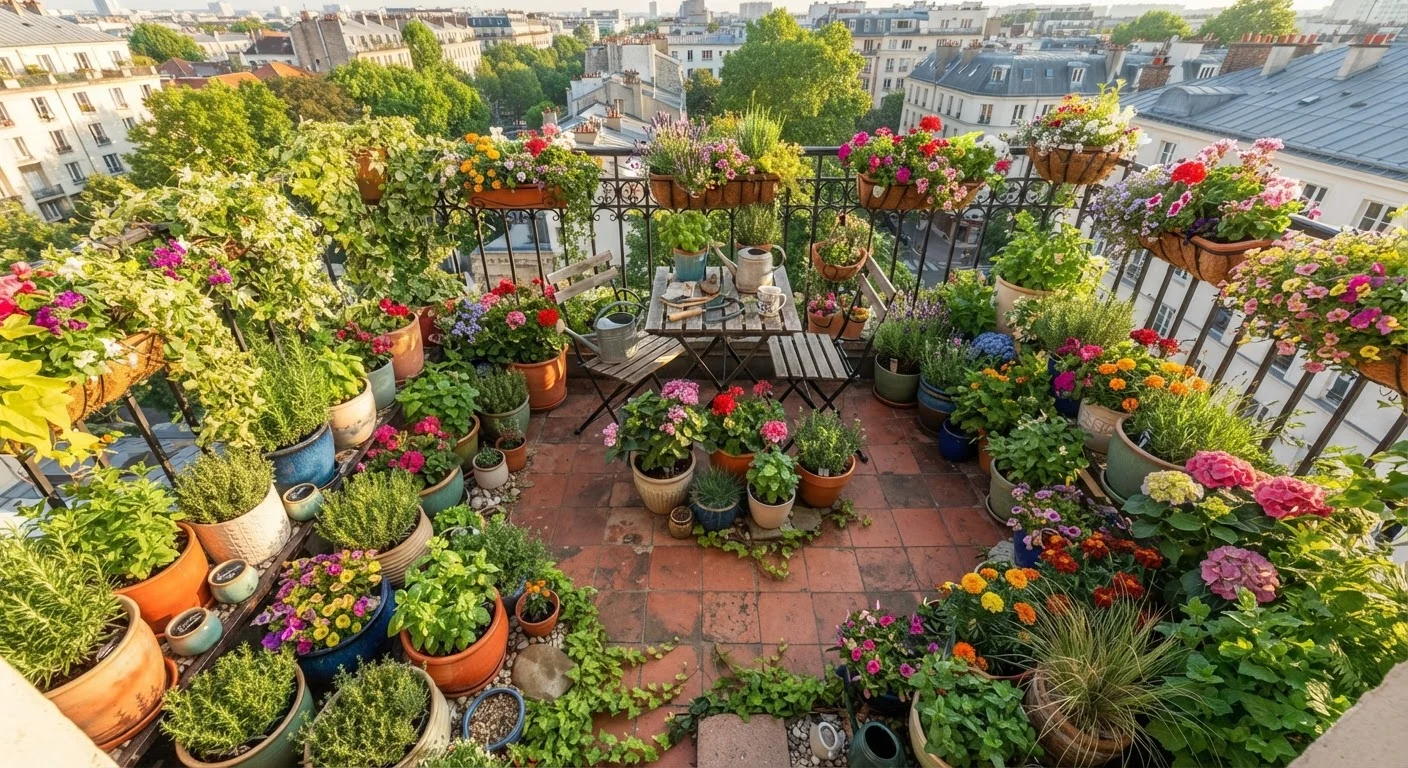
Whether you're growing herbs on a kitchen balcony, annuals on a front stoop, or a mix of edibles and ornamentals on a patio, following a seasonal checklist keeps plants thriving from the first warm days through the last frost. It also saves money: well-maintained containers last longer, and healthy plants need fewer replacements.
If you're new to outdoor growing generally, our guide to starting a vegetable garden from scratch covers foundational concepts that apply equally well to container growing. And if you're thinking about the broader design of your outdoor space, planning an outdoor living space is a useful companion read.
Use the checklist groups below as a seasonal audit you can return to year after year.
Quality Potting Mix
Provides the airy, moisture-retentive, and nutrient-supportive structure that container plants need-unlike garden soil, which compacts in pots.
Slow-Release Granular Fertilizer
Applied at planting, it delivers a steady supply of nutrients over several months without the need for constant feeding.
Liquid Fertilizer
Used throughout the growing season to supplement nutrients that frequent watering depletes from potting mix.
Watering Can or Garden Hose with Adjustable Head
Allows precise, gentle watering at the soil level to keep foliage dry and reduce fungal problems.
Moisture Meter
Takes the guesswork out of watering by indicating whether soil is dry, moist, or wet before you water.
Pot Feet or Risers
Elevate containers slightly off the ground to improve drainage and prevent saucers from becoming stagnant water traps.
The Full Seasonal Checklist
Work through each group as that season approaches. Not every item will apply to every gardener-adjust based on your climate, the types of plants you grow, and how many containers you maintain.
Spring: Setup and Refresh
Late Spring / Early Summer: Planting
Summer: Active Care
Fall: Wind-Down and Assessment
Winter: Storage and Planning
Don't Reuse Exhausted Potting Mix
Old potting mix that has been heavily watered through a full season becomes compacted, nutrient-poor, and may harbor disease pathogens or pest eggs. While you can sometimes refresh it by mixing in compost and perlite, it's often more cost-effective to start fresh in spring. If you do reuse mix, only do so for low-demand plants, not edibles or prized ornamentals.
Thinking about what types of plants to commit to each season? Our article on annuals vs. perennials can help you make smarter planting decisions, and companion planting strategies are surprisingly effective even in containers. If your balcony or patio gets limited sun, shade gardening techniques can help you choose plants that will actually thrive in your conditions.
For enriching your potting mix naturally, composting at home is worth exploring-even a small bin of finished compost can be worked into containers each spring.
Container Weight Matters on Balconies
Large containers filled with wet soil can be surprisingly heavy. Before placing several big pots on a balcony or elevated deck, check your building's load capacity guidelines-your landlord, HOA, or building manager may have specific rules. Use lightweight container mixes, smaller pots, or fabric grow bags to reduce weight where needed.
The content on this site is provided for informational purposes only and should not be considered a substitute for professional advice. While we strive to provide accurate and up-to-date information, we make no guarantees regarding its completeness or accuracy. Always consult a qualified professional for advice specific to your circumstances before making any decisions.