

Working With What You Have
A shaded yard often gets treated like a gardening problem to be solved - when it's actually an opportunity. Many of the most striking garden spaces in the country are built entirely around low light. The key is understanding what you're working with before you plant anything.
Start by observing your yard at different times of day over at least one full week. Note where direct sunlight falls, how long it lasts, and where tree canopies or structures block it. Full shade means less than two hours of direct sun per day. Partial shade means two to six hours - often morning sun with afternoon cover. Dappled shade refers to shifting light filtering through a tree canopy. Each condition supports a different palette of plants.
Also check your soil. Shaded areas under large trees frequently have dry, root-dense soil that competes aggressively with new plants. Amending with compost and choosing drought-tolerant shade plants will help. If you're weighing whether containers might work better in a tricky spot, see our seasonal container gardening guide for ideas that adapt well to low-light patios and balconies.
Map your shade type before choosing any plants
Resist the urge to buy plants before you understand what kind of shade you're dealing with. Walk your yard at 8 a.m., noon, and 4 p.m. on a sunny day and photograph where light lands. Apps that track sun angles by GPS can also help, particularly for new homeowners unfamiliar with how a property shifts through seasons.
This step saves money and frustration. A hosta labeled "shade tolerant" may still struggle in the dry, dense root zone under a Norway spruce - while thriving two feet away in open dappled light.
Mapping shade patterns before buying plants is the single most effective step you can take.
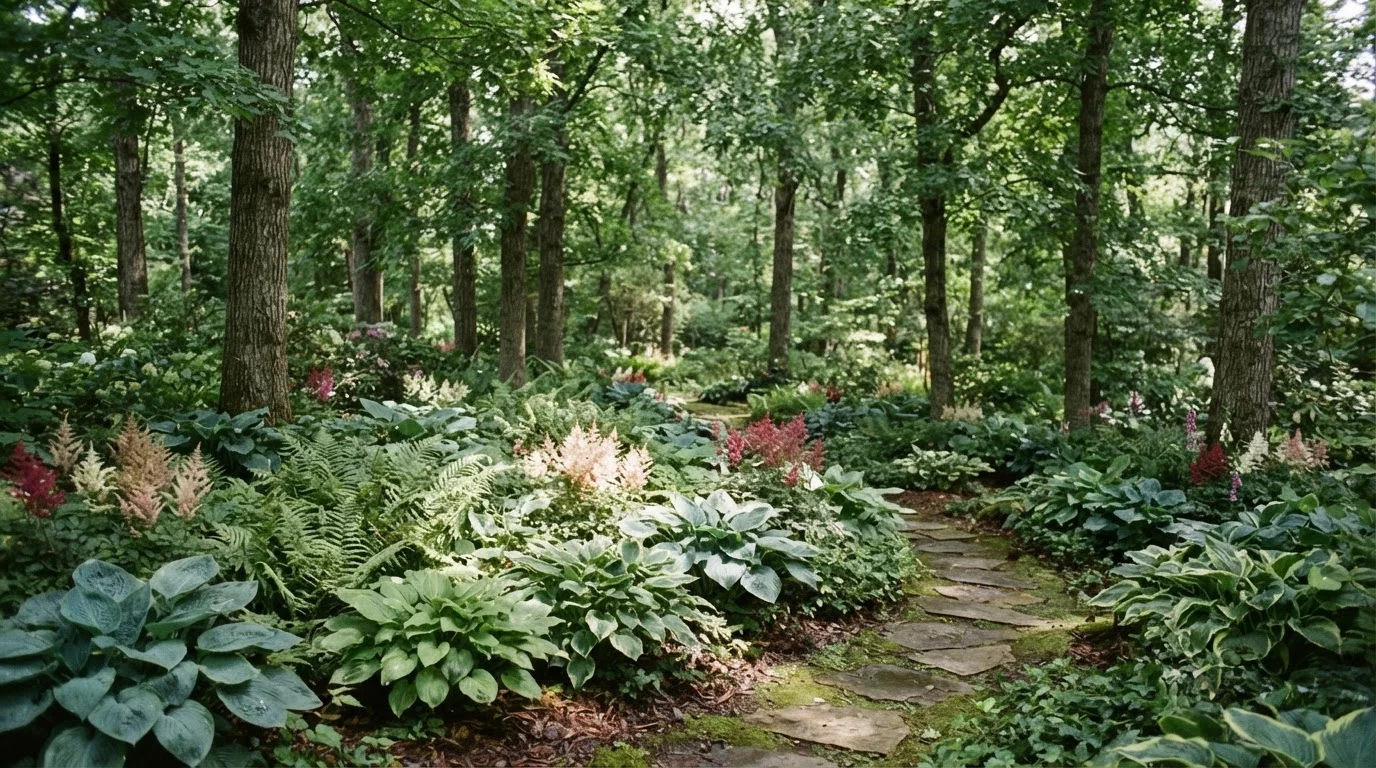
Choose proven perennials: hostas, ferns, and astilbe
These three form the backbone of most successful shade gardens in the U.S. for good reason.
- Hostas offer bold, sculptural foliage in sizes ranging from miniature to dinner-plate. They're low maintenance, deer-resistant varieties exist, and they multiply over time.
- Ferns - particularly native species like ostrich fern (Matteuccia struthiopteris) and autumn fern (Dryopteris erythrosora) - provide soft texture and remain reliably perennial across most U.S. climate zones.
- Astilbe delivers feathery plumes of flower in shades from white to deep red, thriving in moist partial shade and adding the vertical color that shade gardens can sometimes lack.
Hostas, ferns, and astilbe together cover texture, scale, and seasonal color in most shaded spaces.
Add groundcovers to suppress weeds naturally
Open soil in shaded beds invites weeds just as readily as sunny ones. Groundcovers solve this while also adding interest. Consider these options based on your conditions:
- Epimedium (also called barrenwort): tough, drought-tolerant once established, and effective even under shallow-rooted trees.
- Creeping Jenny (Lysimachia nummularia): spreads quickly in moist partial shade and adds bright chartreuse color.
- Wild ginger (Asarum canadense): a native option with attractive heart-shaped leaves that creates a dense, weed-suppressing mat.
Check with your local cooperative extension office before planting any groundcover - some species that perform beautifully in one region can become invasive in another.
The right groundcover does double duty: suppressing weeds while adding texture to bare shaded soil.
Try shade-tolerant edibles in partial sun spots
Partial shade - particularly the kind with morning sun and afternoon cover - opens up more edible options than most gardeners expect. Leafy greens and herbs actually benefit from some shelter, especially in hot summer climates where intense afternoon sun causes bolting (going to seed prematurely).
- Lettuce and spinach perform well with three to four hours of direct sun and often last longer into summer in shaded beds.
- Mint, parsley, and chives tolerate partial shade and are practical additions to any kitchen garden.
- Kale and Swiss chard are among the most shade-tolerant brassicas, though yields will be somewhat lower than in full sun.
If you're considering a raised bed for your edible shade garden, our article on raised beds vs. in-ground planting covers how each approach handles soil and drainage differently.
Partial shade can actually extend the season for leafy greens that bolt quickly in full summer sun.
Use light-colored mulch and hardscape to brighten dark spots
Strategic design choices can make a shade garden feel open and inviting rather than dark and dense. Light-colored mulches - such as undyed wood chips or pale gravel - reflect ambient light back upward toward plant foliage. White or cream-toned stepping stones and pavers serve the same function along paths.
Variegated plants (those with white or yellow leaf margins) also help brighten low-light areas visually. Varieties of variegated Solomon's seal (Polygonatum odoratum 'Variegatum') or white-edged hostas catch and hold light in a way that solid-green plants cannot. Mirrors or light-colored fences along the perimeter of a shaded bed can amplify this effect further.
Light-colored mulch and variegated foliage can make a shadowy corner feel noticeably brighter.
Amend soil and manage moisture carefully in shaded beds
Shade conditions vary widely in their moisture profiles. A north-facing bed sheltered by a wall may stay consistently damp; a bed under a large maple may be surprisingly dry due to root competition and rain interception by the canopy.
Before planting, work 2-3 inches of compost into the top 8-10 inches of soil. This improves both water retention in dry-shade situations and drainage in perpetually wet ones. Mulch to a depth of 2-3 inches after planting to regulate soil temperature and reduce moisture fluctuation - but keep mulch a few inches away from plant stems to prevent rot.
Avoid the assumption that shaded plants need no watering. During dry spells, even shade-loving plants may need supplemental irrigation, particularly in their first season of establishment.
Never assume shade means no watering - root competition and canopy interception can make shaded soil surprisingly dry.
Putting It All Together
Shade gardening rewards patience and observation more than any other garden style. Once you know your light conditions and soil type, plant selection becomes much more straightforward. Layer taller ferns and shrubs at the back, mid-height perennials in the middle, and low groundcovers at the front - this mimics how woodland plants naturally grow and creates visual depth even without flowers.
Start Small, Then Expand
If you're new to shade gardening, begin with a single bed or corner rather than overhauling your entire yard at once. Choose three or four proven performers suited to your specific shade type, plant them, and observe for a full growing season. You'll learn more from watching one real bed than from researching dozens of plant varieties in the abstract.
If you're designing a larger outdoor space that includes shaded zones alongside seating areas or paths, our guide on planning an outdoor living space can help you balance aesthetics and function across the whole yard. And if your shaded spots are competing with dry conditions, many of the strategies in landscaping for drought translate well to dry shade - one of the trickier combinations home gardeners face.
Don't rush to fill every inch at once. Plant in stages, observe how each addition performs, and adjust from there. Shade gardens often improve dramatically after their second or third growing season as plants settle in and spread naturally.
The content on this site is provided for informational purposes only and should not be considered a substitute for professional advice. While we strive to provide accurate and up-to-date information, we make no guarantees regarding its completeness or accuracy. Always consult a qualified professional for advice specific to your circumstances before making any decisions.