

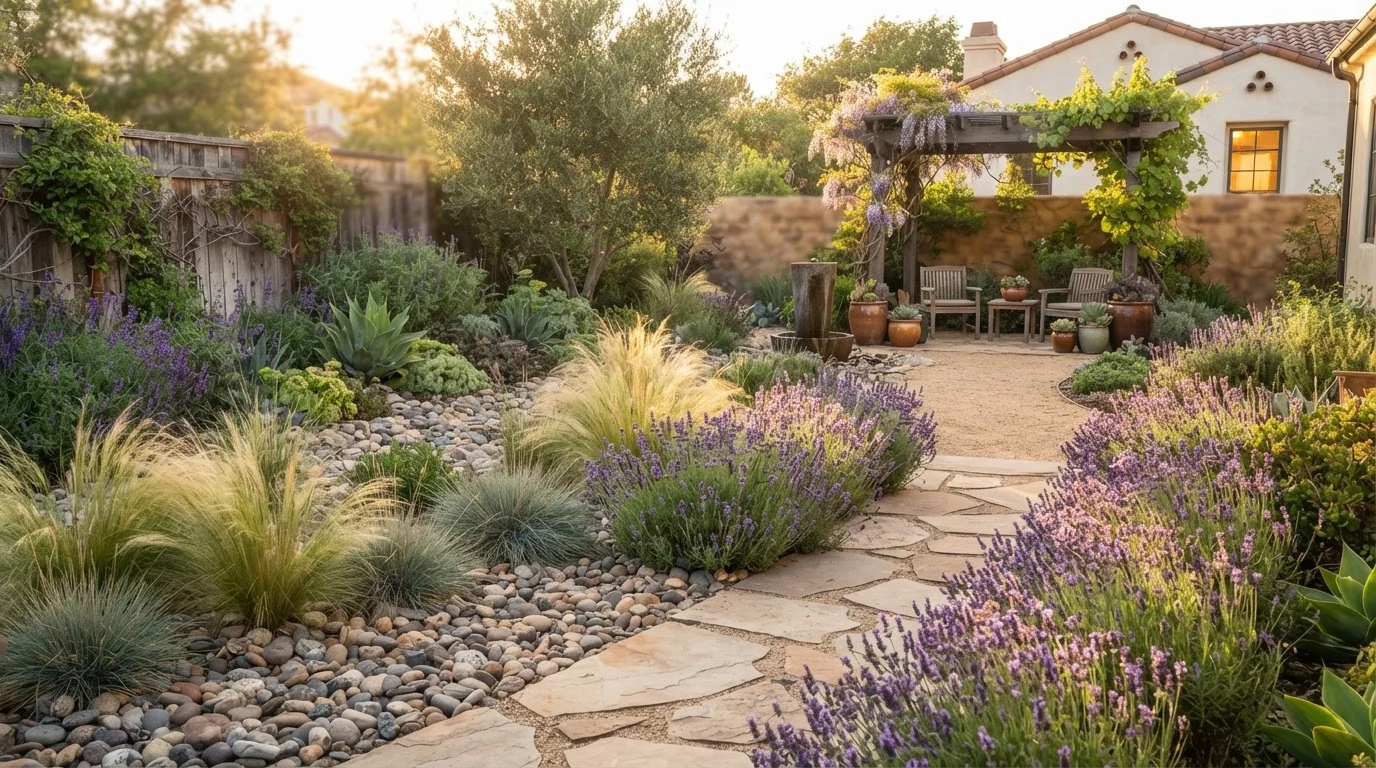
Why Drought-Resilient Landscaping Matters
Extended dry spells put pressure on yards that were designed with endless water access in mind. Lawns turn brown, annuals wilt, and water bills climb - often without the results homeowners hope for. The good news is that redesigning your outdoor space for lower water use doesn't mean settling for bare gravel and cactus. Thoughtful plant selection, smart layout, and a few soil improvements can give you a yard that stays healthy through dry stretches and looks intentional doing it.
Drought-resilient landscaping - sometimes called xeriscaping - works by reducing the gap between what your plants need and what rainfall naturally provides. It's not about eliminating irrigation entirely; it's about using water more strategically. If you're also rethinking how your outdoor space functions overall, our guide to planning an outdoor living space covers the broader design trade-offs worth considering before you break ground.
Best Practices for a Water-Wise Yard
The following practices form the foundation of a landscape that weathers drought without constant intervention. Apply them together for the greatest effect.
Group plants by water needs (hydrozone your landscape)
When plants with different thirst levels share a zone, you inevitably overwater some and underwater others. Hydrozoning - placing high-, medium-, and low-water plants in separate areas - lets you tailor irrigation to each group. This reduces waste and keeps plants healthier overall.
Choose native or regionally adapted plants as your foundation
Native plants evolved alongside local rainfall patterns and soil conditions, which means they typically require little to no supplemental watering once established - usually after one to two growing seasons. Regionally adapted non-natives (plants from climates similar to yours) often perform similarly. Both groups also tend to support local pollinators.
Reduce or replace thirsty lawn areas
Conventional turf grass - particularly non-native varieties - tends to be the single thirstiest element of a residential landscape. Replacing portions of lawn with gravel pathways, native groundcovers, or mulched planting beds can substantially cut outdoor water use without sacrificing usable space.
Water deeply and infrequently rather than a little every day
Frequent shallow watering encourages roots to stay near the surface, where soil dries out fastest. Watering deeply but less often pushes roots deeper into the soil, where moisture persists longer. Deeper roots make plants significantly more resilient during dry spells.
Apply mulch across all exposed soil in planting beds
Bare soil loses moisture rapidly to sun and wind. A consistent layer of organic mulch acts as insulation, slowing evaporation and keeping roots cooler. It also breaks down over time, gradually improving soil structure and fertility.
Install drip irrigation or soaker hoses for planting beds
Overhead watering loses a significant portion of water to evaporation before it ever reaches roots, especially on hot or windy days. Drip systems and soaker hoses deliver water slowly at soil level, directly into the root zone, minimizing waste and reducing foliage diseases caused by wet leaves.
Soil, Mulch, and Irrigation: The Support Systems
Even the right plants struggle if the soil drains too fast, compacts easily, or bakes solid in heat. Working a 2-3 inch layer of compost into planting beds before you plant improves both sandy soils (which drain too quickly) and clay soils (which repel water when dry). Neither extreme holds moisture well in its natural state, but organic matter helps both find a middle ground.
Mulch is one of the highest-return investments in a drought landscape. A 2-3 inch layer of wood chips, straw, or shredded bark over bare soil slows evaporation, suppresses weeds that compete for water, and moderates soil temperature. Avoid piling mulch directly against plant stems or tree trunks, where it can trap moisture and encourage rot.
For irrigation, drip systems and soaker hoses deliver water slowly at root level, where plants actually absorb it. Overhead sprinklers lose a significant portion of water to evaporation and wind drift, especially during hot afternoons. If you water by hand or hose, doing so early in the morning - when temperatures are lower - gives moisture time to soak in before heat accelerates evaporation. Our article on common garden watering myths addresses several habits that inadvertently waste water or stress plants.
Check Before You Plant: Know Your Soil Type
Before investing in new plants, do a simple jar test: fill a jar with your garden soil and water, shake it, and let it settle overnight. Sand sinks first, then silt, then clay floats on top. Knowing your soil type helps you choose plants that will actually thrive in your conditions - and tells you whether amending with compost will make the biggest difference. Sandy soil needs organic matter to hold moisture; clay soil needs it to improve drainage.
Quick Wins to Start Today
You don't need to overhaul your entire yard at once. A few targeted changes can meaningfully reduce your landscape's water demand this season.
If you grow plants in pots, note that containers dry out faster than garden beds and often need different care - our seasonal container gardening checklist covers how to manage moisture through the year for patio and balcony growers.
The content on this site is provided for informational purposes only and should not be considered a substitute for professional advice. While we strive to provide accurate and up-to-date information, we make no guarantees regarding its completeness or accuracy. Always consult a qualified professional for advice specific to your circumstances before making any decisions.