

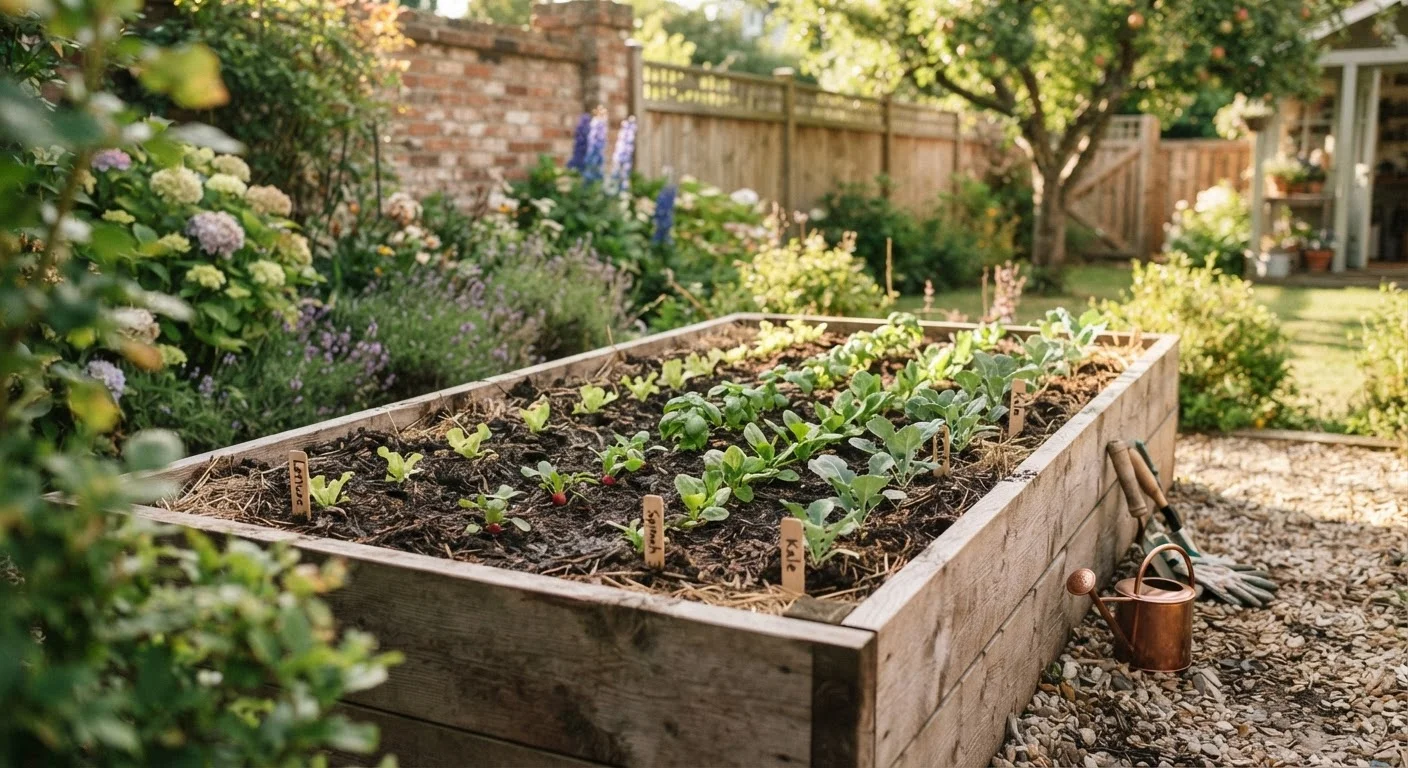
Why Starting Small Sets You Up for Success
Many first-time gardeners overestimate how much space they need-and underestimate how much time a large plot demands. A modest vegetable bed is easier to water, weed, and monitor, which means problems get caught early and plants get the attention they need. As you gain confidence and understand how your particular soil, light, and climate behave, expanding the garden becomes a natural next step rather than an overwhelming one.
If you're also rethinking how your whole yard functions, our guide to planning an outdoor living space can help you integrate a vegetable garden into a broader, well-designed backyard layout.
What you will need
Gather your tools before you start. Having everything on hand avoids mid-task frustration.
Garden Fork or Spade
Used to loosen compacted soil and work amendments into the ground before planting.
Hand Trowel
For digging small holes when transplanting seedlings or planting seeds at the correct depth.
Garden Hose or Watering Can
Delivers consistent moisture to newly planted seeds and transplants.
Raised Bed Frame (optional)
Defines the growing area, improves drainage, and makes soil management easier.
Soil Thermometer
Confirms the soil has reached the minimum temperature needed for seed germination.
pH Test Kit or Meter
Measures soil acidity so you can adjust it to the optimal range for vegetables (6.0-7.0).
Step-by-Step: Building and Planting Your First Vegetable Garden
Check Before You Dig
Before breaking ground, call 811 (the national dig-safe hotline in the U.S.) to have underground utility lines marked. This step is required by law in most states and takes only a few minutes to arrange. Skipping it can result in serious injury or costly utility damage.
Choose and evaluate your site
Walk your yard at different times of day and identify the spot that receives the most direct sunlight. Most vegetables need at least six hours of full sun daily-eight is better. Avoid areas that stay soggy after rain, sit in deep shade from buildings or trees, or are prone to strong wind that can damage plants.
Decide on size and layout
For a first garden, a plot between 4x4 and 4x8 feet is manageable and productive. This size lets you reach the center from either side without stepping on the soil, which compacts it and harms root development. Sketch a simple layout on paper, grouping taller plants (like tomatoes) where they won't shade shorter neighbors.
Test and prepare your soil
Healthy vegetables need loose, well-draining soil rich in organic matter. Use an inexpensive pH test kit to check your soil's acidity level-a pH of 6.0 to 7.0 suits most vegetables. Work the soil 10-12 inches deep with a garden fork, removing rocks, roots, and debris. Mix in 2-3 inches of compost or well-aged manure to boost fertility and improve drainage.
Select vegetables suited to beginners
Some vegetables reward beginner effort more consistently than others. Good starting choices include:
- Lettuce and salad greens - fast-growing, shade-tolerant, and harvestable in stages
- Green beans - low-maintenance and highly productive
- Zucchini and summer squash - vigorous growers with few pest issues early on
- Radishes - ready in as little as three weeks; great for learning soil timing
- Tomatoes (from transplants) - deeply rewarding, though they need consistent watering
Check seed packets or plant tags for your USDA Hardiness Zone and the days-to-maturity number to confirm a variety will produce before your first frost.
Plant at the right time and depth
Each vegetable has a preferred planting window based on soil temperature and frost dates. Cool-season crops like lettuce and peas go in early spring; warm-season crops like tomatoes and squash wait until after the last frost date for your area. Follow the planting depth printed on seed packets-planting too shallow or too deep reduces germination rates significantly.
Water consistently and monitor for problems
Most vegetable gardens need about one inch of water per week, from rain or irrigation combined. Water deeply and less frequently rather than a little every day-this encourages roots to grow deeper. Check plants every few days for signs of pests (holes in leaves, wilting, discoloration) or disease (spotty or yellowing foliage). Early detection makes problems far easier to address.
Build Your Soil Over Time
Adding finished compost each season steadily improves soil structure and fertility. Check out our guide on turning kitchen scraps into compost to create a free, renewable soil amendment right at home.
Once your plants are in the ground and watered in, the main job shifts to consistent observation. Walk the garden every two or three days. Early attention to watering gaps, pest activity, or crowded plants prevents the small issues that become big setbacks. Most first-year problems are fixable when caught early.
Growing your own vegetables can also support a more plant-forward diet. If that interests you, our article on plant-based eating for beginners offers practical guidance on making the most of what you harvest.
The content on this site is provided for informational purposes only and should not be considered a substitute for professional advice. While we strive to provide accurate and up-to-date information, we make no guarantees regarding its completeness or accuracy. Always consult a qualified professional for advice specific to your circumstances before making any decisions.