

Why Composting Is Worth the Effort
Composting is one of the simplest ways to improve your garden while reducing household waste. Instead of sending vegetable peels and coffee grounds to the landfill, you convert them into a dark, crumbly amendment that builds better soil over time. Understanding what makes garden soil healthy helps clarify exactly why compost matters so much - it feeds the microbial life that makes nutrients available to plant roots.
Compost also improves drainage in clay soils and water retention in sandy ones, making it a rare fix that benefits almost any yard. Gardeners who apply it consistently tend to need less supplemental fertilizer and see stronger plant establishment overall.
30%
Household waste that is compostable
The U.S. EPA estimates that food and yard waste together make up roughly 30% of what Americans throw away.
2-6 months
Typical time to finished compost
Active, regularly turned piles can produce usable compost in as few as two months; passive piles may take up to six months or longer.
~130-160°F
Ideal internal pile temperature
A hot compost pile maintained in this range breaks down material quickly and kills most weed seeds and pathogens, according to university extension guidelines.
Choosing Your Composting Method
There is no single right way to compost. The method you choose should fit your space, the volume of scraps you generate, and how involved you want to be.
- Open pile: The simplest approach - stack materials in a corner of the yard. Slow but requires almost no setup.
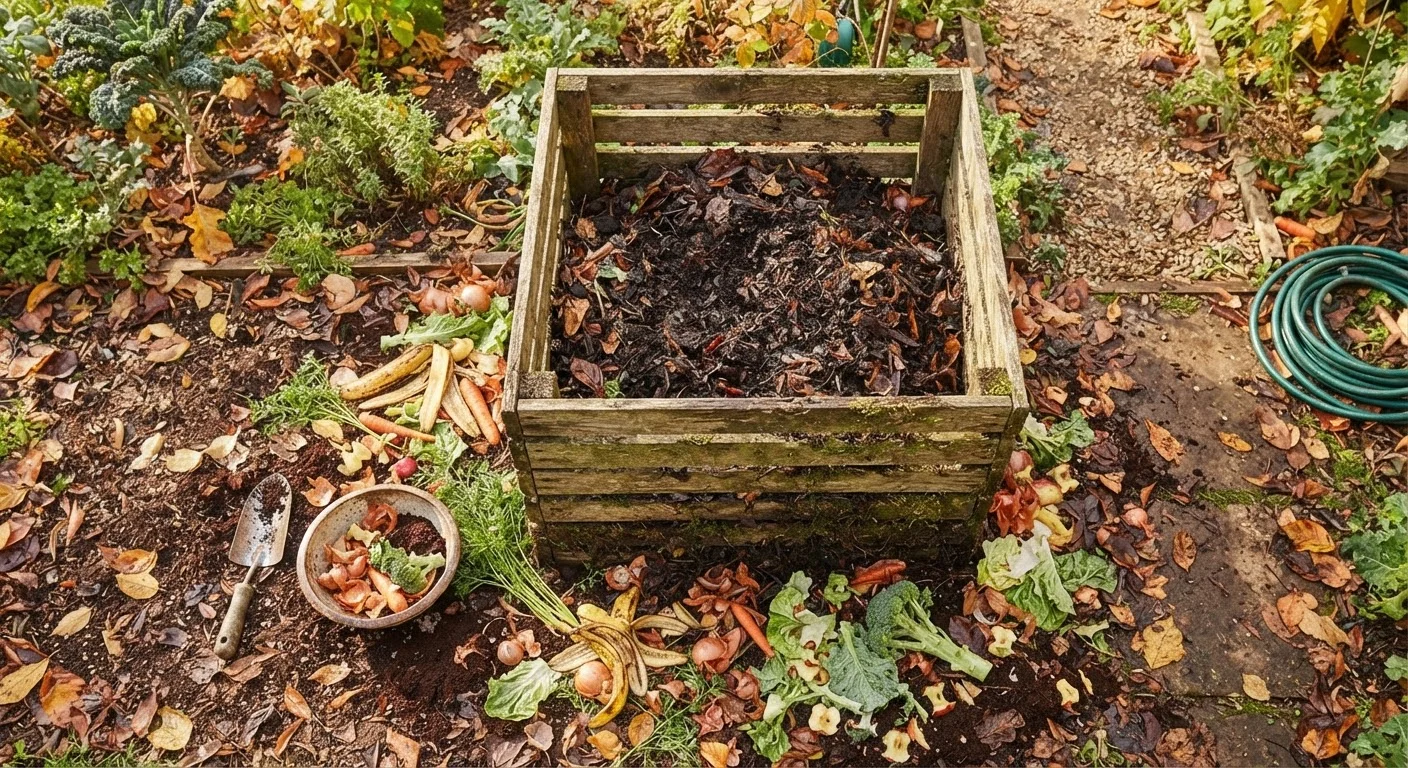
- Enclosed bin: A lidded container keeps pests out and retains heat and moisture more effectively. Good for smaller yards.
- Tumbler: A rotating drum that speeds decomposition because turning is easy. Works well if you want faster results with minimal odor.
- Worm bin (vermicomposting): Uses red wiggler worms to break down scraps indoors or in a garage. Ideal for apartment dwellers or anyone with limited outdoor space.
If you're starting a vegetable garden from scratch, an enclosed bin near your growing beds will make applying compost at planting time much more convenient.
What to Put In (and What to Leave Out)
Compost materials fall into two categories: greens (nitrogen-rich) and browns (carbon-rich). Both are essential. Aim for roughly one part greens to two or three parts browns by volume.
Good Greens
- Fruit and vegetable scraps
- Coffee grounds and paper filters
- Fresh grass clippings
- Plant trimmings (disease-free)
- Eggshells
Good Browns
- Dry leaves
- Cardboard torn into small pieces
- Straw or hay
- Paper bags and newspaper
- Woody prunings chopped small
Never Compost These Materials
Meat, fish, bones, dairy products, and greasy foods attract pests and can create serious odor problems in a home pile. Diseased plants and weeds that have gone to seed should also stay out - a backyard pile may not get hot enough to neutralize pathogens or kill viable seeds. Pet waste carries harmful bacteria and should never be added to compost intended for edible gardens.
Too many greens without enough browns creates a slimy, smelly pile. Too many browns with too few greens stalls decomposition. Keeping that ratio in check is the single most common fix for a struggling pile.
Building and Maintaining Your Pile
Start with a four- to six-inch layer of coarse browns at the base - this promotes airflow. Add a layer of greens, then alternate. Dampen each layer so the pile feels roughly as moist as a wrung-out sponge. Pile size matters too: a heap smaller than three feet in each dimension won't generate enough heat to break down material efficiently.
Chop or shred materials before adding them to your pile. Smaller pieces expose more surface area to microbes and can cut decomposition time nearly in half.
Microbial activity happens at material surfaces, so finer inputs decompose significantly faster than whole scraps or large branches.
Keep a small container with a tight lid on your kitchen counter for daily scraps. Empty it every two to three days to prevent odors and make trips to the pile easier.
Reducing friction in the collection step is one of the most practical ways to build a consistent composting habit.
Turn the pile every one to two weeks using a garden fork, pulling material from the outer edges toward the center where heat is highest. Consistent turning is the single biggest factor separating a fast pile (two to three months) from a slow one (six months or more). Check moisture each time you turn - add water if it feels dry, or layer in dry browns if it feels soggy.
Using Finished Compost in Your Garden
Compost is ready when it looks and smells like dark, earthy soil and you can no longer identify individual ingredients. Spread two to three inches over garden beds each spring and work it lightly into the top few inches of soil. For established perennial beds, lay it on top as a surface dressing and let earthworms incorporate it naturally.
Container growers can blend finished compost into their potting mix - see our full seasonal checklist for container gardeners for guidance on when and how much to add. Compost also pairs well with mulch applications; check our overview of mulch types and when to use each one to layer your soil-care strategy effectively.
Troubleshooting Common Problems
Even well-managed piles hit snags. Here are the most common issues and their fixes:
| Problem | Likely Cause | Fix |
|---|---|---|
| Bad odor | Too many greens, too wet, or poor airflow | Add browns, turn pile, check drainage |
| No heat | Too dry, too small, or too many browns | Add water and greens, rebuild to minimum size |
| Pests | Food scraps too close to surface | Bury scraps six inches deep, use an enclosed bin |
| Slow decomposition | Materials too large | Chop or shred inputs before adding |
For a deeper look at what derails the process, our article on common composting pitfalls walks through each scenario in detail. Most problems are fixable with a small adjustment - composting is a forgiving practice once you understand what the pile needs.
The content on this site is provided for informational purposes only and should not be considered a substitute for professional advice. While we strive to provide accurate and up-to-date information, we make no guarantees regarding its completeness or accuracy. Always consult a qualified professional for advice specific to your circumstances before making any decisions.