

Start here
Why Soil Health Matters More Than Fertilizer
Build your foundation
The Four Components of Garden Soil
Diagnose your soil
How to Read Your Soil's Texture and Structure
Go deeper
Soil pH: The Factor Most Gardeners Overlook
Take action
Practical Ways to Improve Soil Health
Why Soil Health Matters More Than Fertilizer
Most new gardeners reach for fertilizer the moment plants look unhappy. It's an understandable instinct - nutrients feed plants, so more nutrients should help, right? The problem is that fertilizer can't fix poor soil structure, imbalanced pH, or a dead microbial community. Those are the conditions that actually determine whether your plants thrive.
Think of soil less as dirt and more as a complex, living system. When that system is functioning well, it naturally cycles nutrients, manages water, and supports root development. When it isn't, plants struggle regardless of what you add on top. Building healthy soil from the start gives every other gardening effort - watering, planting, pest management - a much stronger foundation.
If you're preparing to plant your first garden, see our step-by-step guide to starting a vegetable garden from scratch before you break ground.
The Four Components of Garden Soil
All garden soil is made up of four basic components. Understanding what each does helps you diagnose problems and make smarter decisions.
Loam
A balanced soil type containing roughly equal parts sand, silt, and clay, along with organic matter. It drains well, holds moisture, and supports root growth effectively.
Organic matter
Decomposed plant and animal material mixed into soil. It improves soil structure, feeds beneficial microbes, and helps retain both water and nutrients.
Soil pH
A measure of how acidic or alkaline your soil is. pH directly affects whether plant roots can absorb the nutrients already present in the ground.
Soil texture
The proportion of sand, silt, and clay particles in your soil. Texture controls drainage speed, nutrient retention, and how easily roots can penetrate the ground.
Humus
The stable, dark end product of organic matter decomposition. Humus improves soil structure, feeds microorganisms, and acts as a slow-release nutrient source.
Soil porosity
The amount of open pore space in soil. Good porosity allows air and water to move through freely, which roots and soil organisms both depend on.
- Minerals: Broken-down rock particles - sand, silt, and clay - form the physical skeleton of soil. Their ratio determines how water moves through it and how tightly nutrients are held.
- Organic matter: Decomposed plant and animal material, often called humus. Even small amounts dramatically improve soil structure, water retention, and fertility.
- Water: Soil water carries dissolved nutrients to plant roots. Too little stunts growth; too much displaces oxygen and causes root rot.
- Air: Soil pore spaces hold oxygen that roots and beneficial organisms need to survive. Compacted soil loses these spaces, making it inhospitable even with plenty of nutrients present.
Ideal garden soil - often called loam - balances all four components in a way that drains well, holds moisture, and stays loose enough for roots to penetrate easily.
How to Read Your Soil's Texture and Structure
You don't need a laboratory to get a useful read on your soil. Two simple field tests tell you a lot.
The Jar Test (Texture)
Fill a clear jar one-third with soil, top it with water, shake it well, and let it settle for 24 hours. Sand sinks first, silt settles in the middle, and clay floats near the top. The layer proportions reveal your soil's texture type and help predict drainage behavior.
The Squeeze Test (Structure)
Grab a handful of moist soil and squeeze it firmly, then open your hand. Sandy soil crumbles immediately - it drains fast but doesn't hold nutrients well. Clay soil holds its shape in a tight, sticky clump - it retains moisture and nutrients but compacts easily. Loamy soil holds together briefly, then crumbles when poked - that's the sweet spot most gardeners aim for.
Understanding how your soil behaves with water also shapes smarter watering habits. Our guide to common garden watering myths explains how soil type affects how and when to water.
Check soil moisture before you test texture
The squeeze test only gives accurate results when soil is moist - not soggy or bone dry. Test a day after light rain or watering for the most reliable read on how your soil actually behaves. Dry soil almost always crumbles regardless of its true texture type.
Soil pH: The Factor Most Gardeners Overlook
pH measures how acidic or alkaline your soil is on a scale from 0 to 14, with 7 being neutral. Most vegetables and flowering plants grow best in a slightly acidic range of about 6.0 to 7.0. Outside this window, nutrients can become chemically locked in the soil - present but unavailable to roots. This is why plants can look nutrient-deficient even in well-fertilized beds.
Inexpensive soil test kits are available at garden centers, or you can send samples to your local cooperative extension service for more detailed results. Extension services - run through land-grant universities across the U.S. - often provide low-cost or free testing along with specific amendment recommendations for your region.
To raise pH (make soil less acidic), gardeners typically add lime. To lower it, sulfur or acidifying organic materials are common choices. Always retest after amendments, as adjustments take time and can overshoot if applied too aggressively.
pH changes take time to take hold
After adding lime or sulfur, allow at least four to eight weeks before retesting - soil chemistry adjusts gradually. Applying amendments in fall gives them time to work through winter so soil is ready by spring planting. Always follow package guidance and consider starting with the lower end of any recommended dose.
Practical Ways to Improve Soil Health
No matter what your soil test reveals, the most universally beneficial thing you can do is add organic matter regularly. Finished compost - whether homemade or purchased - improves drainage in heavy clay, increases water retention in sandy soil, and feeds the microorganisms that make nutrients plant-available.
Learn how to make your own supply with our guide to composting kitchen scraps at home.
- Mulch the surface: A 2-3 inch layer of organic mulch moderates soil temperature, retains moisture, and breaks down slowly to feed soil biology. See a breakdown of mulch types and when to use each.
- Avoid compaction: Stay off wet soil and use designated paths or stepping stones to protect bed areas from foot traffic.
- Minimize bare soil: Exposed soil erodes, loses moisture, and invites weeds. Cover it with mulch, cover crops, or ground plantings between seasons.
- Rotate what you grow: Different plants pull different nutrients from the soil. Rotating crops - and pairing compatible plants together - reduces depletion and can support soil biology. Companion planting is one practical way to put this to work.
Improving soil is a gradual process, not a single fix. Consistent, small actions each season compound into significant, lasting change.
Frequently Asked Questions
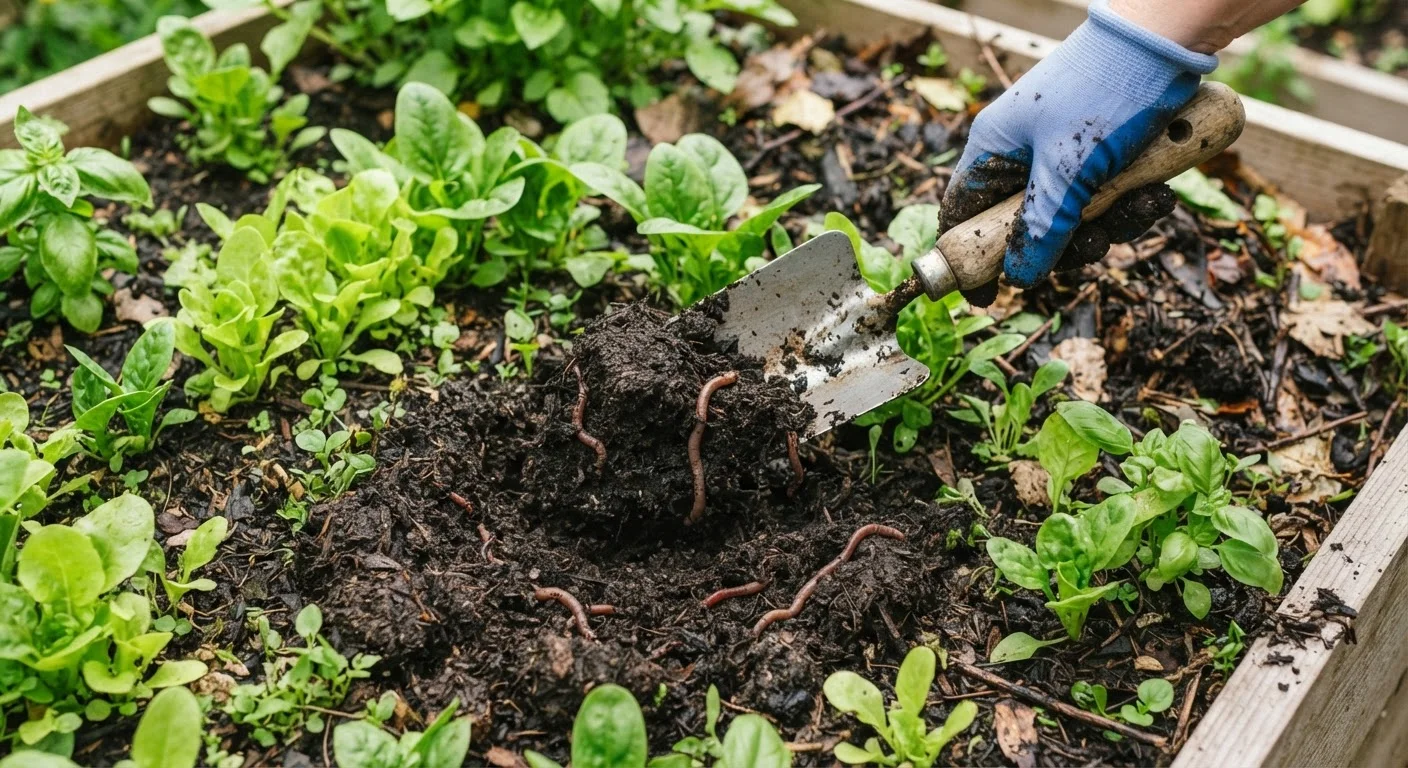
Healthy soil is dark, crumbly, and has an earthy smell. A quick sign is earthworm activity - several worms per shovelful usually indicates good organic matter and biology. A soil test from your local cooperative extension office provides more precise data on nutrients and pH.
Adding organic matter - especially finished compost - is the most effective single improvement for most soil types. It improves drainage in clay soils, increases water retention in sandy soils, and feeds beneficial soil organisms. Consistent additions over one to two seasons produce noticeable results.
Most home gardeners benefit from testing every two to three years, or whenever plants seem persistently unhealthy despite good care. Test before making major amendments so you know what you're actually correcting rather than guessing.
Most vegetables perform well in soil with a pH between 6.0 and 7.0. This slightly acidic to neutral range makes the widest variety of nutrients available to plant roots. Some crops like blueberries prefer more acidic conditions around 4.5 to 5.5.
Container soil needs a different approach since it can't benefit from the same biological activity as ground soil. Refresh container mix each season and incorporate a small amount of compost. See the <a href="/home-garden/gardening-outdoors/container-gardening-a-full-seasonal-checklist-for-patio-and-balcony-growers">container gardening seasonal checklist</a> for specific guidance by season.
Occasional tilling can help break up compacted ground or incorporate amendments, but frequent deep tilling disrupts soil structure and destroys beneficial fungal networks. Minimal-till and no-till approaches, combined with surface mulching, are generally better for long-term soil biology.
The content on this site is provided for informational purposes only and should not be considered a substitute for professional advice. While we strive to provide accurate and up-to-date information, we make no guarantees regarding its completeness or accuracy. Always consult a qualified professional for advice specific to your circumstances before making any decisions.