

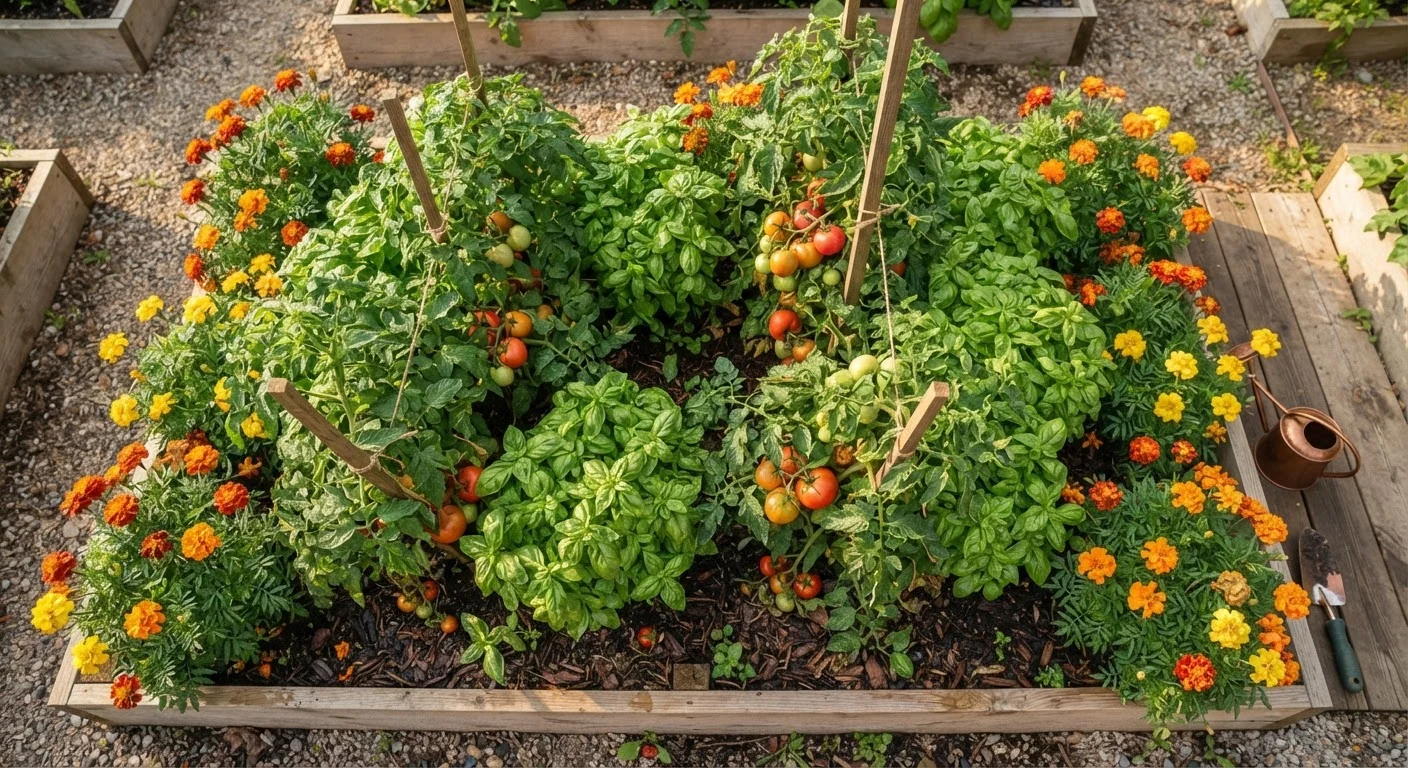
What Companion Planting Actually Does
At its core, companion planting is about relationships - specifically, which plants help each other and which ones get in each other's way. Gardeners have relied on these pairings for centuries, and while not every claimed benefit has been rigorously tested, the underlying logic holds up in many cases.
There are several distinct ways companion planting can work:
- Pest deterrence: Strongly scented plants can confuse insects looking for a host plant by masking the smell of a more vulnerable neighbor.
- Beneficial insect attraction: Flowering plants like dill or fennel draw predatory wasps and other beneficial insects that feed on common garden pests.
- Nitrogen fixation: Legumes (beans, peas, clover) host root bacteria that pull nitrogen from the air and deposit it in the soil - a natural fertilizer for nearby plants.
- Physical support or shade: Tall plants can shelter shorter, shade-tolerant neighbors from harsh afternoon sun or wind.
- Space efficiency: Plants with different growth habits - tall, sprawling, and low-growing - can occupy the same area without competing directly.
Understanding which mechanism you're relying on helps you set realistic expectations and troubleshoot when results don't match the plan.
Classic Pairings Worth Knowing
Some combinations have earned their reputation through long use and a reasonable body of observational evidence. These are good starting points, especially if you're new to the practice.
A home gardener plants marigolds around the border of her tomato beds each spring.
A first-time gardener grows pole beans and corn side by side in a sunny backyard plot.
A patio gardener plants basil alongside a potted pepper plant on their balcony.
A gardener notices their bean crop is stunted after planting it near a row of onions.
Tomatoes and basil are perhaps the most popular pairing in American home gardens. Basil's volatile oils are thought to repel thrips, aphids, and whiteflies, though effects can be modest. More practically, both plants want the same growing conditions: full sun, warm temperatures, and consistent moisture.
Marigolds and most vegetables are a reliable combination. French marigolds in particular produce a root compound that discourages certain nematodes (microscopic soil worms) from attacking vegetable roots. They also attract pollinators and draw aphids away from more valuable crops.
Carrots and onions have a long folk history as companions. Onion scent may deter carrot fly, while carrot scent may confuse onion fly. Results are mixed in scientific literature, but the combination is low-risk and space-efficient.
If you're starting a vegetable garden from scratch, incorporating a few of these pairings from the beginning is much easier than rearranging an established layout later.
Start Small to Learn What Works
Don't redesign your entire garden around companion planting all at once. Pick one or two pairings to try this season and observe what happens. Conditions vary by climate, soil, and local pest populations, so your own garden is the best laboratory for figuring out which combinations deliver real results in your specific situation.
The Three Sisters: A Time-Tested System
No discussion of companion planting is complete without the Three Sisters - the traditional Indigenous agricultural system of growing corn, beans, and squash together. Each plant has a specific role that benefits the others.
- Corn grows tall and provides a natural trellis for bean vines to climb.
- Beans fix nitrogen in the soil, feeding the nutrient-hungry corn and squash.
- Squash spreads along the ground, its large leaves shading the soil to retain moisture and suppress weeds.
This system elegantly addresses three common garden challenges - support, fertility, and weed control - without any synthetic inputs. It's also a reminder that companion planting isn't a modern trend; it's rooted in practical agricultural knowledge developed over generations.
About the Three Sisters Origins
The Three Sisters is a traditional growing system developed by various Indigenous cultures across North America, including the Haudenosaunee (Iroquois) and many others. It represents sophisticated agricultural knowledge refined over many generations. When adopting this method, it's worth acknowledging and respecting its cultural heritage.
Good soil is the foundation that makes any companion planting strategy more effective. See our soil health guide for a primer on what healthy garden soil looks like and how to improve yours.
Combinations to Avoid
Just as some plants help each other, others actively interfere. Knowing these antagonistic pairings saves you from a disappointing growing season.
- Fennel and almost everything: Fennel releases compounds that inhibit the germination and growth of most vegetables and herbs. Grow it in its own separate container or bed.
- Beans and onions or garlic: Alliums appear to stunt the growth of beans and peas. Keep these families apart.
- Brassicas together in crowded beds: Cabbage, broccoli, cauliflower, and kale compete intensely for the same nutrients and can attract the same pests in concentrated numbers.
- Dill and tomatoes (mature plants): Young dill is generally fine near tomatoes, but mature dill can inhibit tomato growth - a common source of confusion for gardeners who've heard of this pairing.
When in doubt, research the specific species you're working with before planting. Gardening resources like university extension programs publish peer-reviewed companion planting guides tailored to regional conditions and are a reliable alternative to anecdotal internet advice.
For gardeners thinking about layout, raised beds vs. in-ground planting is worth reading - bed structure affects how easily you can isolate or group specific plant combinations.
Frequently Asked Questions
Research supports some companion planting combinations more than others. Nitrogen-fixing legumes genuinely improve soil for neighboring plants. Pest-deterring effects from aromatic herbs are plausible but less consistently proven. Treating it as a helpful strategy - rather than a guaranteed fix - gives you the most realistic expectations.
Tomatoes and basil are a classic beginner pairing - basil may help repel aphids and whiteflies, and both thrive in the same conditions. Marigolds planted near vegetables are also widely used because their scent is believed to deter certain insects. The Three Sisters (corn, beans, squash) is reliable if you have the space.
Yes, though space limits what you can combine. A single large container might pair basil with a pepper plant or include a small marigold alongside herbs. Check that each plant has compatible water and sunlight needs before combining them in one pot. Our <a href="/home-garden/gardening-outdoors/container-gardening-a-full-seasonal-checklist-for-patio-and-balcony-growers">container gardening checklist</a> can help you plan by season.
Fennel is notorious for inhibiting most vegetables and should generally be grown in isolation. Onions and garlic can stunt the growth of beans and peas. Brassicas like cabbage and broccoli often compete aggressively with each other and with nearby tomatoes. Always research specific pairings before planting.
Legumes like beans and clover host bacteria on their roots that fix atmospheric nitrogen into the soil, benefiting neighboring plants. Deep-rooted plants like daikon radish can break up compacted soil layers, making nutrients more accessible. Over time, a diverse planting mix can support a healthier, more active soil ecosystem.
The content on this site is provided for informational purposes only and should not be considered a substitute for professional advice. While we strive to provide accurate and up-to-date information, we make no guarantees regarding its completeness or accuracy. Always consult a qualified professional for advice specific to your circumstances before making any decisions.