

Why Mulch Type Matters More Than You Might Think
Spreading mulch around your plants is one of the highest-return habits in home gardening - it conserves moisture, regulates soil temperature, suppresses weeds, and, depending on the material, can improve your soil over time. But mulch is not a one-size-fits-all product. The material you choose shapes how water moves through your beds, whether soil microbes thrive, and even how long the mulch lasts before you need to refresh it.
This reference covers the most common mulch types, what each one is best suited for, and where each falls short. Understanding how your underlying soil works will also help you match the right mulch to your specific garden conditions.
| Recommended Mulch Depth | 2-4 inches for most materials (General horticultural practice) |
| Clearance From Plant Stems | 2-3 inches minimum (General horticultural practice) |
| Best for Vegetable Gardens | Straw or compost |
| Best for Permanent Ornamental Beds | Shredded bark or wood chips |
| Best for Drought-Tolerant Plantings | Gravel or river rock |
| Organic Mulch Refresh Frequency | Every 1-3 years (Varies by material and climate) |
Organic Mulches: Materials That Break Down Over Time
Organic mulches decompose gradually, feeding soil microbes and slowly improving soil structure. They typically need replenishing every one to three years.
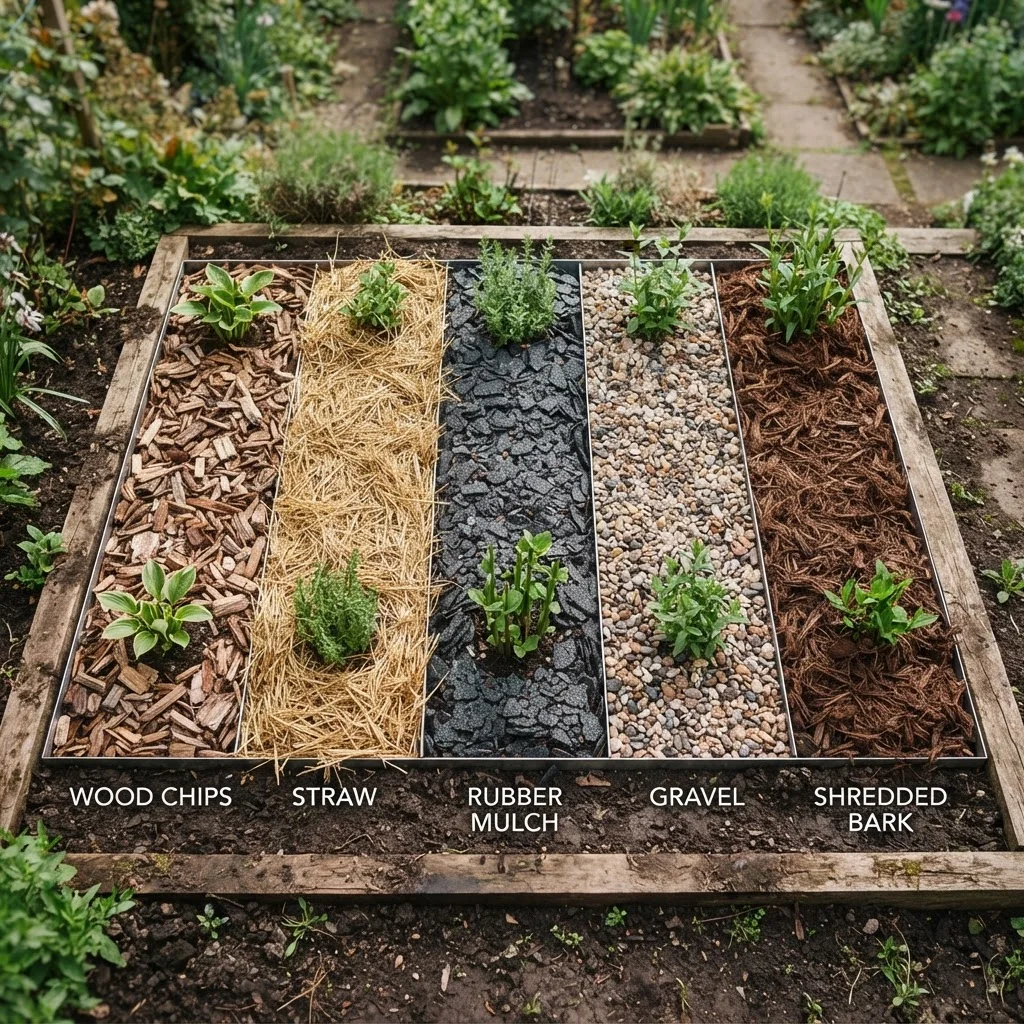
Wood Chips and Shredded Bark
Best for: Ornamental beds, pathways, around trees and shrubs.
Benefits: Long-lasting, excellent moisture retention, moderates soil temperature well, and breaks down into organic matter.
Limitations: Fresh wood chips can temporarily tie up soil nitrogen during decomposition - a process called nitrogen draw-down. Keep a gap of a few inches around plant stems to prevent rot. Not ideal for vegetable gardens where you turn soil frequently.
Straw
Best for: Vegetable gardens, newly seeded lawns, strawberry beds.
Benefits: Lightweight, easy to apply and remove, allows good water penetration, and breaks down to feed soil. Look for seed-free straw to avoid introducing unwanted plants.
Limitations: Breaks down quickly - may need refreshing mid-season. Can harbor rodents if piled too thick.
Shredded Leaves
Best for: Around perennials, woodland gardens, general bed coverage.
Benefits: Free if you have trees, excellent soil amendment as they break down, and widely available in fall. Whole leaves can mat and repel water - shredding or running them over with a mower first helps significantly.
Limitations: Decomposes relatively fast; may need supplementing in spring.
Compost
Best for: Vegetable and annual flower beds where soil feeding is a priority.
Benefits: Adds nutrients and beneficial microbes while mulching. Pairs naturally with home composting practices.
Limitations: Thin layer (1-2 inches) needed - too much can overfeed. Does not suppress weeds as effectively as coarser materials.
Organic Mulch
Any mulch material derived from living matter - such as wood chips, straw, or leaves - that breaks down over time, adding organic content to the soil below.
Inorganic Mulch
Mulch made from non-decomposing materials like gravel, rock, or rubber. These do not break down or contribute to soil health but last much longer.
Nitrogen Draw-Down
A temporary condition where soil microbes decomposing woody mulch consume available nitrogen, briefly reducing what's accessible to nearby plants. It typically corrects itself as decomposition progresses.
Landscape Fabric
A woven or non-woven geotextile material laid on soil beneath mulch to suppress weed growth while allowing some water and air to pass through.
Moisture Retention
A mulch's ability to slow evaporation from the soil surface, keeping plant roots hydrated longer between rain or irrigation events.
Inorganic Mulches: Long-Lasting, Low-Maintenance Options
Inorganic mulches do not decompose, which means they last longer but also do not contribute organic matter to your soil. They work best where permanence and low maintenance are priorities.
Gravel and River Rock
Best for: Desert-style and drought-tolerant plantings, paths, drainage areas, around cacti and succulents.
Benefits: Does not decompose, excellent drainage, effective weed barrier when laid over landscape fabric, very low maintenance.
Limitations: Can increase soil temperature significantly in summer - fine for heat-loving plants, but potentially stressful for others. Does not improve soil. Heavy and difficult to remove once installed.
Landscape Fabric With Topping
Best for: Under gravel or rock in permanent beds.
Benefits: Physically blocks weed growth.
Limitations: Degrades over several years, can impede water flow if low-quality fabric is used, and makes it harder to amend soil later. Often less effective long-term than organic options in beds where plants change seasonally.
Rubber Mulch
Best for: Playgrounds, high-traffic paths where cushioning is needed.
Benefits: Very long-lasting, does not decompose or blow away easily, provides impact cushioning.
Limitations: Does not improve soil, can trap heat, and some gardeners prefer not to use it in planting beds due to concerns about long-term leaching - research on this continues and findings are mixed. Not recommended for edible gardens as a precaution.
When planning raised beds, mulch choice also intersects with your bed setup - see raised beds vs. in-ground planting for more context on how structure affects drainage and soil management.
Quick Application Guidelines
Regardless of material, a few principles apply across the board:
- Depth matters: Most mulches work best at 2-4 inches deep. Too thin and weeds push through; too thick and water may not penetrate properly.
- Keep mulch away from stems and trunks: Piling mulch against plant stems traps moisture and can cause rot or disease. Leave a few inches of clear space.
- Timing: Apply mulch in spring after the soil has warmed, or in late fall to protect roots through winter. Mulching cold soil too early can delay warming.
- Refreshing: Organic mulches break down - check depth each spring and top up as needed.
Mulch choices also connect to broader soil and fertility decisions. If you're comparing nutrient inputs alongside mulching strategies, organic vs. synthetic fertilizers is worth reading alongside this guide.
The content on this site is provided for informational purposes only and should not be considered a substitute for professional advice. While we strive to provide accurate and up-to-date information, we make no guarantees regarding its completeness or accuracy. Always consult a qualified professional for advice specific to your circumstances before making any decisions.