

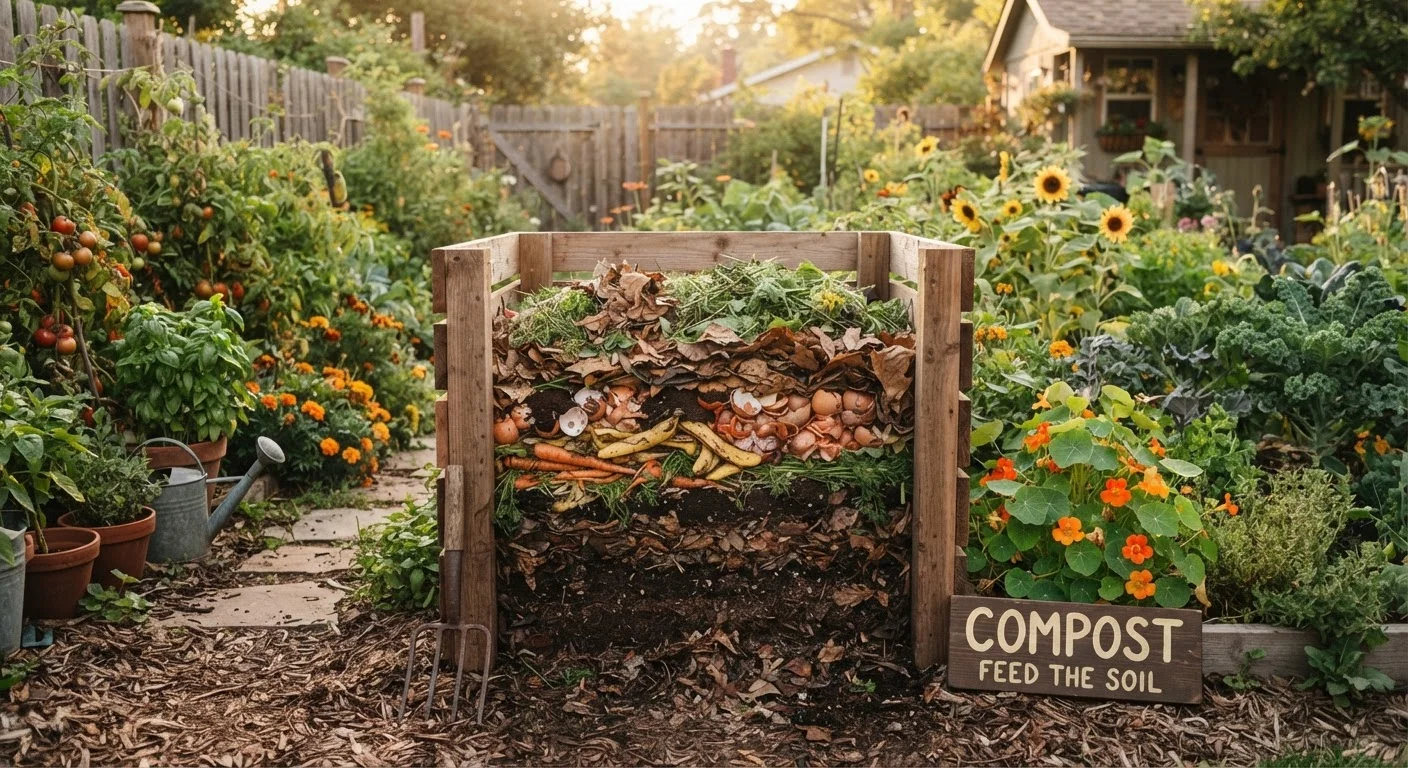
Why Compost Piles Stall - and Why It's Almost Always Fixable
A backyard compost pile that's producing nothing but a soggy, smelly mess is one of the most common frustrations for home gardeners. The good news: most compost problems have a clear, correctable cause. Decomposition is carried out by microorganisms that need four things - carbon, nitrogen, moisture, and oxygen. When any of these falls out of balance, the process grinds to a halt.
Understanding what's going wrong is the first step toward a productive pile. Whether you're composting to enrich a vegetable garden, reduce waste, or simply improve your soil, the fundamentals are the same. And they connect directly to broader gardening success - healthy compost feeds healthy plants, which is foundational to everything from starting a vegetable garden from scratch to maintaining containers through the seasons.
Never Compost These Materials
Meat, fish, bones, dairy products, and oily foods can attract rodents and create serious odor problems in a backyard bin. Diseased plant material or plants treated with persistent herbicides can spread pathogens or chemicals into your finished compost and ultimately into your garden soil. When in doubt, leave it out.
The Most Common Composting Mistakes
The mistakes below are responsible for the vast majority of stalled, smelly, or pest-attracting compost piles. Each has a straightforward fix that doesn't require special equipment or expertise.
Adding too many 'greens' and not enough 'browns,' throwing off the carbon-to-nitrogen balance.
Why it happens: Gardeners often default to tossing in whatever scraps are available without thinking about balance - fresh grass clippings and kitchen scraps pile up faster than dried leaves or cardboard.
Not turning the pile, which starves it of oxygen and halts decomposition.
Why it happens: It's easy to treat compost as a passive process - add material and wait. But without regular aeration, anaerobic bacteria take over and activity slows dramatically.
Letting the pile get too dry or too wet, both of which stop microbial activity.
Why it happens: Outdoor bins are subject to weather extremes - heavy rain saturates them and dry summers can dry them out entirely. Many gardeners don't check moisture levels regularly.
Making the pile too small to generate enough heat for efficient breakdown.
Why it happens: Space constraints or slow material accumulation lead to piles that simply don't have the critical mass to heat up and sustain microbial activity.
Adding materials that don't belong, including meat, dairy, diseased plants, and pet waste.
Why it happens: Some gardeners assume any organic material is fair game for compost, not realizing that certain inputs introduce pathogens, persistent chemicals, or strong odors that attract pests.
Placing the bin in a location with poor drainage or full shade.
Why it happens: Convenience often drives bin placement - whatever spot is out of the way. Shaded, low-lying spots stay too wet and too cold for effective composting.
Watch for Pest Activity Near Your Bin
If you notice rodents, raccoons, or other animals investigating your compost pile, the cause is almost always food scraps that attract them - particularly cooked food or anything containing fat or protein. Switching to a bin with a secure lid and limiting inputs to raw fruit and vegetable scraps can resolve the issue without chemical deterrents.
If your compost pile has been sitting inert for more than a month, run through this list systematically. Chances are one or two of these issues are the culprit, and correcting them will get decomposition moving again within a week or two.
Getting the Most from Finished Compost
Once your pile is producing rich, dark, earthy-smelling finished compost, use it strategically. Work it into garden beds before planting, use it as a top dressing around established plants, or mix it into potting soil for containers. Finished compost improves soil structure, feeds beneficial organisms, and reduces the need for synthetic fertilizers over time.
3:1
Ideal carbon-to-nitrogen ratio by volume
Most composting guides recommend roughly three parts brown (carbon-rich) material to one part green (nitrogen-rich) material for efficient breakdown.
55-70°F
Optimal internal pile temperature range
University extension programs generally note that active compost piles need consistent warmth; cold piles slow microbial activity significantly.
Healthy soil built with compost also supports the kind of companion planting strategies that help the whole garden thrive - learn more in our guide to companion planting and garden plant pairings. If you're planning a broader outdoor space, quality compost is also a foundational element worth building into your design - see our overview of planning an outdoor living space for more context.
The content on this site is provided for informational purposes only and should not be considered a substitute for professional advice. While we strive to provide accurate and up-to-date information, we make no guarantees regarding its completeness or accuracy. Always consult a qualified professional for advice specific to your circumstances before making any decisions.