

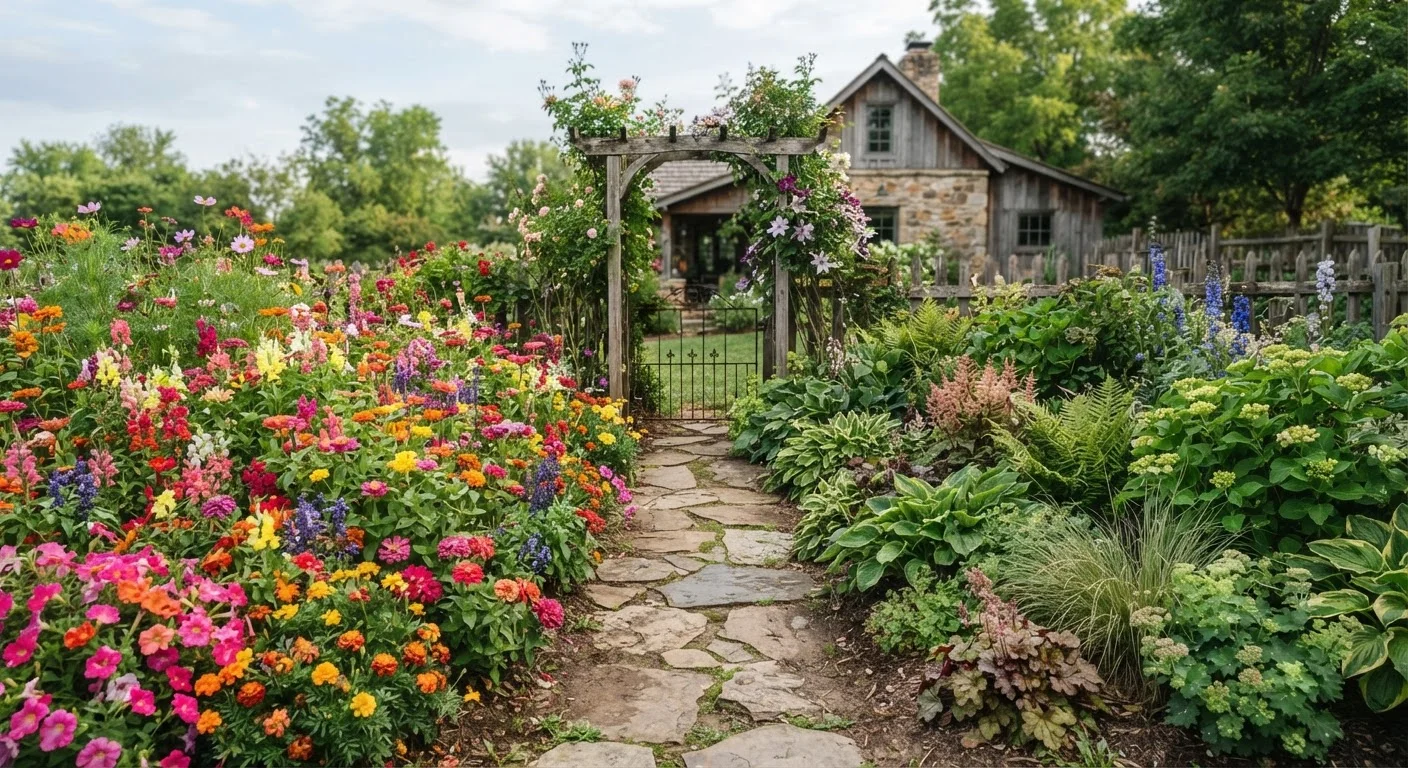
Option A
Annuals
The high-impact, single-season performer.
Best for: Gardeners who want bold, continuous color throughout one growing season and the flexibility to change their plantings each year.
Option B
Perennials
The long-term, low-replanting investment.
Best for: Gardeners building a lasting garden framework who prefer plants that return on their own each year with less replanting effort.
What Actually Makes a Plant an Annual or a Perennial
The terms annual and perennial describe a plant's life cycle - specifically, how long it lives and how it reproduces. Understanding this distinction is the foundation of smarter garden planning.
An annual completes its entire life - germination, growth, flowering, seed production, and death - within a single growing season. Once frost arrives or the season ends, the plant dies. To have it again next year, you replant from seed or transplant.
A perennial, by contrast, lives for more than two years. Above-ground foliage often dies back in winter, but the root system survives underground and sends up new growth the following spring. Some perennials live for decades when properly sited.
There is a third category worth knowing: biennials. These plants take two years to complete their cycle - growing leaves in year one and flowering in year two before dying. Foxglove and hollyhock are common examples, though they're less commonly discussed than annuals and perennials.
Hardiness Zones Affect How Plants Are Classified
Your USDA Hardiness Zone plays a significant role in how annuals and perennials behave in your garden. A plant labeled as a perennial in zone 8 may behave like an annual in zone 5, where winters are colder. Always check the zone recommendations on plant tags or seed packets for your specific region. The USDA Plant Hardiness Zone Map is freely available online and is the standard reference for U.S. gardeners.
Your USDA Hardiness Zone plays a significant role in how annuals and perennials behave in your garden. A plant labeled as a perennial in zone 8 may behave like an annual in zone 5, where winters are colder. Always check the zone recommendations on plant tags or seed packets for your specific region.
Side-by-Side: How Annuals and Perennials Compare
When choosing between the two, most decisions come down to a handful of practical factors: bloom time, cost, effort, and how you want your garden to look across the seasons.
| Criterion | Annuals | Perennials |
|---|---|---|
| Lifespan | One growing season | Three or more years |
| Bloom duration | Most of the season | Typically 2-6 weeks |
| Upfront cost per plant | Generally lower | Generally higher |
| Long-term cost | Higher (replant yearly) | Lower (return each year) |
| Replanting required | Every year | Rarely, unless dividing |
| Establishment effort | Quick; blooms same season | May take 1-2 seasons to fully establish |
| Design flexibility | High - change annually | Lower - longer commitment |
| Propagation | Seed or transplant each year | Division, cuttings, or seed |
One key trade-off that's easy to overlook is bloom duration. Many perennials have a defined window of two to six weeks when they flower. Annuals, bred specifically for continuous production, often bloom from planting until frost. This is why gardeners frequently use annuals to fill color gaps between perennials that have finished flowering.
Cost structure is another real difference. Annuals are often less expensive per plant at the nursery, but you repurchase them every year. Perennials cost more initially but return without replanting - and many can be divided every few years to multiply your stock at no extra cost.
If you're working with raised beds or in-ground plots, the planting type you choose also affects soil management. See our guide to raised beds vs. in-ground planting for how each setup handles root depth and soil health differently.
Planning a Garden That Uses Both
Most experienced home gardeners don't choose one type exclusively - they layer both for a garden that has dependable structure and flexible color. Here's how to think about combining them effectively:
- Use perennials as the backbone. Plant perennial clumps or borders that anchor your beds with consistent form year after year. Ornamental grasses, coneflowers, black-eyed Susans, and hostas are popular choices that require minimal replanting.
- Fill gaps with annuals. Once you know where perennials bloom and when, tuck annuals into the spaces that look sparse during off-peak periods. Impatiens, marigolds, zinnias, and petunias are reliable options for season-long color.
- Think about succession. Choose perennials with staggered bloom times - early spring bloomers, midsummer flowers, and late-season varieties - so something is always contributing visual interest.
If you're growing in pots or on a balcony, annuals are particularly practical for seasonal container displays. Our container gardening seasonal checklist walks through what to plant and when across the full growing year.
Feeding your plants - regardless of type - also matters. The approach you take with fertilizer can affect how robustly annuals bloom and how well perennials establish. Our article on organic vs. synthetic fertilizers explains the practical differences for garden beds.
For gardeners interested in ecological gardening, many native perennials offer both beauty and habitat value. Native plants tend to be well-adapted to local conditions and often require less water and care once established - a meaningful advantage over non-native alternatives.
The content on this site is provided for informational purposes only and should not be considered a substitute for professional advice. While we strive to provide accurate and up-to-date information, we make no guarantees regarding its completeness or accuracy. Always consult a qualified professional for advice specific to your circumstances before making any decisions.