

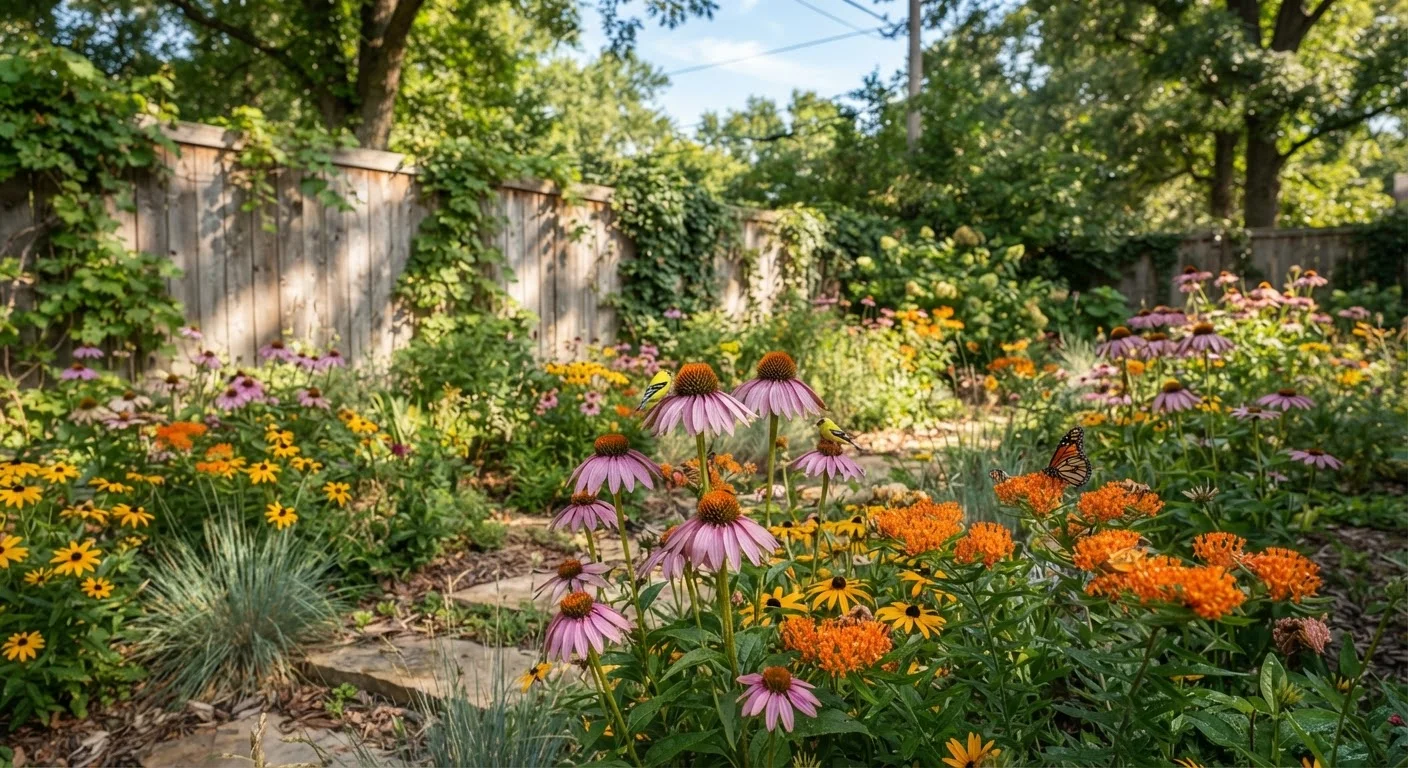
What Actually Makes a Plant 'Native'?
The word native gets used loosely in garden centers, but ecologists are precise about what it means. A plant is considered native to a region when it established itself there through natural processes - wind dispersal, animal movement, glacial retreat - rather than being introduced by humans. That distinction matters because native plants and local wildlife developed together, creating relationships that non-native species simply don't replicate.
Critically, native status isn't national - it's regional. Black-eyed Susans (Rudbeckia hirta) are native to much of the eastern and central United States but aren't native to the desert Southwest. A plant labeled as an "American native" may still be ecologically foreign to your specific corner of the country. When building a native garden, focus on plants native to your ecoregion - the ecological zone that shares your climate, soil type, and wildlife community.
This regional lens also helps separate native plants from naturalized plants - species introduced from elsewhere that now grow without human help but weren't part of the original ecosystem. Dandelions, for example, are naturalized across North America but originated in Europe. They survive fine, but they don't carry the same ecological history as true natives.
Why Ecologists Champion Native Plants
The ecological case for native plants is grounded in co-evolution. Over millennia, native insects, birds, and other animals developed dependencies on specific native plants - for food, shelter, and reproduction. Entomologist Doug Tallamy has documented that native oak trees support hundreds of caterpillar species, while many non-native ornamentals support almost none. Those caterpillars aren't just food for birds - they're a foundational link in the food web.
“Gardeners have an extraordinary opportunity to help restore ecological function simply by choosing the right plants. A suburban yard with diverse native plantings can support far more life than most people expect.”
— Doug Tallamy, Entomologist and author focused on native plants and wildlife
This matters practically for home gardeners. When you plant native species, you're not just adding greenery - you're rebuilding a functional piece of the local ecosystem. Native plants provide:
- Nectar and pollen timed to local pollinator emergence cycles
- Host plants for native butterfly and moth larvae
- Seeds and berries that native birds have evolved to digest efficiently
- Root structures that support beneficial soil fungi and microbes
Understanding this web connects to broader gardening decisions - including soil health, since native plants often work in partnership with specific underground organisms that support their growth.
Practical Benefits for Home Gardeners
Beyond ecology, native plants offer real-world advantages in the garden. Because they evolved in local conditions, established native plants typically tolerate regional drought, heat, cold, and soil without the level of intervention non-natives may need. Many gardeners find they spend less on irrigation and fertilizer once a native planting matures - though results vary by species, soil, and placement.
Start Small and Build Outward
You don't need to redesign your entire yard at once. Even a single native planting bed or a small cluster of native shrubs can provide meaningful habitat. Choose two or three species native to your specific ecoregion and observe how your garden changes over a season before expanding.
Native plants also tend to work well in combination with thoughtful garden design strategies. For instance, companion planting principles apply equally to native gardens - pairing plants that support each other above and below ground can reduce pest pressure and improve overall garden health.
It's worth noting that native perennials - plants that return year after year - offer compounding value over time, building root systems and habitat with each season. If you're still sorting out how perennials compare to annuals in your garden plan, our explainer on annuals vs. perennials covers the key differences.
~4,000
Native bee species in North America
According to the USDA, North America is home to roughly 4,000 native bee species, many of which depend on specific native plants for survival.
96%
Of land birds that feed insects to nestlings
Research by entomologist Doug Tallamy indicates that approximately 96% of North American land bird species rely on insects - many of which depend on native host plants - to feed their young.
30-50%
Potential reduction in landscape water use
The EPA's WaterSense program notes that switching to climate-appropriate and native plantings can meaningfully reduce outdoor water consumption, though results vary by region and design.
The Trade-Offs Worth Knowing
Native plants aren't a universal solution, and it's worth being honest about the trade-offs. Some native species can be aggressive spreaders within the garden, particularly certain grasses and ground covers. Others may look untidy by conventional landscape standards - bare stems in winter, seed heads that some neighbors find unkempt. Aesthetic expectations and local codes (some HOAs restrict certain plantings) are real considerations.
There's also the sourcing challenge. Not every garden center carries regionally appropriate native species, and mislabeling - where plants are sold as natives without being locally sourced - does occur. Look for reputable native plant nurseries or local native plant society sales when possible, and ask about where plants were propagated.
Finally, native doesn't automatically mean low-maintenance during establishment. New plantings - native or not - typically need reliable watering through their first growing season. Plan accordingly before assuming any plant can fend for itself from day one.
Frequently Asked Questions
Check with your local cooperative extension service, native plant society, or a regional gardening resource. The USDA Plants Database is also a useful tool for looking up native ranges by state. When buying plants, look for labels that specify regional origin rather than just the country.
Once established in their home region, native plants generally need less watering, fertilizing, and pest management than non-natives. However, the establishment period - usually the first one to two growing seasons - still requires consistent care. Soil conditions, microclimate, and placement all affect how any plant performs.
Yes. Invasive species can outcompete native plants for light, water, and nutrients, often reducing habitat value significantly. Removing invasives before planting natives is one of the most effective steps you can take for a healthier garden ecosystem.
Research suggests that native plants often support more native bee and butterfly species than non-natives, partly because many insects rely on specific plant relationships that developed over long periods. That said, some non-native plants do support pollinators - context and regional species matter.
For most home gardeners, a mixed planting approach is perfectly reasonable. Prioritizing natives in a portion of your garden - especially for trees, shrubs, and ground cover - can provide meaningful ecological benefits without requiring a complete landscape overhaul.
The content on this site is provided for informational purposes only and should not be considered a substitute for professional advice. While we strive to provide accurate and up-to-date information, we make no guarantees regarding its completeness or accuracy. Always consult a qualified professional for advice specific to your circumstances before making any decisions.