

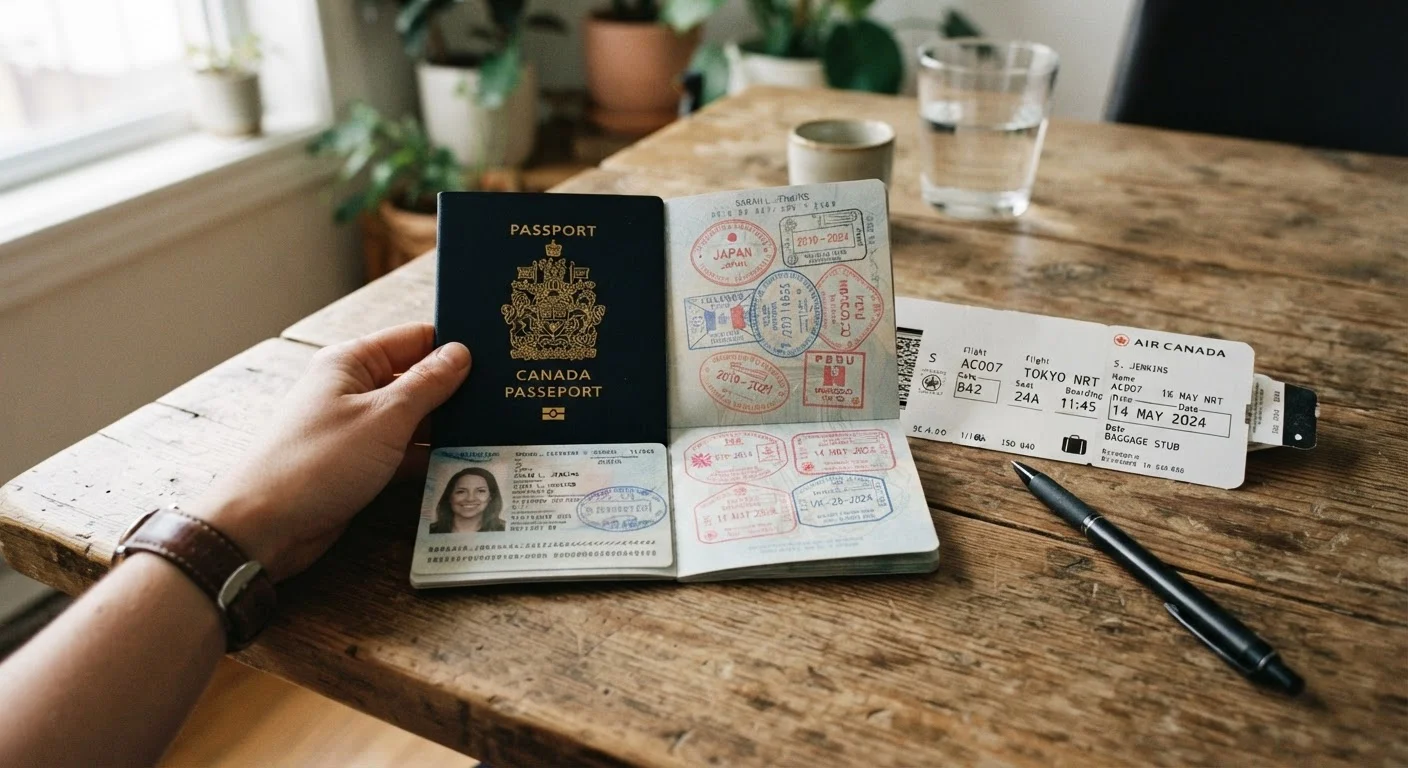
The Core Documents Most Americans Will Need
For most international trips, your passport is the single most important document you own. U.S. passports are valid for 10 years for adults (5 years for children under 16). Many countries require your passport to be valid for at least 6 months beyond your travel dates - so check that expiration date before you book anything. Standard processing through the U.S. State Department typically takes several weeks; expedited service is faster but costs more. Apply or renew early.
For domestic travel within the United States, a valid driver's license or state ID generally works - but not for long. The REAL ID Act requires that IDs used for domestic flights meet federal security standards. Verify that your license is REAL ID-compliant (look for a star marking) or plan to bring a passport instead. See the complete domestic trip planning guide for more on ID requirements within the U.S.
| Adult U.S. Passport Validity | 10 years (U.S. State Department) |
| Child Passport Validity (under 16) | 5 years (U.S. State Department) |
| Minimum Passport Validity Required by Many Countries | 6 months beyond travel dates (Varies by destination - verify before booking) |
| REAL ID Compliance Marker | Star symbol on your state-issued ID or license (U.S. Department of Homeland Security) |
| Recommended Application Lead Time | At least 3-6 months before departure (U.S. State Department processing guidance) |
Visas, eTAs, and Entry Authorizations Explained
Beyond a passport, many countries require additional permission to enter. These requirements vary widely - and the terminology is easy to mix up. A visa is a formal authorization issued by a foreign country, granted before or upon arrival. A travel authorization (sometimes called an eTA or ESTA) is a lighter electronic pre-clearance required by some countries that otherwise allow visa-free entry from the U.S.
Common examples: Canada requires U.S. citizens flying into the country to hold an Electronic Travel Authorization (eTA), even though no visa is needed for short visits. Australia requires an Electronic Travel Authority (ETA) or visitor visa. The European Union's ETIAS system - which applies to many Schengen Area countries - is expected to become mandatory for U.S. travelers in the coming years. Always verify current entry requirements through the destination country's official government immigration website or the U.S. State Department's travel pages before you travel.
Confusing visa-free access with no-documentation-required access is a common and costly mistake. The guide to visa requirement misconceptions breaks down exactly how to read entry rules correctly.
Passport
A government-issued travel document that verifies your identity and citizenship, required for entry into most foreign countries. U.S. passports are issued by the State Department.
Visa
An official authorization from a foreign country permitting entry, issued either in advance through an embassy or consulate, or upon arrival at the border, depending on the destination.
eTA / ETIAS
Electronic travel authorizations required by some countries that otherwise grant visa-free access to U.S. travelers. These are typically applied for online before departure and approved quickly.
REAL ID
A federally compliant form of state-issued ID that meets security standards set by the REAL ID Act. Required for domestic U.S. air travel; look for a star symbol on your driver's license.
Closed-Loop Cruise
A cruise that departs from and returns to the same U.S. port. Travelers on these itineraries may enter some Caribbean ports on a birth certificate and government ID, though a passport is strongly recommended.
Special Situations and Supporting Documents
Certain trip types call for paperwork beyond the standard passport-and-visa combination. Traveling with a minor? If one parent is absent, many countries ask for a signed, notarized consent letter from the non-traveling parent. Cruises departing from and returning to U.S. ports (called closed-loop cruises) may allow travel on a birth certificate plus government-issued ID rather than a passport - but a passport is always the safer choice if an emergency diversion occurs.
If you're carrying prescription medications internationally, document them carefully and research destination rules. Some medications legal in the U.S. are controlled or restricted abroad. The prescription medication travel awareness guide covers what to verify before you pack.
Always make photocopies and digital scans of all key documents - passport, visa, travel authorization, insurance card - and store them separately from the originals. If something goes missing, those copies can be a lifesaver. The pre-trip safety and document checklist walks through exactly what to verify before leaving home, and how to handle common travel emergencies covers what to do if documents are lost abroad.
Entry requirements, visa rules, and processing times change frequently. Always verify current requirements with official government sources - including the U.S. State Department and the destination country's immigration authority - before finalizing any travel plans.
The content on this site is provided for informational purposes only and should not be considered a substitute for professional advice. While we strive to provide accurate and up-to-date information, we make no guarantees regarding its completeness or accuracy. Always consult a qualified professional for advice specific to your circumstances before making any decisions.