

Why Medication Rules Change at Every Border
A drug prescribed by your American doctor - taken daily without a second thought - can be classified as a controlled substance, a restricted import, or even an outright illegal compound in another country. This isn't a rare edge case. Common medications including certain ADHD treatments, opioid-based pain relievers, sleep aids, and anxiety medications fall under strict regulations in destinations ranging from Japan and the UAE to Mexico and several European nations.
The rules are set by each country's health ministry or customs authority, not by your home country's laws. U.S. regulations do not travel with you. What matters at the border is the destination country's classification system - and that can shift without widely publicized notice. Always verify directly with the official embassy or consulate of each country you're visiting before departure.
See our full breakdown of international vs. domestic planning to understand the wider documentation differences involved in going abroad.
The Documentation You Should Carry
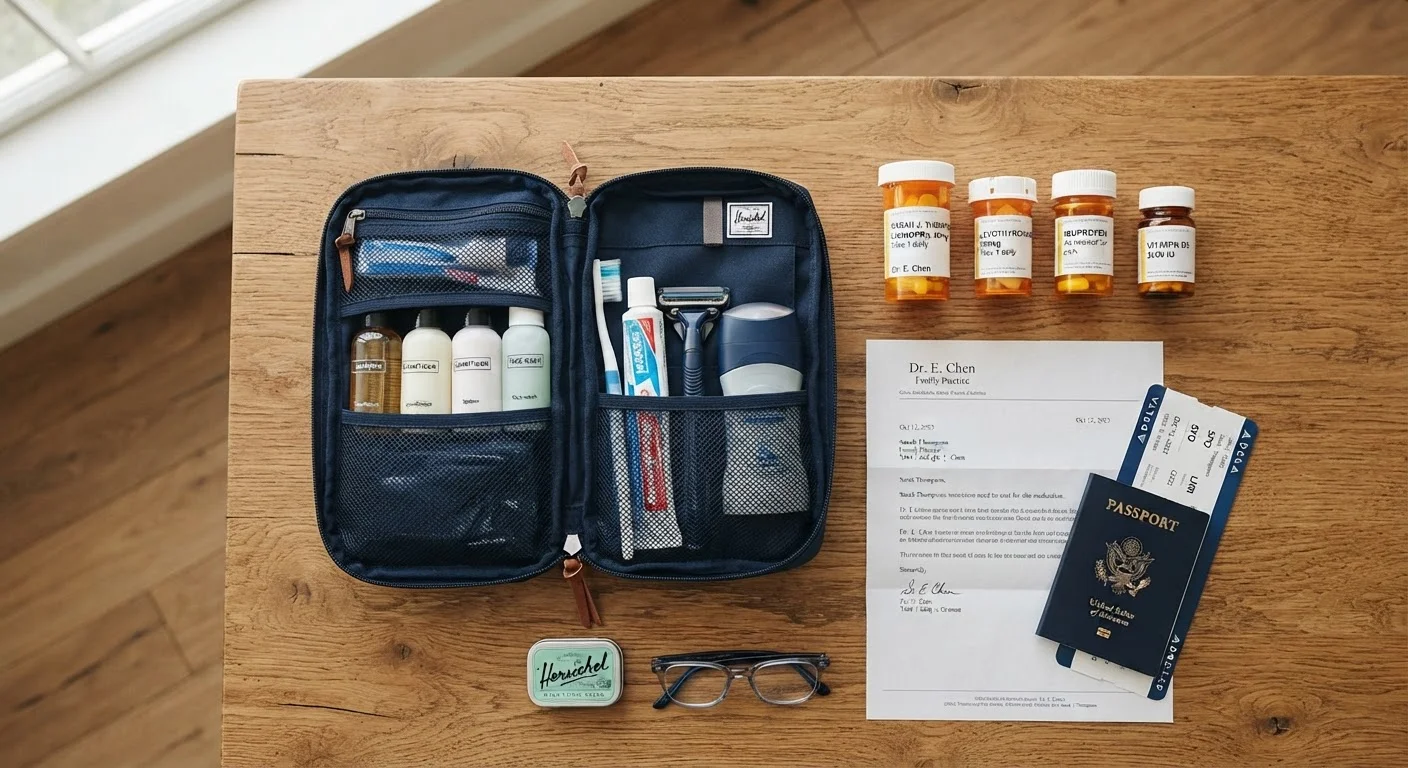
Proper paperwork is your single most effective defense against customs delays or confiscation. Before any international trip involving prescription medications, gather the following:
- Original prescription label: Keep medications in their original pharmacy-dispensed containers with your name, the prescribing doctor's name, medication name, dosage, and dispensing date clearly printed.
- Doctor's letter: Request a signed letter on official letterhead stating your diagnosis (in general terms), the medication name and dosage, and that the medication is medically necessary. Some countries specifically request this.
- Translation of the letter: For destinations where English is not widely used in official settings, having the letter translated into the local language strengthens your position at customs.
- Carry-on only: Never pack essential medications in checked luggage. Bags can be delayed or lost, and you cannot risk an interruption in critical treatment.
For a structured pre-departure checklist that includes health documents alongside passports and emergency contacts, see Before You Board.
Controlled substance
A drug whose manufacture, possession, and use is regulated by government law due to its potential for abuse or dependence. A substance may be controlled in one country and freely available in another.
Import certificate (Yunyu Kakunin-sho)
A document required by Japan's government to legally bring certain medications into the country. Travelers must apply through the Japanese Embassy before departure.
Psychotropic medication
A drug that affects brain function, mood, or behavior - including some antidepressants, anti-anxiety medications, and stimulants. Many countries classify these separately for import purposes.
Transit country
A country through which a traveler passes (including during a layover) on the way to a final destination. Customs and medication rules in transit countries apply even if the traveler does not plan to leave the airport.
Country-by-Country Awareness: High-Attention Destinations
While every country warrants individual verification, certain destinations are consistently flagged for strict medication policies:
- Japan
- Stimulants including amphetamine-based ADHD medications (such as Adderall) are prohibited outright. Many pseudoephedrine-containing products are also restricted. Travelers bringing allowed medications in larger quantities must apply for a Yunyu Kakunin-sho (import certificate) in advance from the Japanese Embassy.
- United Arab Emirates
- The UAE maintains a detailed controlled substances list. Certain opioids, benzodiazepines, and even some codeine-containing cough medicines require prior approval from the UAE Ministry of Health. Quantities are capped, and travelers must carry documentation for every controlled item.
- Singapore
- Strict drug laws apply to visitors as well as residents. Controlled medications require documentation and, in some cases, advance import permits. Penalties for undeclared controlled substances are severe.
- Indonesia
- Psychotropic and narcotic medications are tightly regulated. Travelers have faced significant legal issues attempting to enter with medications that were legal in their home country but unauthorized in Indonesia.
- Mexico and the Caribbean
- Though often perceived as more relaxed, several Latin American and Caribbean nations restrict opioid-based medications. Carrying documentation is strongly advised.
This list is illustrative, not exhaustive. Conditions and classifications change. Always consult each destination's official embassy website or government health authority well before travel.
Practical Steps Before You Depart
Good preparation takes a bit of lead time but dramatically reduces your risk of disruption at the border or abroad:
- Research early: Contact the embassies or consulates of every country on your itinerary - not just your final destination. Transit countries matter too.
- Use official government sources: The U.S. Embassy pages for each country, the destination country's own health ministry, and the International Narcotics Control Board (INCB) publish relevant guidance.
- Carry only what you need: Bring enough medication to cover your trip plus a small buffer, but avoid carrying quantities that may raise red flags. Some countries set specific day-limits (e.g., 30-day supply).
- Keep a digital backup: Photograph your prescription labels, doctor's letter, and any import permits. Store them in a secure cloud account you can access from anywhere.
- Check travel insurance coverage: Some policies include medication loss or emergency prescription services abroad - review your plan's terms carefully.
For broader travel document planning, our guide to travel documents Americans need covers passports, visas, and authorizations in one place. And if something does go wrong abroad, knowing how to respond to medical situations overseas can make a real difference.
This article is for general informational purposes only and does not constitute medical or legal advice. Regulations vary widely and change frequently. Always consult your prescribing physician and verify current requirements directly with the official authorities of each country you plan to visit before traveling with any prescription medication.
The content on this site is provided for informational purposes only and should not be considered a substitute for professional advice. While we strive to provide accurate and up-to-date information, we make no guarantees regarding its completeness or accuracy. Always consult a qualified professional for advice specific to your circumstances before making any decisions.