

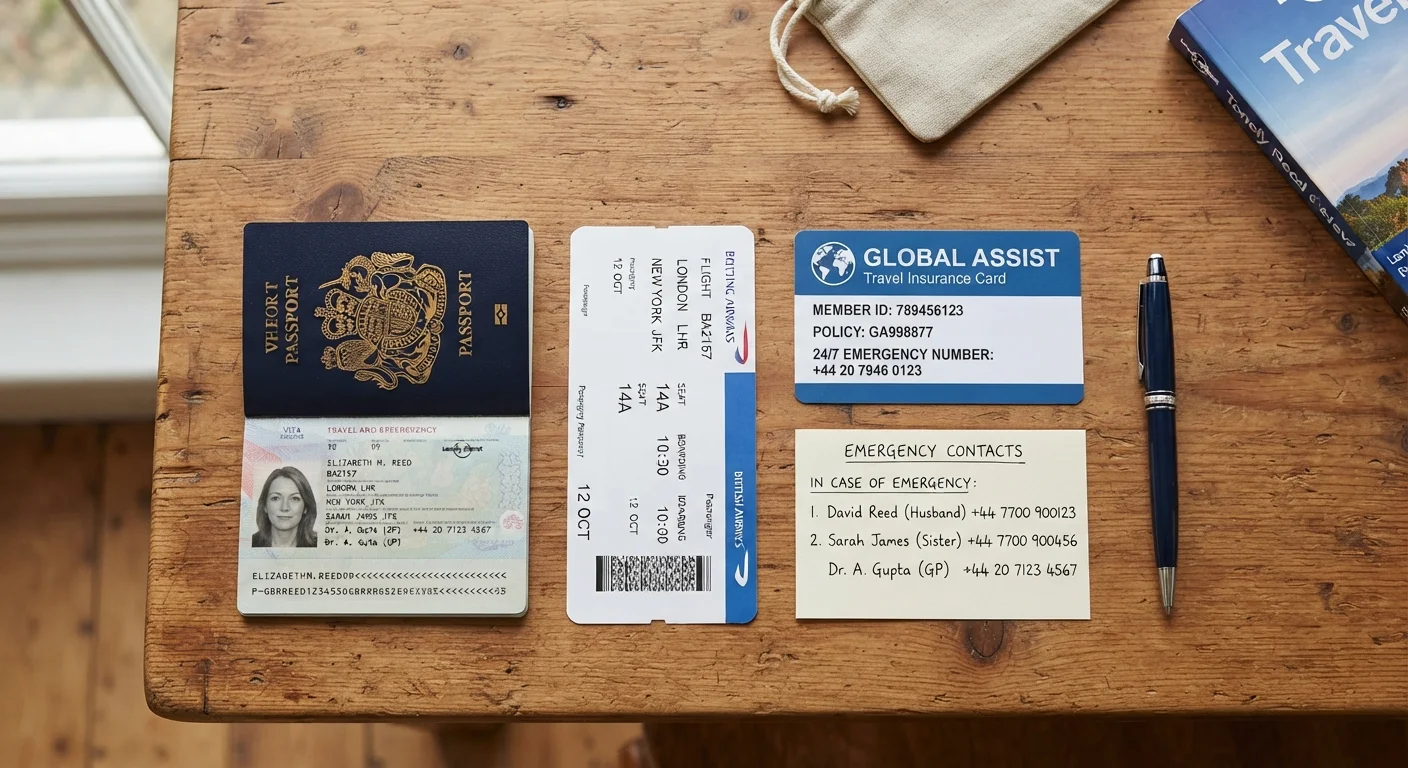
Summary
22 items · 20-45 minutes
Why a Pre-Trip Document Check Matters
Even experienced travelers have been turned away at a boarding gate for an expired passport or denied entry at a foreign border for a missing visa. These situations are almost always avoidable - and that's exactly why running through a structured checklist before you leave home is one of the smartest travel habits you can build.
This checklist covers the documents, health records, and safety essentials that should be confirmed before you board - not at the airport. For a broader view of pre-departure planning, see The Week Before You Leave: A Final Preparation Checklist, which addresses reservations, home prep, and loose ends too.
Work through each group below at least 48 hours before your flight so you have time to fix anything that's missing or expired.
Passport and Identity Documents
Document Copies and Backups
Travel Insurance and Financial Documents
Health and Medical Documents
Emergency Contacts and Safety Prep
Tools and Resources You'll Need
Before you start checking items off, gather the right materials. Most of what you need is already in your home - the goal is to have everything in one place and verified.
Secure Cloud Storage or Encrypted Email
Store digital copies of your passport, visa, insurance card, and key confirmations so they're accessible from any device.
Photocopier or Scanner
Create physical copies of your passport photo page and insurance documents to carry and leave with a trusted contact.
U.S. Department of State Website (travel.state.gov)
Check current passport processing times, travel advisories, and entry requirements for your destination.
STEP (Smart Traveler Enrollment Program)
Register your international trip with the U.S. Embassy so you can receive safety alerts and be contacted in an emergency.
Offline Maps App
Download destination maps before departure so you can navigate without relying on mobile data or Wi-Fi.
If you're driving part of your journey, pair this checklist with our driver safety checklist to make sure your vehicle is road-ready too.
What to Do If Something Is Missing
Discovering a problem before departure - not at the gate - gives you options. Here's how to respond to the most common gaps:
- Expired passport: Contact the U.S. Department of State for expedited renewal services. Processing times vary, so act immediately. Verify current wait times through the official State Department website.
- Missing visa: Check the destination country's official government or embassy website for the correct visa application process. Do not rely on third-party sites for requirements.
- No travel insurance yet: It's not too late to purchase a policy up until the day of departure in many cases, though coverage windows vary by provider. Read any policy carefully before buying.
- Lost or misplaced prescription records: Contact your prescribing physician or pharmacy to obtain documentation. If traveling internationally, ask whether a letter on official letterhead is recommended for medications crossing borders.
Don't Rely on Digital-Only Backups
A dead phone battery, lost device, or spotty international data can make a purely digital backup useless at the worst possible moment. Always keep at least one physical copy of your passport photo page and emergency contact list separate from your main bag. Paper is low-tech - and often the most reliable backup you have.
For a grounded look at how to handle emergencies if something goes wrong during your trip, Situations Every Traveler Should Know How to Handle walks through lost passports, medical issues abroad, and more without the panic.
Also consider how you'll move through airport security efficiently. Airport Security Lines, Global Entry, and TSA PreCheck: How They Actually Differ can help you understand what to expect at the checkpoint.
This article provides general travel preparation information only. Entry requirements, health documentation rules, and visa regulations change frequently - always verify current requirements through official government and embassy sources before traveling. This is not legal, medical, or insurance advice.
The content on this site is provided for informational purposes only and should not be considered a substitute for professional advice. While we strive to provide accurate and up-to-date information, we make no guarantees regarding its completeness or accuracy. Always consult a qualified professional for advice specific to your circumstances before making any decisions.