

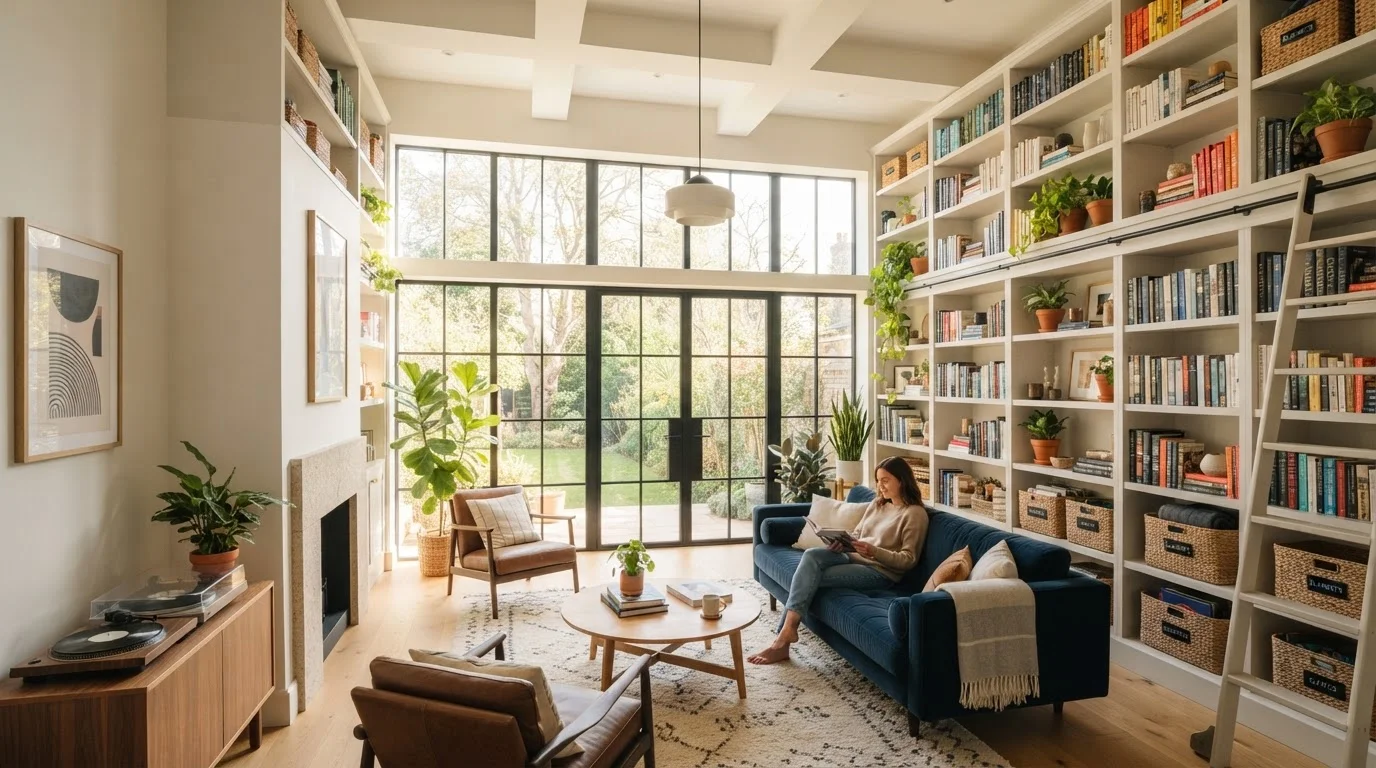
Why We Ignore the Walls Above Us
Walk through any typical American home and you'll notice a pattern: storage happens at floor level. Furniture sits on the ground, bins stack two high at most, and everything above roughly five feet of wall height goes completely unused. It's not laziness - it's habit. We organize the way we shop: scanning shelves at eye level and ignoring what's above.
The result is homes where closets overflow, garages feel chaotic, and kitchens lack counter space - not because there isn't enough room, but because available room is going unused. Professional organizers refer to this unused zone as dead space, and reclaiming it is often the single most impactful change a household can make. For a deeper look at how this concept fits into whole-home organization, see the glossary of organizing terms that explains dead space and other key concepts plainly.
~4-5 ft
Typical active storage height in most homes
Professional organizers commonly observe that household storage rarely extends above eye level, leaving several feet of wall height unused in every room.
30%+
Potential storage gain from vertical use
Home organization specialists frequently estimate that adding shelving above standard furniture height can expand a room's effective storage capacity by a significant margin.
16 inches
Standard stud spacing in most U.S. homes
The International Residential Code and standard framing practice place wall studs 16 inches on center, which determines where wall-mounted shelving can be safely anchored.
Mapping the Vertical Zones in Any Room
Before installing anything, it helps to think of each room's walls in three horizontal zones:
- Prime zone (waist to eye level): The most accessible area. Reserve this for items used daily or weekly.
- Secondary zone (eye level to ceiling): Ideal for seasonal storage, bulk supplies, and items needed monthly. A step stool makes this zone practical.
- Floor-to-waist zone: Often already occupied by furniture. Look for gaps - the space above a dresser, beside a bookcase, or over a toilet can all host additional storage.
Mapping these zones before buying any hardware prevents common mistakes, like mounting shelves too high for regular use or installing systems that block light switches and outlets.
Start With One Wall Before Committing
Before purchasing a full shelving system for any room, measure your wall height from floor to ceiling and sketch where each zone falls. Tape a horizontal line at the height you're considering for a new shelf and live with it for a day or two. This simple test reveals whether a shelf at that height will feel accessible or awkward in daily use.
Practical Vertical Solutions by Room
Vertical storage doesn't require a renovation. Here's how to apply it room by room:
Kitchen
Mount open shelving above counters to hold frequently used dishes or dry goods. Use a wall-mounted magnetic strip for knives and metal utensils. Stack pot lids vertically in a narrow cabinet with a rack. For a thorough look at the trade-offs between open shelves and cabinets, the kitchen shelving comparison guide breaks down when each approach makes sense.
Closets
Most closets have 8 to 10 feet of ceiling height but only one rod installed at about 5 feet. Adding a second rod below - or a high shelf above the existing rod - can nearly double hanging and folding capacity with minimal cost.
Garage
Garages offer the most unused vertical space of any area in the home. Wall-mounted track systems, ceiling-hung storage platforms, and tall freestanding shelving all work well here. Many homeowners are surprised how much floor space opens up once bins and tools move to the walls. The garage organization myths article addresses common misconceptions that delay this step.
Entryways and Hallways
Over-door organizers, wall-mounted hooks at multiple heights, and narrow floating shelves above eye level can transform a chaotic entryway into a functional landing zone without taking any floor space.
Safety and Installation Basics
Vertical storage only works safely when it's properly anchored. The most common mistake is mounting shelves into drywall alone, which cannot reliably support weight over time. Before installing any wall-mounted system:
- Locate wall studs using a stud finder - most studs are spaced 16 inches apart.
- Use fasteners rated for the intended load. When studs aren't available, use toggle bolts or wall anchors designed for drywall, and stay within the weight rating printed on the package.
- Keep heavy or bulky items in the secondary and floor zones - not at ceiling height where falling objects pose a greater risk.
For anything involving electrical work, significant structural changes, or built-in cabinetry that could affect walls, it's worth consulting a licensed contractor. The guide to load-bearing vs. partition walls is essential reading before any project that touches wall structure.
Vertical storage is one part of a broader strategy for managing space well. The room-by-room organization framework offers a complete picture for tackling every area of your home systematically.
Frequently Asked Questions
Items you reach for daily should sit between shoulder height and eye level - roughly 60 to 72 inches from the floor. Reserve shelves above that zone for seasonal or rarely used items. A step stool can safely extend your practical reach for higher zones.
No. Drywall alone cannot safely support significant weight. Shelves holding books, appliances, or bins must be anchored into wall studs or use appropriate wall anchors rated for the expected load. When in doubt, consult a licensed contractor or handyperson.
Freestanding shelving units, tension rod organizers, over-door hooks, and command-strip solutions are all renter-friendly options. Always check your lease before making any wall modifications, even with removable hardware.
Vertical storage is especially valuable in small spaces because it adds capacity without consuming additional floor area. Tall bookshelves, wall-mounted rails, and stackable bins are practical starting points for compact homes.
Use uniform bins or baskets to contain loose items, and group things by category. Consistent container sizing and labels help maintain visual order even at heights that aren't easily scanned. See our guide on <a href="/home-garden/home-organization/labeled-vs-unlabeled-storage-when-each-approach-serves-you-better">when labeling storage pays off</a> for more detail.
Standard wall-mounted shelves typically do not require permits, but structural changes - such as built-in cabinetry that involves framing or electrical work - may. Local building codes vary, so verify requirements with your municipality before beginning any significant installation.
The content on this site is provided for informational purposes only and should not be considered a substitute for professional advice. While we strive to provide accurate and up-to-date information, we make no guarantees regarding its completeness or accuracy. Always consult a qualified professional for advice specific to your circumstances before making any decisions.