

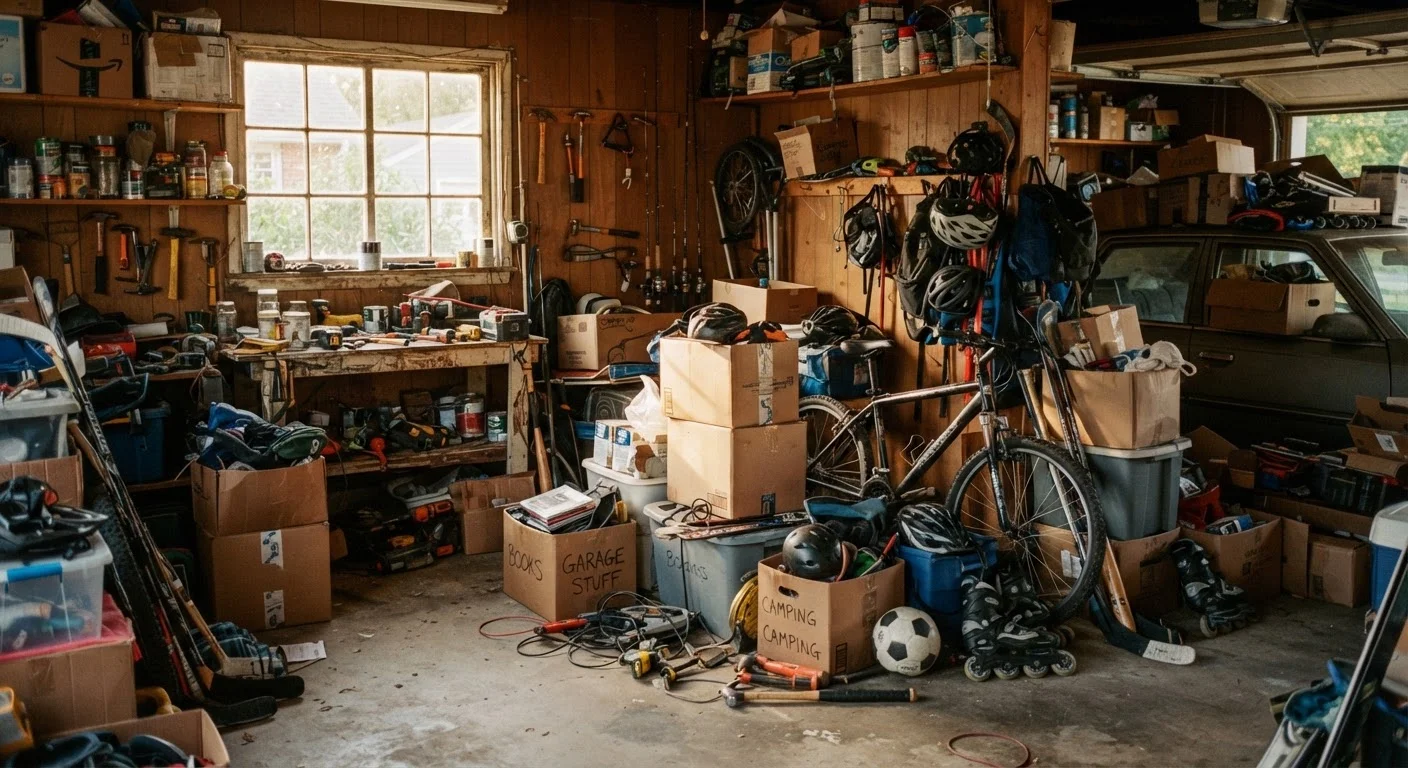
Why Garage Organization Myths Are So Persistent
Garages occupy a unique psychological space in American homes. They're simultaneously storage rooms, workshops, hobby spaces, and catch-all zones - and because they're out of sight, the mess feels easier to ignore. That invisibility also breeds misinformation: ideas about what it takes to get organized spread through neighborhoods and home improvement shows without much scrutiny.
The result is that many homeowners delay action for months or years, waiting for the right moment, the right budget, or the right plan. Understanding which widely held beliefs are actually false is the most effective way to stop that cycle. The myths below are the ones most likely to keep a garage stuck in chaos.
If closet organization feels familiar, it's worth noting that the same kinds of misconceptions apply there too - see why closets get disorganized again within weeks for a parallel breakdown.
Myth
You need to buy an expensive storage system before you can get organized.
Fact
The sorting and purging process - which costs nothing - does most of the organizational work.
Custom cabinetry and modular wall systems can be genuinely useful, but they work best after you know what you're storing. Buying containers before you've sorted your belongings often results in purchasing the wrong sizes or storing things you should have discarded. Start by categorizing items into keep, donate, and discard piles. Many homeowners find that eliminating clutter alone frees up significant space - no purchase required.
Myth
A bigger garage would solve the problem.
Fact
Organization problems are almost always about systems, not square footage.
Research on household clutter consistently points to accumulation patterns and storage habits - not room size - as the primary culprit. A larger garage without a system simply provides more room to store things that shouldn't be kept. Before attributing the problem to space, assess whether you've used vertical wall space, whether items have designated homes, and whether you're holding onto things you no longer need.
Myth
You have to do it all in one weekend or it's not worth starting.
Fact
Incremental organization done consistently is more effective and sustainable than a single large overhaul.
All-or-nothing thinking is one of the most common reasons garage projects stall. A two-hour session that tackles just tools or just sports equipment creates a real, usable result - and builds momentum. Setting a smaller, specific goal (one zone, one shelf, one category) is far more likely to get done than waiting for a full free weekend that may not come for months.
Myth
Once it's organized, it will stay that way.
Fact
Without simple maintenance habits, garages reliably return to disorder regardless of how well they were organized initially.
Organization systems don't maintain themselves. What keeps a garage tidy over time is consistent behavior: returning items to their designated spots, doing a quick quarterly review of what's accumulating, and making sure new items are assigned a home when they enter the space. A system that's slightly easier to maintain - even if less polished - will outperform a perfect system that no one uses consistently.
Myth
Everything in the garage needs to be labeled and sorted into matching bins.
Fact
Rigid aesthetic uniformity isn't necessary - clarity and consistency matter far more than matching containers.
Pinterest-perfect garages are aspirational, but the organizational goal is function, not appearance. Mismatched bins that are consistently returned to assigned spots serve better than a photogenic system that nobody maintains because it feels too precious to disturb. Use labeling where it genuinely helps - grouping camping gear, holiday decorations, or automotive supplies - but don't let the absence of matching containers delay getting started.
Practical Steps That Actually Move the Needle
Once the myths are out of the way, garage organization becomes far less daunting. The core process is consistent: sort first, then contain. Pull everything out, group similar items, discard or donate what you haven't used in over a year, and only then decide what storage approach fits what remains.
Wall space deserves serious attention. Most garage owners use floor space and maybe a shelf or two - but the vertical real estate from floor to ceiling is almost always wasted. Pegboards, wall-mounted brackets, and overhead ceiling storage can each dramatically expand usable capacity without touching floor space. The overlooked potential of vertical storage applies directly to garages, where ceiling heights often exceed those found indoors.
Finally, resist the urge to over-engineer. Label bins clearly, keep frequently used items at eye level, and store seasonal gear up high or in back. If you're working with a compact garage, many of the same principles apply as in small indoor spaces - the small-space storage solutions guide covers techniques that translate well.
Don't Store Hazardous Materials Haphazardly
Garages frequently become default storage for paints, pesticides, fuels, and solvents. These materials require proper containment and should never be stored near heat sources or in unlabeled containers. Check local guidelines for disposal of chemicals you no longer need - many municipalities offer hazardous waste drop-off programs. Keeping these items organized isn't just about tidiness; it's a genuine safety concern.
The content on this site is provided for informational purposes only and should not be considered a substitute for professional advice. While we strive to provide accurate and up-to-date information, we make no guarantees regarding its completeness or accuracy. Always consult a qualified professional for advice specific to your circumstances before making any decisions.