

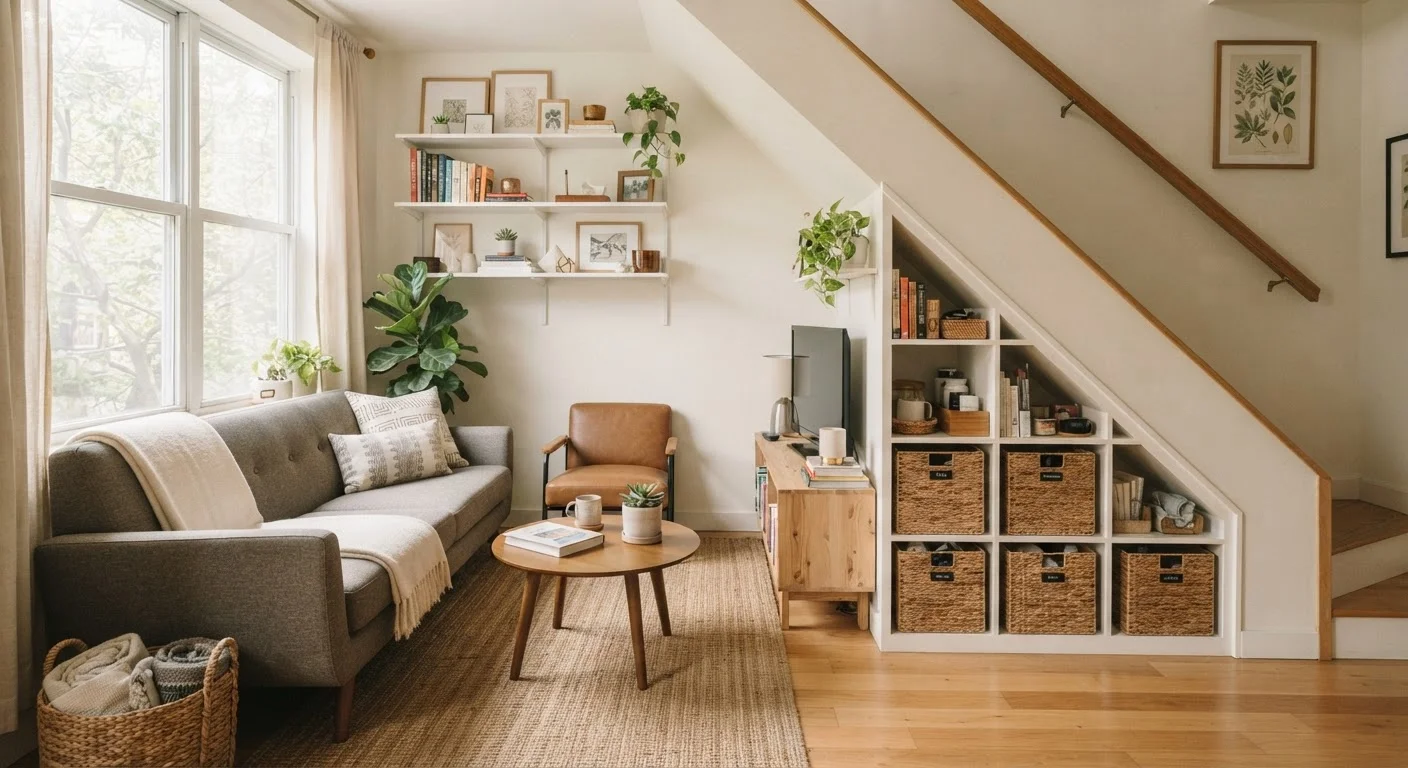
Making the Most of What You Already Have
Living in an apartment or compact home doesn't mean accepting clutter as inevitable. The challenge isn't usually a shortage of space - it's a shortage of organized space. Most small homes have untapped storage potential hiding in plain sight: above doorframes, beneath beds, behind cabinet doors, and along walls that hold nothing but paint.
The good news is that meaningful storage improvements rarely require drilling, construction permits, or a weekend of heavy labor. Many of the most effective solutions are portable, renter-friendly, and easy to reconfigure as your needs change. This list focuses on practical approaches that work across room types, whether you're in a studio apartment, a narrow townhouse, or simply a bedroom that's running out of room.
For a broader framework on organizing every room in your home, see our room-by-room organization guide. And if vertical wall storage is an area you want to explore further, our piece on using vertical space effectively goes deeper on that dimension specifically.
Mount Floating Shelves on Empty Wall Sections
Walls between windows, above desks, and alongside doorways often go completely unused. Floating shelves - the kind that mount with a bracket or keyhole hardware - can turn these blank surfaces into genuine storage without occupying any floor space. They work in kitchens for spices and cookbooks, in living rooms for baskets and books, and in bedrooms for folded items or small bins.
If you're renting or prefer not to patch holes later, look for adhesive-mount shelf systems rated for your intended load. These won't hold heavy items, but they're perfectly suited for lightweight everyday objects. Always check weight limits before loading a shelf, and follow the manufacturer's installation guidance carefully.
Empty walls between windows and doorways are some of the most overlooked storage real estate in any home.
Use Furniture That Pulls Double Duty
In small spaces, furniture that stores nothing is a missed opportunity. Ottomans with interior compartments, bed frames with built-in drawers, and benches with lift-up lids all provide a place to sit or set things while hiding clutter inside. Coffee tables with lower shelves or drawers serve the same principle in living rooms.
When choosing multipurpose furniture, prioritize pieces where the storage is genuinely accessible - not so awkward to open that you stop using it. A storage ottoman you use daily beats a beautiful cabinet that's hard to reach.
Furniture that stores nothing in a small home is a missed opportunity you're paying floor-space rent on every day.
Maximize the Back of Every Door
The back of a door is one of the most reliable no-renovation storage surfaces available. Over-the-door organizers with pockets or hooks work on pantry doors (for spices, foil, and bags), bathroom doors (for toiletries and hair tools), and bedroom closet doors (for shoes, accessories, or folded items). Most mount using the door itself and require no hardware.
A few caveats: check that your door swings and closes fully with the organizer installed, and don't overload the pockets - heavier items can stress the door over time. Lightweight items like cleaning supplies, snacks, and small folded items are ideal candidates.
Behind every closed door is a storage surface most households never think to use.
Reclaim Under-Bed Space Strategically
The area under a bed can hold a meaningful amount - seasonal clothing, extra bedding, shoes, or even flat storage boxes for documents - without taking up any additional floor space. Low-profile bins with lids keep contents protected from dust and easy to pull out. Vacuum storage bags compress bulky items like comforters significantly, freeing up even more room.
The key is to use this space intentionally, not as a dumping ground. Assign specific categories to under-bed storage and label containers so you can find things without pulling everything out. Storing rarely needed items here keeps them accessible without cluttering daily-use areas.
Under-bed space, used intentionally, can hold an entire season's worth of clothing without crowding a single closet.
Add Tension Rods to Cabinets and Drawers
Tension rods - the spring-loaded kind used for curtains - are surprisingly versatile inside cabinets and drawers. Mounted vertically inside a cabinet, they create dividers that keep baking sheets, cutting boards, and pan lids upright and separated rather than stacked in an unstable pile. Placed horizontally under a sink, they let you hang spray bottles by their triggers, freeing up the cabinet floor for other items.
Because tension rods require no tools or hardware, they're completely reversible and renter-friendly. They're also inexpensive and adjustable, so you can reposition them as your storage needs shift. This makes them one of the most flexible small-space tools available.
A tension rod under the sink can double usable cabinet space in under five minutes with no tools.
Install a Pegboard in the Kitchen or Workshop Area
A pegboard is a perforated panel - typically hardboard or metal - that accepts hooks, shelves, and holders in any configuration. Mounted on a wall, it brings frequently used tools and utensils off the counter and into clear view. In kitchens, pegboards commonly hold pots, utensils, and spice jars. In a small home office or craft area, they organize scissors, tape, charging cables, and small containers.
Pegboards do require wall mounting with screws, so they're best suited for homeowners or renters with permission to make wall modifications. Once installed, they're easy to reconfigure as your needs change - no additional holes required. Check local building codes or your lease agreement before mounting anything to walls.
A pegboard puts your most-used tools within arm's reach while clearing the counter space below it.
Stack and Label Clear Bins in Deep Closets
Deep closets often become disorganized because items at the back become invisible and inaccessible. Clear stackable bins solve this by making contents visible at a glance and allowing items to be retrieved without dismantling a stack. Uniform bin sizes stack more stably and use vertical closet space efficiently.
Labeling matters as much as the containers themselves. A labeled bin gets used correctly; an unlabeled one gets filled with whatever doesn't have a place. Use broad, honest categories - "winter accessories," "craft supplies," "backup toiletries" - and resist the urge to create too many narrow subcategories that become hard to maintain.
Clear, labeled bins transform a chaotic deep closet into a system anyone in the household can actually use.
Building Habits That Keep Small Spaces Functional
Storage solutions only work if they're used consistently. In a small space, even one or two misplaced categories of items can create the feeling of chaos. The fix isn't always adding more storage - sometimes it's editing what you keep. A clear-out every few months prevents the slow accumulation that defeats even the most thoughtful organization system.
Start With a Declutter, Not a Shopping Trip
Before buying bins, hooks, or shelving, spend 20 minutes removing items you no longer need from one area. Storage solutions work best when they organize things you genuinely use - not when they hide things you've been meaning to discard. A lighter load is always easier to organize than a full one.
Trouble spots like junk drawers are worth addressing specifically. Our guide on getting a junk drawer under control offers a method that doesn't require dumping everything on the floor first. Similarly, if you're weighing whether open shelves or cabinets serve small kitchens better, the open shelving vs. cabinet storage trade-offs article lays out practical considerations for that decision.
Small-space storage is less about buying the right product and more about building the right habits. Start with one area, get it genuinely functional, and use that momentum to tackle the next. Incremental progress in compact spaces adds up quickly.
The content on this site is provided for informational purposes only and should not be considered a substitute for professional advice. While we strive to provide accurate and up-to-date information, we make no guarantees regarding its completeness or accuracy. Always consult a qualified professional for advice specific to your circumstances before making any decisions.