

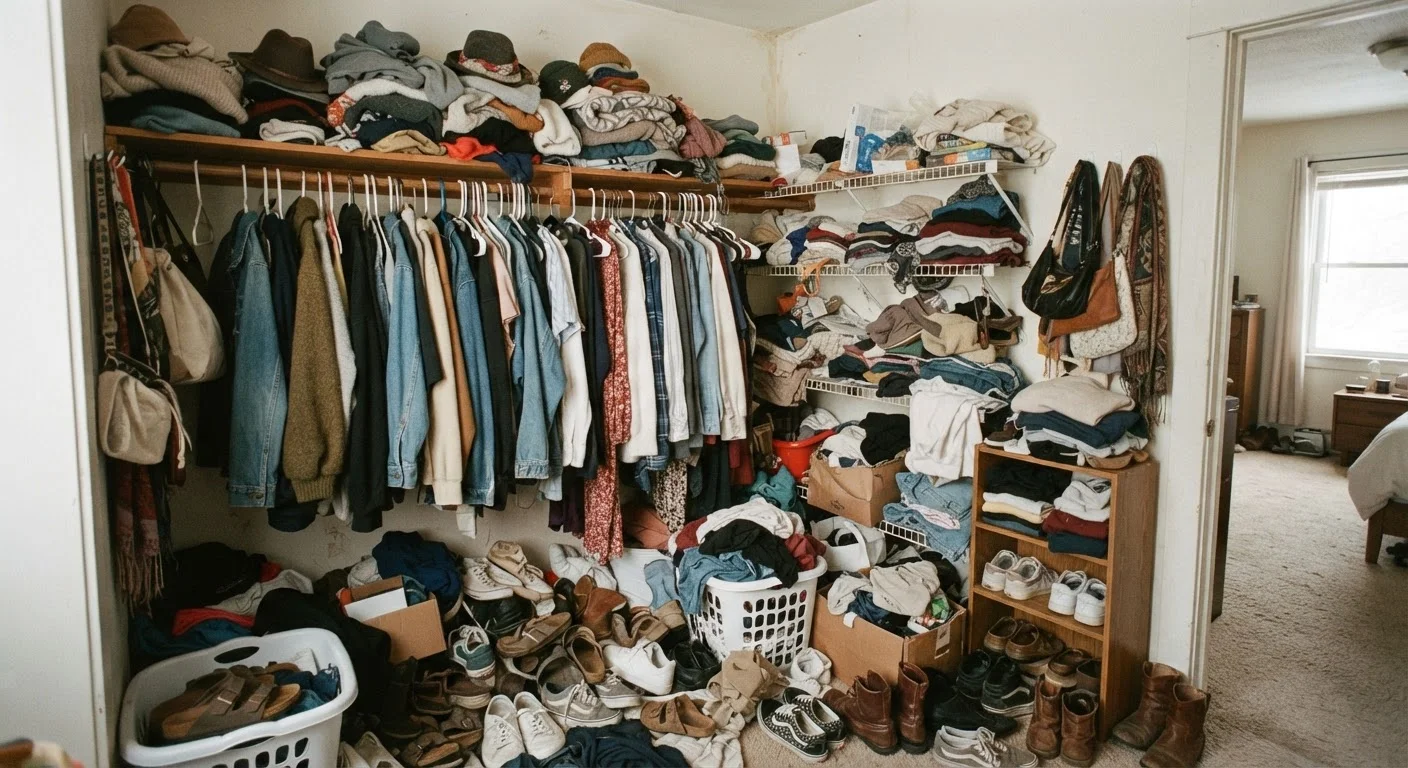
The Real Reason Your Closet Keeps Falling Apart
You spent a Saturday reorganizing your closet - folding everything neatly, grouping clothes by type, maybe adding a few bins. Three weeks later, it looks worse than before. Sound familiar?
The problem usually isn't willpower or time. It's that most closet systems are designed around an idealized version of daily life rather than the real one. When returning a shirt to its proper place takes more than a second or two of thought, most people don't bother - and the pile starts forming.
Understanding why disorganization returns is the first step toward building a system that actually holds. The mistakes below are among the most common culprits, and all of them are fixable without a complete renovation.
Organizing without first removing the excess.
Why it happens: It feels faster to rearrange than to make decisions about what to keep, so people skip the decluttering step entirely.
Creating categories that are too broad or too vague.
Why it happens: Broad zones like "tops" or "misc" feel intuitive at first but don't give items a specific enough home, so things drift.
Storing items based on what fits rather than how often you use them.
Why it happens: When setting up storage, most people fill available space without considering frequency of access.
Skipping a one-in-one-out rule after the initial overhaul.
Why it happens: After a big organizing session, the closet feels spacious - so new purchases get added without anything leaving.
Building a system designed for the ideal self, not the real one.
Why it happens: It's tempting to organize for aspirational habits - color-coded hangers, elaborate folding methods - that don't survive daily life.
Building a System That Lasts
A closet that stays organized is one that works with your habits, not against them. That means designing around how you actually use the space - not how a magazine spread or storage company suggests you should.
Start by observing your real patterns for a week before making any changes. Where do clothes pile up? What items do you reach for daily versus seasonally? The answers tell you more about your ideal layout than any pre-packaged organizing system.
Don't Skip Decluttering Before Reorganizing
Adding storage solutions - bins, dividers, extra hangers - to an overloaded closet rarely solves the problem. If there are simply too many items for the space, more containers just relocate the chaos. Reduce volume first, then organize what remains.
Once you've built a better system, the maintenance piece matters just as much. Short daily resets - spending two minutes at the end of the day returning items to their spots - consistently outperform occasional deep-clean sessions. For more strategies on keeping organized spaces from reverting, see habits that prevent clutter from returning.
If your whole home feels like it needs attention, not just your closet, starting from scratch with an organized home can help you prioritize where to begin. And if a chaotic closet is just one of several trouble spots, similar principles apply to spaces like getting a junk drawer under control.
The content on this site is provided for informational purposes only and should not be considered a substitute for professional advice. While we strive to provide accurate and up-to-date information, we make no guarantees regarding its completeness or accuracy. Always consult a qualified professional for advice specific to your circumstances before making any decisions.