

Why Organization Vocabulary Matters
Professional organizers speak a shorthand that can feel like a foreign language the first time you hear it. Terms like decanting, dead space, and zoning come up constantly in organizing guides and videos - but they're rarely defined for the reader who just wants a tidier home.
Understanding these concepts makes the advice stick. Once you know what a zone is, you'll start spotting the missing ones in your own kitchen. Once you understand dead space, you'll stop walking past wasted square footage every day. This glossary explains the terms professional organizers use most, in plain language you can put to work right away.
If you're ready to move beyond definitions and into action, our beginner's guide to getting started walks through the first practical steps for any household.
Zoning
Dividing a room into dedicated areas, each serving a specific activity or category of items. Intentional zones reduce the effort needed for everyday tasks by keeping related items together.
Decanting
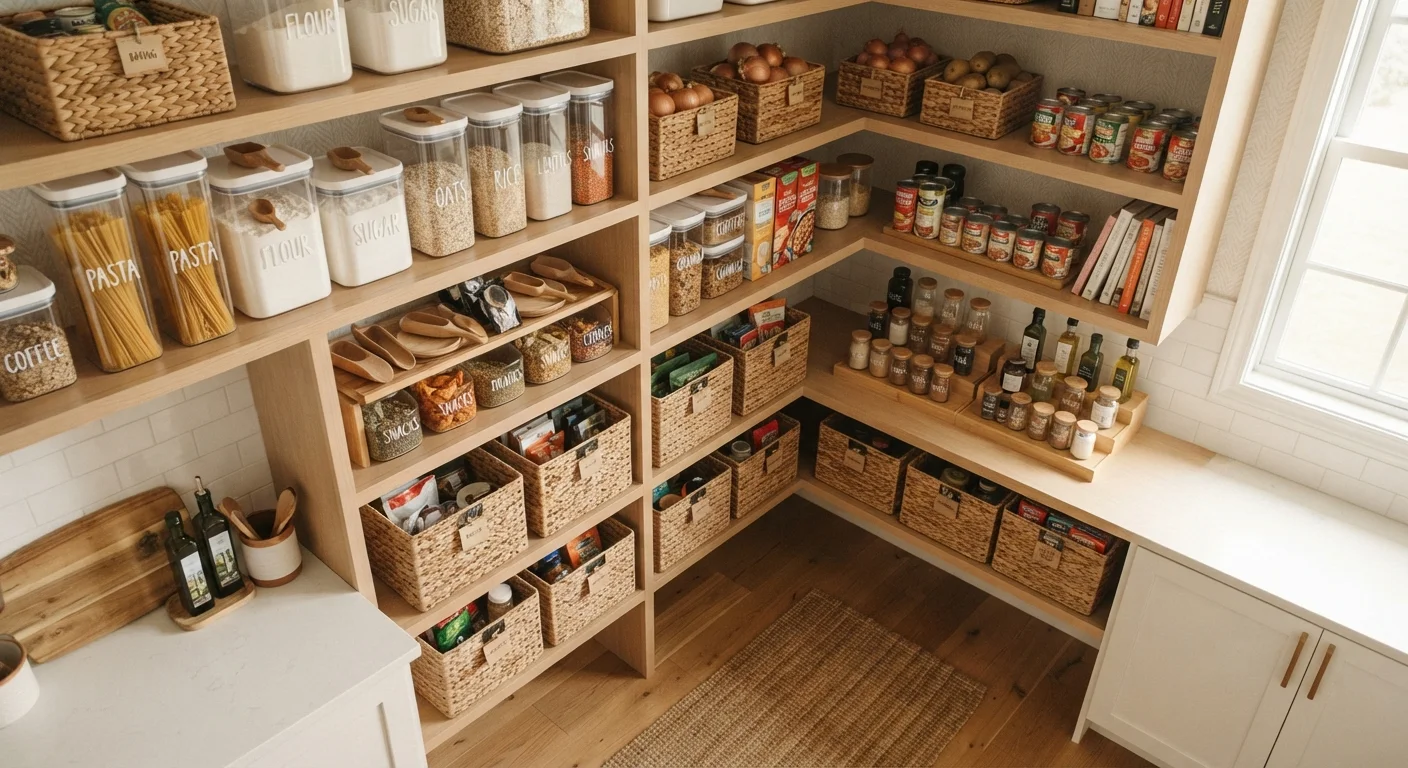
Transferring items from original packaging into uniform, reusable containers. Decanting improves visibility, maximizes shelf space, and creates a more consistent look in storage areas.
Dead Space
Areas in a home that are currently unused or underused - deep cabinet corners, narrow side gaps, or wall space above fixtures. Identifying dead space is the first step to either activating or intentionally leaving it empty.
Negative Space
Deliberately empty areas within a storage system or room. Negative space keeps organized areas from becoming overcrowded and gives a system room to absorb new items without breaking down.
Editing
The decision-making phase of decluttering - reviewing categorized items and choosing what to keep, donate, or discard. Editing is most effective after categorizing, not during it.
Categorizing
Sorting items into like groups before assigning them a storage location. Categorizing reveals how much of any one type of item you actually own, which informs both editing and zone assignments.
One-In, One-Out Rule
A maintenance habit where one existing item leaves the home for every comparable new item that enters. It's designed to prevent slow accumulation from reversing organized spaces over time.
Containerizing
Using bins, baskets, trays, or other containers to corral groups of similar items within a zone. Containers create visible boundaries that make it easy to return items to their correct location.
Core Concepts in Plain English
Most home organization strategies rest on a handful of repeating ideas. Recognizing them helps you apply advice from any source more confidently.
| Most common organizing mistake | Buying storage containers before editing and categorizing |
| Most underused storage dimension | Vertical wall space above eye level |
| Where decanting helps most | Pantries, bathroom cabinets, linen closets |
| Recommended order of operations | Categorize → Edit → Assign zones → Containerize |
| Purpose of negative space | Prevents systems from overcrowding; maintains long-term order |
Zoning
A zone is any area of your home dedicated to a specific activity or category of items. Your kitchen likely has an informal coffee zone near the kettle and a cooking zone near the stove - even if you've never called them that. Making zones intentional means grouping related items together so every task has a home base. Zones reduce the friction of daily routines and cut down on searching.
Decanting
Decanting means transferring items from their original packaging into uniform, reusable containers. Cereal from the box into a sealed canister, pasta from the bag into a clear jar. The benefits are practical: standardized containers stack better, take up less space, stay sealed longer, and let you see exactly what you have at a glance. Decanting works especially well in pantries, linen closets, and bathroom cabinets.
Dead Space
Dead space is any area in your home that currently holds nothing useful - or holds items so rarely used that the space is effectively wasted. The corner of a deep cabinet, the wall above a toilet, the gap beside the refrigerator. Identifying dead space is a quick win: once you see it, you can choose to activate it with storage solutions or leave it deliberately empty as breathing room. Thinking vertically is one of the most effective ways to reclaim dead space on walls and in tall cabinets.
The One-In, One-Out Rule
A behavioral guideline rather than a storage method: for every new item that enters your home, one comparable item leaves. It's a simple discipline that prevents gradual accumulation from undoing organized spaces.
Negative Space
In organization, negative space refers to intentional emptiness - shelf room left open, a clear countertop, a drawer that isn't packed full. It's not wasted space; it's the breathing room that keeps a system from collapsing under its own weight. Organized homes that stay organized almost always have some built-in negative space.
Categorizing vs. Editing
Categorizing is the sorting phase - grouping like with like before deciding where things live. Editing is the decision phase - choosing what to keep, donate, or discard. Many people try to do both simultaneously and get stuck. Professional organizers typically categorize first, then edit, then assign homes to what remains. For a closer look at how this plays out in a specific high-stakes situation, see decluttering before a move vs. decluttering in place.
Putting the Terms Together
These concepts work best as a system, not in isolation. A typical organizing session might look like this: identify the zones a room needs, categorize everything currently in the space, edit down to what you're keeping, decant where it makes sense, assign items to their zones, and then look critically at dead space and negative space to finalize storage placement.
When you're ready to apply this framework across your entire home, our room-by-room organization guide takes you through every space from entryway to garage using these exact principles.
Organization terminology isn't jargon for its own sake - each term names a real concept that solves a real problem. Once the vocabulary clicks, the advice you'll find anywhere becomes far easier to act on.
The content on this site is provided for informational purposes only and should not be considered a substitute for professional advice. While we strive to provide accurate and up-to-date information, we make no guarantees regarding its completeness or accuracy. Always consult a qualified professional for advice specific to your circumstances before making any decisions.