

Why Mirrors Have Limits
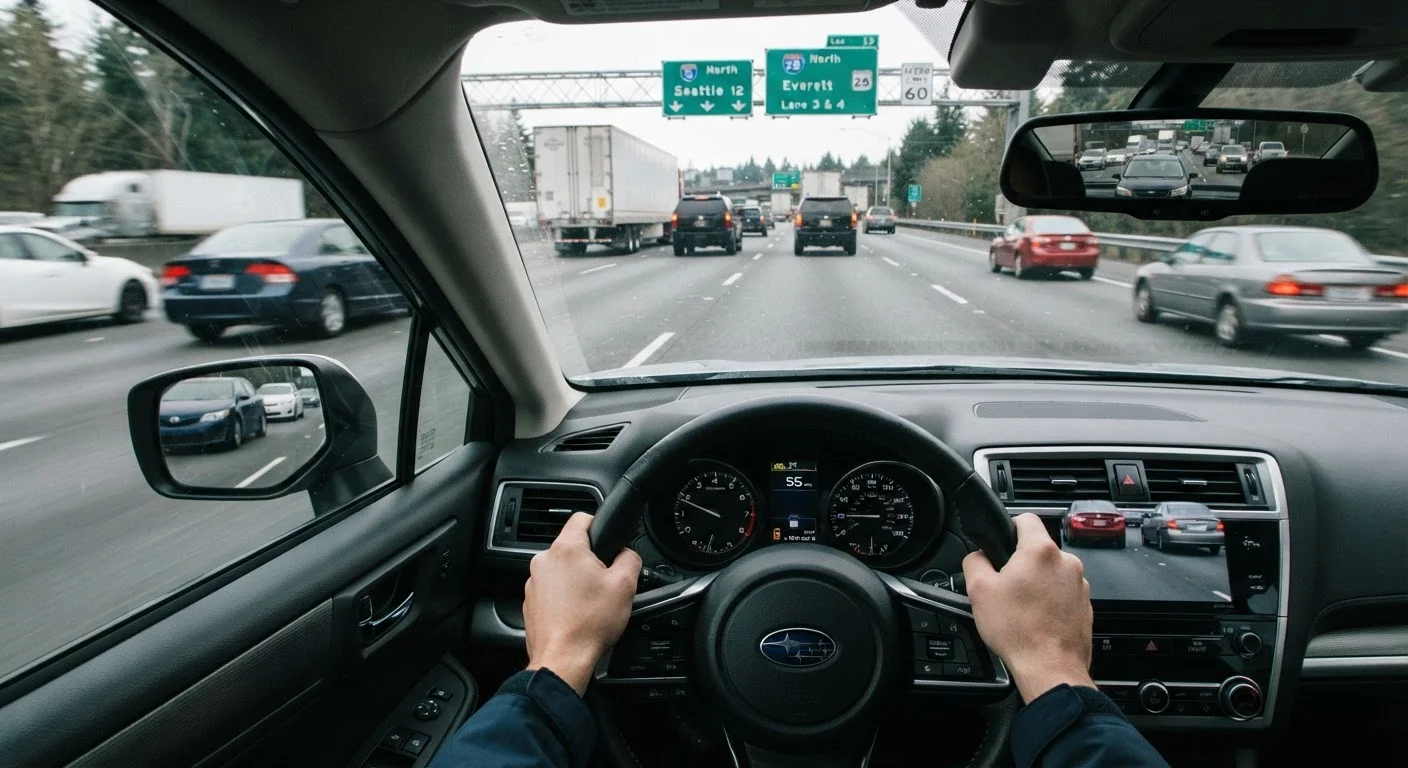
Most drivers trust their mirrors instinctively - and mirrors do an enormous amount of work. A properly adjusted mirror setup gives you a wide view of traffic behind and to the sides of your vehicle. The problem is geometry: no flat or slightly curved mirror can capture a full 360-degree view from a fixed position on your car's body.
When you sit in the driver's seat, your rearview mirror captures the area directly behind you. Each side mirror covers a wedge of space to either side. But between those wedges and your direct forward view, there are zones - typically on the rear-left and rear-right quarters - that fall into neither. That's where blind spots live.
The size of those zones depends on several factors: how your mirrors are adjusted, the shape of your vehicle's rear pillars and windows, your own seating height, and whether you're driving a compact sedan or a full-size pickup. Blind spots on SUVs and trucks can be dramatically larger than those on smaller passenger cars.
Mirror Adjustment Varies by Vehicle
Some vehicles have convex (curved) side mirrors that offer a wider field of view at the cost of making objects appear farther away than they are - a trade-off noted on the mirror itself. Other vehicles offer power-adjustable or auto-dimming mirrors. Whatever your setup, taking a few minutes to properly position mirrors before driving is worth the effort, especially if multiple people share the vehicle.
The Geometry of a Blind Spot
Picture your vehicle from above. Your rearview mirror creates a narrow corridor of visibility directly behind you. Each side mirror creates an angled corridor extending backward and outward. Where those corridors end - before your peripheral vision picks up - is your blind zone.
On a typical four-door sedan, the blind zones sit roughly at the 8 o'clock and 4 o'clock positions relative to the driver, extending from just behind the rear doors outward. A vehicle traveling in the adjacent lane at a similar speed can sit entirely within that zone for several seconds - invisible to both mirrors and your forward field of view - while you consider a lane change.
Motorcycles are particularly prone to disappearing in these zones. Their narrow profile means they occupy far less visual space than a car, making them easy to overlook even when a driver does glance at a mirror. This is one reason lane-change crashes involving motorcycles are disproportionately common. See our guide to sharing the road with motorcycles and cyclists for more on keeping vulnerable road users visible in your mind.
~840,000
Annual U.S. blind spot crashes estimated
The National Highway Traffic Safety Administration has cited hundreds of thousands of blind spot-related crashes annually in the United States, making it one of the most common crash causes.
2018
Year backup cameras became federally required
The U.S. federal government mandated rearview cameras on all new passenger vehicles starting with model year 2018, specifically to address rear blind zone dangers.
~4x
Larger blind zones on large trucks vs. sedans
Commercial trucks have substantially larger no-zones on all sides than passenger cars, according to the Federal Motor Carrier Safety Administration's public safety guidance.
How to Actually Manage Blind Spots
The most reliable technique remains the shoulder check - physically turning your head to look into the blind zone before moving into another lane. This takes a fraction of a second and directly confirms whether the space is clear. It is simple, free, and works regardless of vehicle type or technology.
Mirror adjustment also matters more than most drivers realize. The Society of Automotive Engineers has long recommended positioning side mirrors so your car's own body is barely visible at the inner edge of the mirror - rather than prominently centered. This angles the mirror further outward, extending its coverage deeper into the adjacent lane rather than showing you a redundant view of your own door.
Blind spot monitoring (BSM) systems, now common on newer vehicles, use radar or ultrasonic sensors to detect vehicles in adjacent lanes and alert you with a warning light in or near the mirror housing. These are genuinely useful - but they have documented limitations. Some systems respond slowly to fast-approaching vehicles or may not detect narrow objects like cyclists. Treating BSM as a backup to active checking, not a substitute for it, is the approach consistently recommended by safety researchers.
Build the Shoulder Check Into Every Lane Change
Make the physical head turn a non-negotiable part of your lane-change sequence, not an occasional extra step. Practice it every time - even when your mirrors look clear and your blind spot monitoring light is off. Consistent habits are what protect you when conditions are less than ideal.
Lane changes should also follow a consistent sequence: signal early, check mirrors, perform a shoulder check, and then move - in that order, every time. Rushing any step of that sequence is where crashes happen. Our article on aggressive driving habits drivers often miss covers how impatience and lane-change cutting can escalate risk in ways drivers rarely recognize in themselves.
Blind Spots Beyond Your Own Vehicle
Managing your own blind spots is only half the picture. You also exist in other drivers' blind spots - and understanding that changes how you position yourself in traffic.
Large commercial trucks have blind zones on all four sides. The Federal Motor Carrier Safety Administration describes a no-zone area directly in front of the cab, immediately behind the trailer, and alongside both doors extending back through much of the trailer's length. Lingering in any of these positions means the truck driver may have no awareness of your presence.
The same principle applies to following too closely behind any vehicle. Tailgating reduces your forward visibility, increases stopping distance risk, and keeps you in the blind spot of the vehicle ahead. Maintaining adequate following distance gives you sightlines, reaction time, and visibility - on both ends of the equation.
At night, blind spots become even harder to manage. Reduced contrast and glare from oncoming headlights make it more difficult to spot movement in adjacent lanes, even when you do perform a shoulder check. Our guide to night driving hazards explores how darkness amplifies visibility challenges beyond just blind spots.
Frequently Asked Questions
The main blind spots on most passenger vehicles are on the rear-left and rear-right sides - roughly the zones behind each rear pillar that mirrors don't fully capture. There is also a smaller rear blind spot directly behind the vehicle. The exact size depends on the car's design, window shape, and mirror adjustment.
Correct mirror adjustment significantly reduces blind spots but does not eliminate them entirely. The Society of Automotive Engineers recommends angling side mirrors outward so your own vehicle's side is barely visible - this extends coverage further into adjacent lanes. A quick shoulder check remains necessary before any lane change.
No. Blind spot monitoring systems are a useful safety aid, but they have limitations - they can miss fast-approaching vehicles, cyclists, or motorcycles in certain conditions. Driver education groups and safety researchers consistently recommend treating these systems as a supplement to, not a replacement for, active driver checking.
Yes. Taller vehicles with longer hoods and higher ride heights have larger front and rear blind spots compared to sedans. This is why backup cameras are now federally required on all new passenger vehicles sold in the U.S. as of 2018 - to address the rear blind zone specifically.
A common rule of thumb is: if you can see the other driver's face in their side mirror, they can likely see you. If you cannot see their mirror at all, you are almost certainly in their blind spot. When driving near large trucks, assume their blind spots are substantial and avoid lingering beside them.
The content on this site is provided for informational purposes only and should not be considered a substitute for professional advice. While we strive to provide accurate and up-to-date information, we make no guarantees regarding its completeness or accuracy. Always consult a qualified professional for advice specific to your circumstances before making any decisions.