

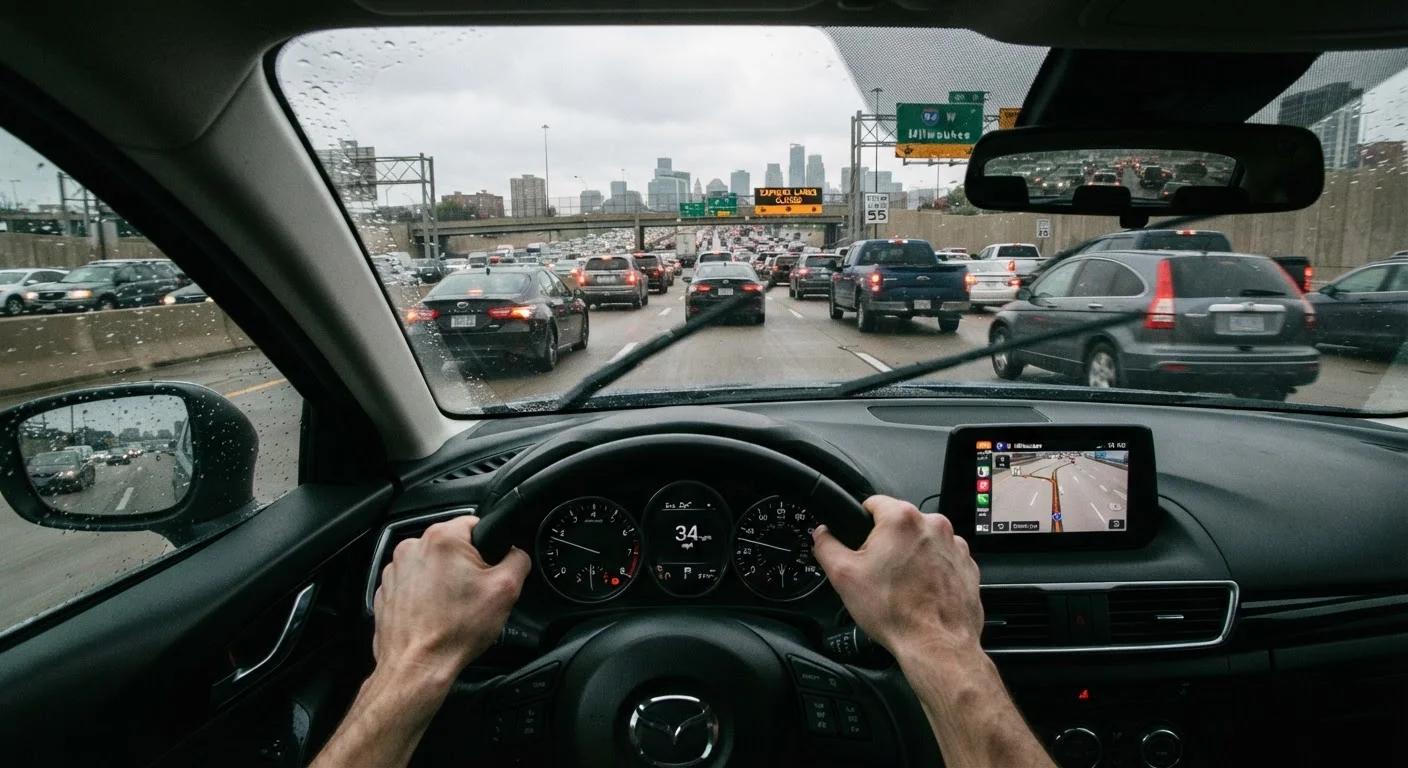
Why Aggressive Driving Is Easier to Miss Than You Think
Most drivers picture aggressive driving as road rage - screaming, obscene gestures, or deliberate confrontation. But according to the National Highway Traffic Safety Administration (NHTSA), aggressive driving encompasses a much broader range of behaviors, including speeding, unsafe lane changes, and failure to yield. The gap between the dramatic image and the everyday reality is exactly why so many drivers engage in these behaviors without realizing it.
The key mechanism is normalization. Habits that begin as responses to urgency - running five minutes late, trying to get ahead of a merge - gradually become default behavior. Once a driving style feels normal to you, it rarely triggers self-awareness. Meanwhile, the risk it creates for others on the road is very real. Defensive driving principles offer a useful counterpoint: they require active awareness of how your choices affect everyone around you, not just your own immediate goal.
Stress Doesn't Excuse Risk
Running late, a difficult day at work, or frustration with other drivers are among the most common triggers for aggressive behavior behind the wheel. While these feelings are understandable, they don't change the physics of stopping distances or the vulnerability of others on the road. Recognizing emotional triggers before you start driving - and building in extra time - is one of the most effective ways to interrupt the pattern.
Common Aggressive Habits Drivers Rarely Admit To
The following mistakes represent the most frequently unrecognized forms of aggressive driving. Each one feels justifiable in the moment - which is precisely what makes them worth examining honestly.
Rolling through stop signs and treating them as yield signs, especially in low-traffic areas.
Why it happens: Drivers rationalize that if no cars are visible, a full stop is unnecessary. Repeated without consequence, this becomes automatic.
Following the vehicle ahead more closely than conditions safely allow.
Why it happens: Drivers focus on their own desired speed rather than the gap needed to stop safely. Time pressure intensifies the urge to close the gap.
Blocking other drivers from merging or changing lanes by speeding up to close a gap.
Why it happens: Many drivers perceive merging as losing position in traffic and respond competitively, often without consciously choosing to be aggressive.
Flashing high beams at other drivers to express frustration or pressure them to move.
Why it happens: Drivers feel anonymized inside a vehicle and use light or horn as a surrogate voice. It feels less confrontational than it actually is.
Accelerating through yellow or newly red lights rather than preparing to stop.
Why it happens: Drivers calculate that stopping will cost them time, especially if they're already late. The behavior is reinforced when it goes consequence-free.
Weaving between lanes repeatedly to gain small time advantages in congested traffic.
Why it happens: Lane-switching feels productive during congestion, even when studies consistently show it produces minimal time savings and increases crash exposure.
It's also worth noting that aggressive habits don't always stay behind the wheel. Patterns that feel like relief but deepen stress in other areas of life can show up on the road too - using speed or dominance as an emotional outlet rather than a practical necessity.
What the Data Says About These Behaviors
56%
Fatal crashes linked to aggressive driving
The AAA Foundation for Traffic Safety has attributed aggressive driving behavior to more than half of all U.S. traffic fatalities in studies examining crash causation.
3 sec
Minimum safe following distance at highway speed
Traffic safety researchers and the NHTSA recommend at least a three-second gap behind the vehicle ahead, increasing to four or more seconds in adverse conditions.
~7 mph
Average time gained by chronic lane-weaving
Research by transportation engineers has found that repeated lane-switching in congestion typically yields speed gains of only a few miles per hour on average, far below driver expectations.
Aggressive driving is a contributing factor in a significant share of U.S. traffic fatalities each year, according to NHTSA research. Tailgating alone dramatically compresses the time a driver has to react to sudden stops - a risk that grows even larger at highway speeds. See why following too closely is more dangerous than it feels for a detailed breakdown of stopping distances by speed.
Aggressive lane changes are another underappreciated source of crashes. Poor merging technique and abrupt cuts without proper signaling contribute to multi-vehicle collisions on highways. How lane changes go wrong explains the correct approach for entering traffic safely. These risks multiply when vulnerable road users are involved - motorcyclists, cyclists, and pedestrians have far less protection if an aggressive driver misjudges a gap.
Aggressive Driving Can Have Legal Consequences
In many U.S. states, aggressive driving is a codified traffic offense - not just a description of bad behavior. Depending on the jurisdiction, it can result in significant fines, points on a license, mandatory driving courses, or in more serious cases, reckless driving charges. If an aggressive driving incident contributes to a crash, civil and criminal liability may follow. Knowing the legal framework in your state is part of being an informed driver.
The content on this site is provided for informational purposes only and should not be considered a substitute for professional advice. While we strive to provide accurate and up-to-date information, we make no guarantees regarding its completeness or accuracy. Always consult a qualified professional for advice specific to your circumstances before making any decisions.