

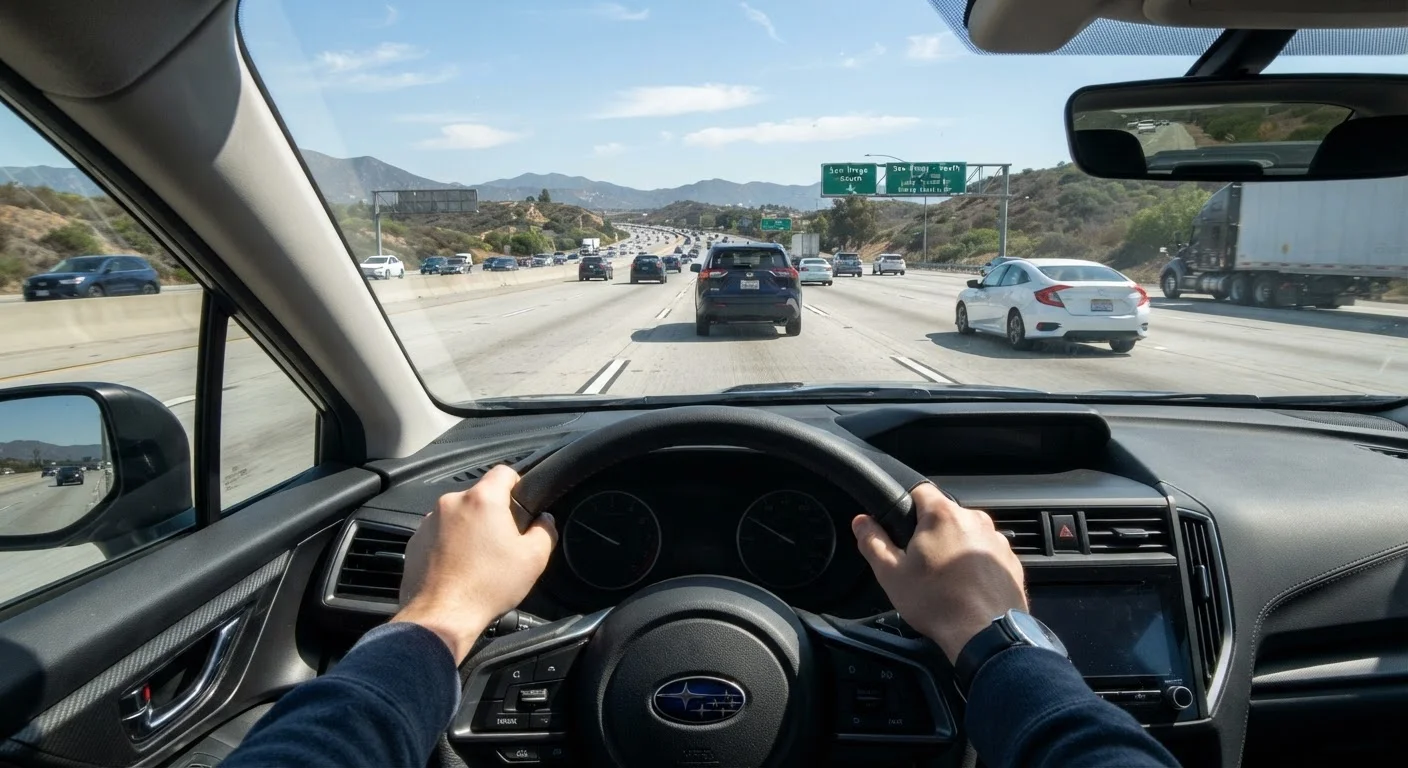
Beyond the Rules: What Defensive Driving Actually Means
Most drivers understand that they should follow traffic signals, use turn signals, and observe speed limits. But traffic laws describe the minimum required behavior - they don't account for the unpredictability of other drivers, sudden road hazards, or the split-second decisions that separate a near-miss from a collision.
Defensive driving fills that gap. It's an active, anticipatory approach to operating a vehicle. A defensive driver isn't reacting to what's happening directly in front of them - they're reading conditions ahead, monitoring surrounding traffic, and making small adjustments that prevent problems from arising in the first place.
This mindset contrasts directly with aggressive driving habits that many drivers don't recognize in themselves - behaviors like following too closely, cutting off other vehicles, or accelerating through yellow lights. Defensive driving is the deliberate opposite of that pattern.
The 3-Second Rule as a Starting Point
A widely taught guideline recommends maintaining at least a 3-second following distance behind the vehicle ahead. Pick a fixed point - a sign or lane marker - and count how many seconds pass between when the car ahead passes it and when you do. In adverse conditions, extend that gap to 4-6 seconds. This single habit gives you a meaningful reaction buffer at almost any speed.
The Core Principles Defensive Drivers Practice
Scan ahead, not just at the car in front of you. Experienced drivers look 10-15 seconds ahead on the road - roughly a city block at typical speeds. This gives them time to process developing situations rather than reacting at the last moment.
Maintain space in every direction. The space cushion around your vehicle is your margin for error. Reducing that cushion - by tailgating or merging too tightly - leaves no room for correction. Our detailed look at why following too closely is more dangerous than it feels explains the stopping-distance physics behind this.
Assume others will make mistakes. Defensive drivers don't trust that the car at a stop sign will actually stop, or that a merging driver has checked their mirrors. Building in that assumption means you're rarely caught off guard.
Eliminate distraction before it eliminates your options. Reacting to a hazard requires full attention. Distracted driving and impaired driving both degrade reaction time in ways that make defensive driving impossible to execute.
~94%
Crashes involving human error as a factor
According to the National Highway Traffic Safety Administration, the vast majority of motor vehicle crashes involve human choice or error as a critical factor.
3 seconds
Minimum recommended following distance
Traffic safety educators widely recommend a minimum 3-second gap, extended in poor weather - a guideline that gives drivers measurable reaction time.
40,000+
Annual U.S. traffic fatalities
The NHTSA consistently reports over 40,000 deaths annually on American roads, underscoring why proactive driving habits have real public safety consequences.
Conditions That Demand Extra Vigilance
Defensive driving isn't only for bad weather or rush-hour traffic - though those conditions genuinely raise the stakes. Rain, fog, and ice reduce traction and visibility, requiring increased following distances and lower speeds. Night driving limits your ability to spot hazards early, making the scanning habit even more valuable.
Fatigue is among the most underestimated threats to defensive driving. A tired driver cannot maintain the sustained attention the approach demands. If you recognize signs of drowsiness, knowing when to stop driving is itself a defensive decision.
Intersections account for a disproportionate share of crashes. Defensive drivers treat green lights as permission to proceed, not as a guarantee that other drivers have stopped. A brief scan left, right, and left again before entering an intersection is a habit that costs nothing and can prevent serious harm.
Building the Habit: How Defensive Driving Develops Over Time
Formal defensive driving courses - offered through organizations like the National Safety Council and AAA - teach these principles in structured formats, often satisfying court requirements or qualifying drivers for insurance considerations. But the principles themselves can be practiced during any drive.
New drivers benefit enormously from learning these habits early. Graduated licensing programs are partly structured around giving new drivers time to build foundational skills before introducing high-risk conditions - a system explained in detail in our overview of teen drivers and graduated licensing.
Even experienced drivers benefit from periodic self-assessment. Habits drift over time, and familiarity can breed complacency. Asking yourself - honestly - whether you maintain proper following distances, avoid phone use, and check mirrors consistently is a useful check on whether your driving has stayed defensive or gradually slipped toward routine inattention.
A driver approaching a green light notices a large truck slowing near the cross street. Rather than accelerating, they ease off the gas and verify the intersection is clear before proceeding.
On a rain-slicked freeway, a commuter increases her following distance from 3 seconds to 5 seconds behind the vehicle ahead and moves out of a lane next to an erratically changing truck.
A driver notices he's been yawning repeatedly on a long highway trip and pulls off at the next rest stop rather than continuing.
At a busy urban intersection, a driver waits an extra moment after the light turns green, checking for late red-light runners before moving forward.
Frequently Asked Questions
They overlap significantly, but defensive driving is a more proactive concept. Safe driving often means following rules; defensive driving means actively anticipating what could go wrong and adjusting your behavior before a hazard develops into a crash.
Many insurers offer discounts to drivers who complete approved defensive driving courses, though eligibility and discount amounts vary by provider and state. Check directly with your insurer for specifics on what qualifies in your situation.
Most road safety educators emphasize maintaining adequate space around your vehicle as foundational. A proper following distance gives you time and room to react before a collision becomes unavoidable.
Defensive driving applies on every road type. Highway speeds mean smaller reaction windows, making hazard anticipation even more critical. City driving introduces pedestrians, cyclists, and complex intersections that require constant alertness.
Aggressive driving prioritizes speed and convenience over safety, often involving tailgating, abrupt lane changes, or ignoring signals. Defensive driving does the opposite - it prioritizes safety margins, predictability, and awareness of others.
The content on this site is provided for informational purposes only and should not be considered a substitute for professional advice. While we strive to provide accurate and up-to-date information, we make no guarantees regarding its completeness or accuracy. Always consult a qualified professional for advice specific to your circumstances before making any decisions.