

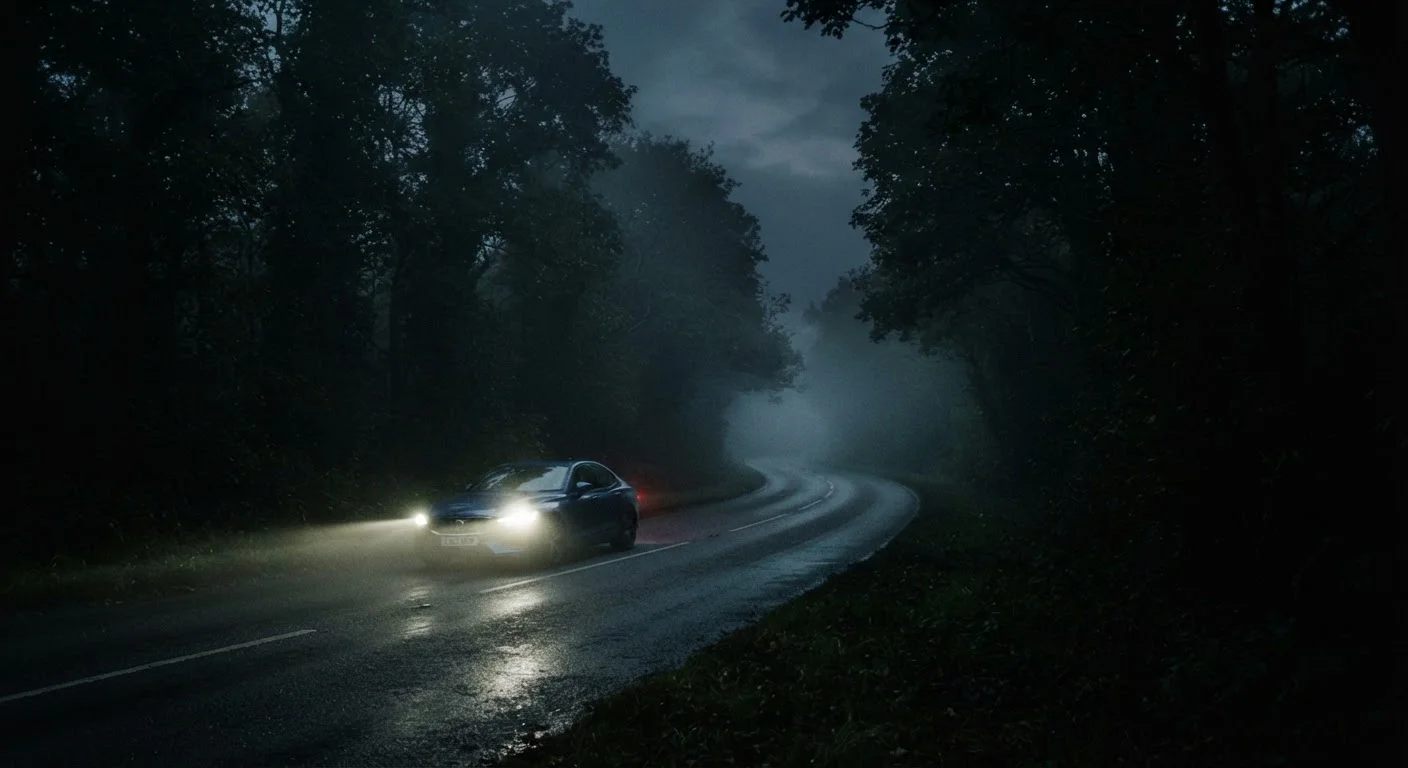
Why Night Driving Is More Dangerous Than It Feels
Most drivers feel comfortable behind the wheel at night - they've done it hundreds of times. That familiarity can be deceiving. According to the National Safety Council, traffic fatality rates are roughly three times higher at night than during daylight hours, even though fewer vehicles are on the road. The combination of reduced visibility, physiological changes in how our eyes perform in low light, and a higher concentration of impaired or fatigued drivers creates a risk environment that looks ordinary but isn't.
The hazards covered below aren't exotic edge cases. They're patterns that routinely catch experienced drivers off guard - often because they've never been formally taught to watch for them. Understanding each one is the first step toward adjusting your driving behavior to match the actual risk, not the perceived one.
Check Your Headlights Before Driving After Dark
Oxidized or fogged headlight lenses can cut light output by up to 80 percent, dramatically shortening how far ahead you can see. Inspect your lenses regularly and consider restoration if they appear yellowed or hazy. Also confirm both low and high beams are functioning - a single burned-out bulb is easy to miss during daylight driving.
Night Driving Hazards to Take Seriously
Reduced Depth Perception and Peripheral Vision
Human eyes rely on cone cells for color and detail and rod cells for low-light sensitivity. At night, the shift toward rod-dominant vision narrows your effective visual field and degrades depth perception - meaning you're less accurate at judging how far away objects are and less likely to notice movement at the edges of your field of view. This is not a correctable problem with glasses; it's a physiological limitation that affects every driver regardless of prescription.
The practical implication: objects you'd confidently judge in daylight - the gap before a merge, the distance to a pedestrian, the curve ahead - require more mental effort and more margin at night.
Night vision narrows your visual field and reduces depth perception for every driver, regardless of corrective lenses.
Overdriving Your Headlights
Standard low-beam headlights typically illuminate about 160 feet ahead. At 60 mph, a vehicle travels approximately 88 feet per second - meaning your total stopping distance under ideal conditions can exceed what your headlights actually reveal. This is called overdriving your headlights: moving faster than you can safely respond to what's visible in the beam.
Many drivers don't register this as a problem because roads ahead often appear clear. But a stopped vehicle, a large animal, or road debris can appear at the edge of that light cone with almost no time to react. Reducing speed at night - particularly on unlit rural roads - directly addresses this gap. Rural nighttime driving presents its own layered risk profile, as explored in this comparison of urban and rural road conditions.
If you're driving faster than your headlights can reveal hazards, your stopping distance exceeds your sight distance.
Glare from Oncoming Headlights
Oncoming headlights - particularly high-intensity LED and HID systems - can cause temporary blindness lasting several seconds after the vehicle passes. This effect is more pronounced for older drivers, whose eyes take longer to readapt to darkness after glare exposure. Looking slightly toward the right edge of the lane markings rather than directly at oncoming lights can help maintain lane awareness without staring into the source.
Using your night vision setting on your rearview mirror (the small lever or button on the back of most mirrors) also reduces the impact of high-mounted headlights from vehicles following closely behind you.
Glare from modern LED headlights can temporarily blind you for several seconds - never stare directly at oncoming lights.
Higher Concentration of Impaired and Drowsy Drivers
Weekend nights between midnight and 3 a.m. see disproportionately high rates of alcohol- and drug-impaired drivers. But impairment isn't the only concern - fatigue produces deficits in reaction time and judgment that closely parallel those caused by alcohol. The late-night hours align with the body's natural dip in circadian alertness, meaning even drivers who haven't consumed anything may be significantly impaired by sleepiness alone.
Recognizing the behavioral signs of other impaired or fatigued drivers - weaving, inconsistent speed, delayed responses to signals - gives you time to create distance. Our in-depth guide on distracted versus impaired driving risks explains how these different forms of impairment affect reaction time and decision-making.
Late-night roads concentrate both alcohol-impaired and drowsy drivers - two of the most dangerous impairment types combined.
Wildlife and Road Debris
Deer, raccoons, and other wildlife are most active at dawn, dusk, and overnight - exactly when visibility is lowest. A deer crossing a dark highway can appear with less than a second of warning, particularly when vehicles approach from a straight stretch at highway speed. High-beam use where safe and legally appropriate gives meaningful extra distance to react.
Road debris is similarly underestimated. Tire remnants, fallen cargo, and unsecured loads are difficult to see in the narrow cone of low-beam headlights, and swerving to avoid them at speed introduces its own rollover and collision risk. Maintaining following distance - more than you think you need - gives you additional time to identify and respond to stationary hazards.
Wildlife and road debris at night can appear within less than a second of warning at highway speeds.
Faded Lane Markings and Missing Road Signs
Lane markings that are clearly visible in daylight often become difficult to read at night, especially on older or high-traffic roads. Without contrast from ambient light, worn paint nearly disappears in certain headlight angles, particularly in wet conditions. Drivers who unconsciously rely on lane markings to guide their positioning may drift without realizing it.
Road signs also become harder to process quickly at night - your brain has less time to read and interpret them before you've passed. Familiarity with standard sign shapes and colors helps fill in what you can't fully read. Knowing key road signs by memory becomes more useful at night than during daylight, when you have more time to process unfamiliar markings.
Worn lane markings nearly vanish under headlights at night, making passive lane-keeping far less reliable than drivers expect.
Building Better Nighttime Habits
Awareness of these hazards is only useful when paired with practical adjustments. Slowing down - even 5 to 10 mph below your typical highway speed - expands the margin between what your headlights illuminate and where you can actually stop. Keeping your windshield and headlight lenses clean makes a measurable difference in how far and clearly you can see. And knowing when you're too tired to drive safely is one of the most protective decisions you can make; see our guide on recognizing driver fatigue for specific warning signs to watch for.
Night driving also amplifies existing blind spot risks, since the reference points you'd normally use to gauge surrounding traffic disappear in the dark. Reviewing how blind spots work and how to manage them can help you adapt your lane-change habits for low-visibility conditions. Small, deliberate changes in behavior compound over time into significantly lower risk exposure - and that's true whether you drive at night occasionally or every day.
Night Driving Adjustments Vary by Road Type
Urban streets with consistent streetlighting present different challenges than unlit rural highways, where overdriving headlights and wildlife crossings are more acute concerns. Adjust your speed, following distance, and beam selection based on the specific road environment you're in, not a single one-size-fits-all setting. What works safely in a lit suburb may be insufficient on an unlit two-lane county road.
The content on this site is provided for informational purposes only and should not be considered a substitute for professional advice. While we strive to provide accurate and up-to-date information, we make no guarantees regarding its completeness or accuracy. Always consult a qualified professional for advice specific to your circumstances before making any decisions.