

Why Arrival Day Is the Most Vulnerable Part of Any Trip
There's a romantic version of travel where you step off the plane, breathe in unfamiliar air, and let the city reveal itself to you. That version skips the part where you're exhausted, possibly disoriented by time zones, carrying all your luggage, and suddenly need to make a dozen decisions you haven't thought about.
Arrival day concentrates more potential friction than almost any other point in a trip. You're in an unfamiliar environment without established routines, and small gaps in preparation - no cash, no address written down, no transport plan - compound quickly. The good news is that these problems are almost entirely preventable with a small amount of pre-departure thinking.
For a structured approach to building a trip that handles arrival day and beyond, see our guide to building a solid travel itinerary. And if you're starting entirely from zero, this first-timer's roadmap walks through every stage.
Verify Entry Requirements Before You Book
Visa rules, passport validity requirements, and health documentation can change with little notice. Never rely on secondhand accounts or travel blogs for official entry conditions. Always check directly with the destination country's embassy or consulate and your own government's travel advisory pages before booking flights or accommodation. Arriving without valid documentation can result in being denied boarding or turned back at the border.
The Mistakes That Catch Travelers Off Guard
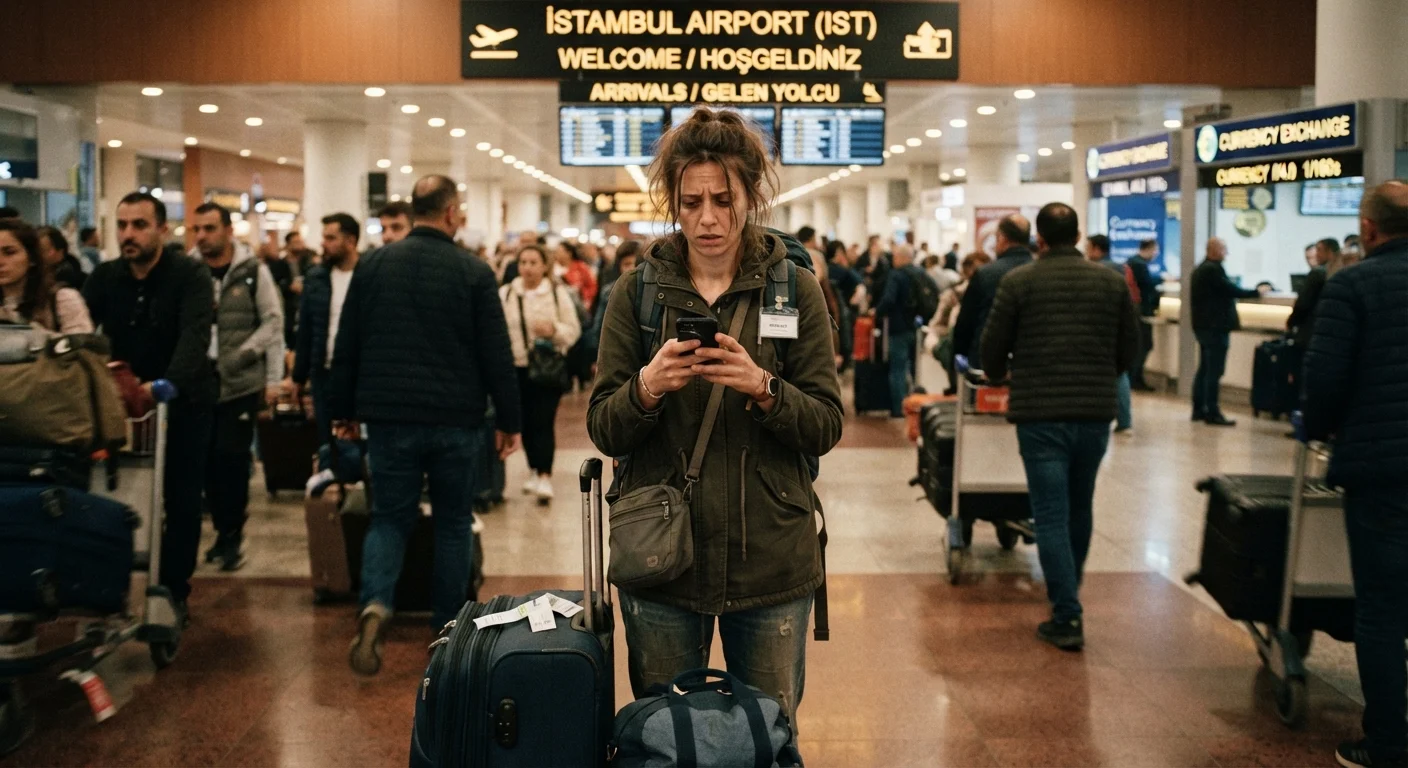
These aren't dramatic blunders - they're the quiet assumptions that feel reasonable until you're standing in an arrivals hall at midnight with a dead phone and no plan. Each one is avoidable.
Arriving without confirmed accommodation for the first night.
Why it happens: Travelers assume finding a room on arrival is easy or prefer to 'keep options open.' In practice, availability, language barriers, and exhaustion make this far harder than expected.
Having no local currency and no plan for getting it.
Why it happens: Many travelers assume cards work everywhere, or that airport ATMs will always be available and affordable. Currency exchange desks may be closed on arrival, and some destinations are still heavily cash-based.
Not knowing how to get from the airport to the city.
Why it happens: It feels like something you can Google on the way. But jet lag, no data roaming, unfamiliar signage, and competing touts make the arrivals hall a poor place to start researching transport.
Assuming your phone will work and data will be available immediately.
Why it happens: Travelers forget that international roaming may not activate instantly, SIM purchases require ID and setup time, and airport Wi-Fi can be unreliable or restricted.
Skipping any research on local safety or health conditions.
Why it happens: Excitement about the destination overshadows practical due diligence. Travelers often feel that researching risks will dampen their enthusiasm.
Airport Scams Target Unprepared Arrivals
Travelers who visibly don't know where they're going or what things should cost are disproportionately targeted by unlicensed taxi drivers and unsolicited 'helpers' in arrival halls worldwide. Knowing in advance how the airport's ground transport works - and roughly what a legitimate fare costs - dramatically reduces your exposure. Research official transfer options before you land.
For solo travelers especially, these vulnerabilities are amplified. There's no travel companion to split problem-solving with. Our article on what nobody tells first-time solo travelers covers the practical groundwork that most travel content skips entirely.
What 'Prepared' Actually Looks Like
Preparation doesn't mean a minute-by-minute itinerary or a color-coded spreadsheet. It means arriving with answers to five basic questions: Where am I sleeping tonight? How am I getting there from the airport? Do I have local currency for immediate needs? Will my phone work, or do I have offline backups? And are there any safety or health conditions I should be aware of?
~50%
Travelers who experience a problem on arrival day
Industry surveys consistently suggest roughly half of international travelers encounter at least one logistical problem - transport, accommodation, or money-related - within the first day of arrival.
3-5x
Higher cost of last-minute airport transport vs. pre-booked
Unlicensed or opportunistic airport taxis in many destinations charge several times the standard fare to travelers who haven't researched legitimate options ahead of time.
That's it. Those five answers - which might take two hours of research total - form the difference between an arrival that feels like an adventure and one that feels like a crisis. Everything else about your trip can remain spontaneous and flexible. For help estimating what your trip will realistically cost once you've landed, see our piece on planning a trip around a budget.
If something does go wrong despite your preparation - a missed connection, a lost document, an unexpected situation - knowing how to respond calmly matters just as much as avoiding problems in the first place. Our guide on handling common travel emergencies covers the most frequent scenarios with grounded, practical advice.
Explore more practical guidance in the Trip Planning hub, where you'll find everything from destination research to packing strategy.
The content on this site is provided for informational purposes only and should not be considered a substitute for professional advice. While we strive to provide accurate and up-to-date information, we make no guarantees regarding its completeness or accuracy. Always consult a qualified professional for advice specific to your circumstances before making any decisions.