

Why Coastal Towns Deserve More Than a Weekend Glance
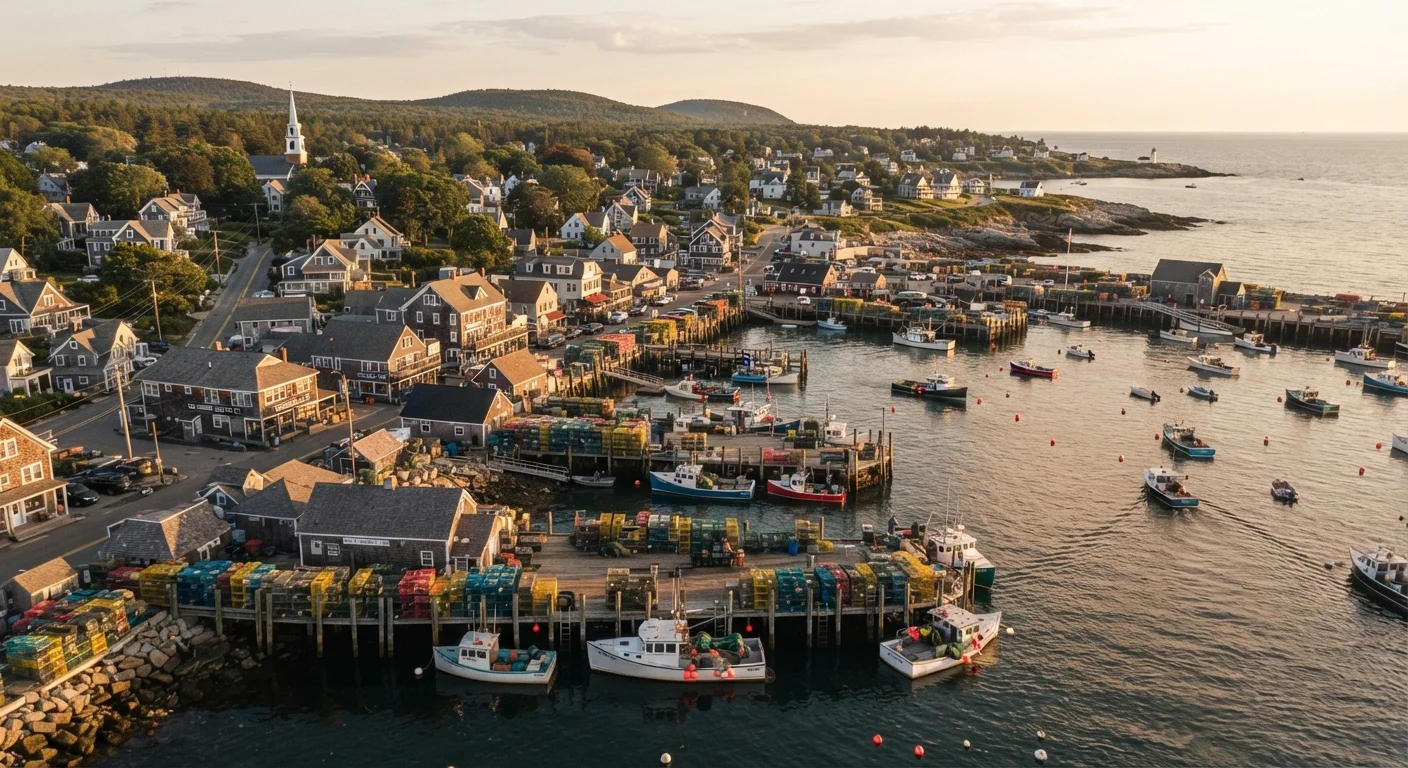
American coastal towns often appear in the same recycled frames: a lobster shack in Maine, a candy-colored row of Victorian houses in Cape May, a surf shop on the Outer Banks. The images are real enough, but they're curated - snapshots designed for maximum appeal and minimum complication. What they tend to leave out is everything that makes a place actually worth knowing.
These towns have working economies, complicated housing markets, seasonal labor dynamics, and deep local histories that existed long before tourism became their primary industry. Traveling with that in mind changes what you look for, how you plan, and what you remember. For a broader framework on how to research any destination you're considering, this practical approach to destination research covers how to verify conditions and avoid outdated sources before you book. If you're still weighing coastal against inland options, matching your travel style to a destination type offers a useful starting point.
Gloucester, Massachusetts - Still a Working Harbor
Gloucester is often romanticized as a quaint New England fishing village, but it is, in practical terms, one of the oldest continuously operating commercial fishing ports in the country. The harbor still smells like diesel and brine on weekday mornings, and the memorial to fishermen lost at sea - a weathered bronze figure gripping a ship's wheel - is not decorative. It marks real losses going back generations.
For travelers, this means Gloucester rewards curiosity over comfort-seeking. The Rocky Neck Art Colony has genuine depth, the seafood is traceable to boats you can actually see, and accommodation options range from historic inns to modest motels. Shoulder season - late September through October - strips away the day-tripper crowds and shows the town at closer to its actual scale.
Gloucester's harbor still smells like diesel on weekday mornings - that's not an aesthetic, it's a livelihood.
Apalachicola, Florida - A Gulf Town Caught Between Eras
Apalachicola sits on Florida's Forgotten Coast, a stretch deliberately kept off the interstate grid. The town built its reputation on oysters - Apalachicola Bay was once responsible for a significant share of Florida's oyster harvest - but environmental stress and overharvesting have substantially reduced that industry. The town is in transition, and travelers who understand that context will find it far more interesting than those who simply show up expecting postcard scenery.
The historic downtown has genuine 19th-century architecture, independent galleries, and a pace that feels genuinely unhurried. Accommodation leans toward small inns and vacation rentals; availability can tighten in winter when Gulf temperatures are still mild enough to draw visitors. Expect authenticity alongside uncertainty - the town is figuring out what comes next.
Apalachicola is figuring out its next chapter - travelers who notice that will have a richer visit.
Astoria, Oregon - The Pacific Northwest's Underread Port City
Astoria sits where the Columbia River meets the Pacific and has more documented history per square mile than almost any town of its size on the West Coast. It was the first permanent American settlement west of the Rockies, a detail that tends to surprise visitors who associate the region primarily with Portland or the Cascade mountains.
The Victorian hillside neighborhoods are largely intact, the maritime museum anchors a serious cultural visit, and the town's arts scene is earnest rather than curated-for-tourism. Fog is not a weather event here - it's a condition, sometimes lasting well into summer afternoons. Travelers who understand that will dress accordingly and find themselves rewarded with moody, dramatic light that photographers quietly covet.
Astoria's fog isn't a bug - it's the defining mood of the Pacific Northwest coast at its most honest.
Beaufort, North Carolina - Quiet Depth on the Southern Outer Banks
Beaufort (pronounced BOH-fort, distinct from Beaufort, South Carolina) is a small town with a serious maritime past and a working waterfront that still functions alongside tourism. The Rachel Carson Reserve sits just across Taylor's Creek, accessible by ferry, and offers one of the more genuinely wild coastal experiences available on the Eastern Seaboard - a place where wild horses have roamed barrier islands for centuries.
The town itself has well-preserved colonial-era architecture, a small but thoughtful maritime museum, and an accommodation market anchored by historic inns and B&Bs. It's an easy day trip from the busier Outer Banks resorts, but staying overnight shifts the experience considerably - the evenings are genuinely quiet, and the waterfront at dusk has a quality that day visitors never catch.
Staying overnight in Beaufort rather than day-tripping fundamentally changes what you take home from it.
Port Townsend, Washington - Victorian Ambition on Puget Sound
Port Townsend was built in the late 1800s by investors convinced it would become the major commercial hub of the Pacific Northwest. It didn't, which is precisely why its Victorian downtown is so remarkably intact - the boom stopped before anyone had reason to tear things down and rebuild. Walking the bluff-side streets today is a study in architectural ambition that outlasted its original purpose.
The town has cultivated a serious arts and crafts culture, including wooden boat building and restoration, which draws a specific kind of visitor - one interested in making things, not just consuming them. The Puget Sound setting means weather can shift quickly; layers are not optional. For context on how this Pacific Northwest coastal character compares to more desert-oriented American road trip territory, the Southwest road trip overview offers a useful geographic contrast.
Port Townsend's Victorian grandeur survived precisely because the boom it was built for never arrived.
Galveston, Texas - Resilience Built Into the Landscape
Galveston carries the physical and cultural memory of the 1900 hurricane - still one of the deadliest natural disasters in US history - in ways that are visible if you know to look for them. The seawall that runs along the Gulf is not an amenity; it is infrastructure built in direct response to catastrophic loss. That history gives the island a weight that its resort hotels and Mardi Gras celebrations don't fully communicate.
The Strand Historic District preserves 19th-century commercial architecture that makes it genuinely unlike other Gulf Coast resort towns. Accommodation ranges from large beachfront hotels to smaller Victorian-era guesthouses inland from the water. Humidity is real and persistent; summer visits require planning around heat in ways that coastal New England does not.
Galveston's famous seawall is not scenic infrastructure - it's the direct response to devastating human loss.
Going In With a Fuller Picture
None of these towns will look exactly the way a travel influencer's feed suggests, and that's genuinely a good thing. Off-season light hits differently. Mid-week locals are chattier. The fishing fleet actually leaves before dawn. The version of a place that exists outside peak weekends is often more interesting - and more honest - than the polished summer rush.
Consider Visiting in Shoulder Season
Most US coastal towns operate on dramatically compressed tourism calendars - a few peak months carry the economic weight of the whole year. Visiting in late spring or early fall typically means lower accommodation rates, shorter waits, and more genuine interaction with locals. You'll also see the town functioning as a community, not just as a destination.
It's also worth noting that many of these communities are navigating real pressures: housing costs pushed up by short-term rental saturation, infrastructure strained by visitor volume, and local businesses competing against branded tourism. Understanding what overtourism does to a place is useful context for any coastal trip. For a comprehensive framework to pull all your planning together, the complete guide to planning any US trip covers logistics, budgets, and accommodation from start to finish.
All travel conditions, prices, and local regulations are subject to change. Verify current entry requirements, accommodation availability, and any seasonal restrictions with official sources and local authorities before making plans.
The content on this site is provided for informational purposes only and should not be considered a substitute for professional advice. While we strive to provide accurate and up-to-date information, we make no guarantees regarding its completeness or accuracy. Always consult a qualified professional for advice specific to your circumstances before making any decisions.