

Our Verdict
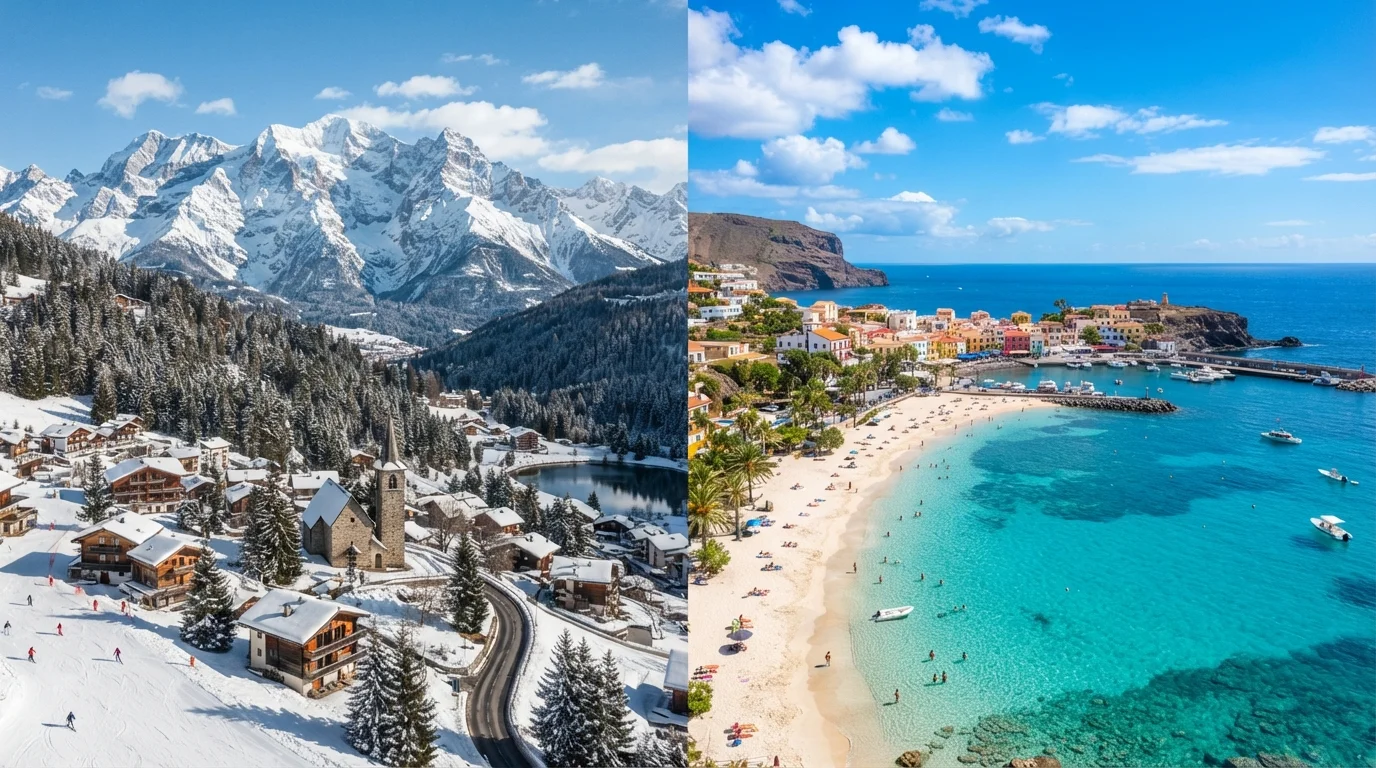
Mountain towns and beach towns each excel in different dimensions of travel experience. Mountains reward those who want immersion, physical challenge, and quieter surroundings, while beaches suit travelers prioritizing relaxation, social atmosphere, and warm-weather flexibility. The honest answer is that neither is superior - the right fit depends entirely on how you like to spend your days, not on which setting looks better in photos.
| Best for | Recommended |
|---|---|
| Travelers who want active, immersive, and quieter escapes | Mountain Towns |
| Those seeking warmth, social energy, and flexible downtime | Beach Towns |
| Budget-conscious travelers with flexible timing | Either - shoulder seasons at both types offer notable value |
| Families with young children or those prioritizing accessibility | Beach Towns |
Start With How You Actually Want to Spend Your Days
The single most useful question you can ask before choosing a destination type isn't "mountains or beach?" - it's "what does an ideal travel day actually look like for me?" If your honest answer involves hiking, altitude, forested trails, and evenings by a fire, mountain towns align naturally. If it involves morning swims, open-air dining, and afternoon naps with sand between your toes, a coastal setting fits better.
This matters because travelers often choose destinations based on aesthetics - the photo, the vibe - and then arrive somewhere that structurally doesn't match how they want to spend time. Mountain towns typically require more planning for daily activities: trailheads need permits, weather shifts fast, and altitude can genuinely affect energy levels. Beach towns tend to offer more unstructured flexibility but can feel repetitive for travelers who need variety or stimulation beyond the shoreline.
Before booking anything, do grounded destination research that goes beyond Instagram and travel blogs - conditions, accessibility, and the actual character of a place often differ from their marketed image.
Try a 'Day in the Life' Exercise Before You Book
Before committing to a destination type, write out what you'd realistically do from 8 a.m. to 9 p.m. on a typical trip day - not the fantasy version, but the honest one. Then ask whether a mountain town or beach town physically supports that day. This simple exercise catches mismatches between expectation and reality before they cost you money or disappointment.
Pace, Crowds, and Seasonal Realities
Mountain towns and beach towns operate on very different seasonal rhythms, and those rhythms shape your entire experience. Most US mountain towns peak in summer for hiking and fall for foliage, then again in winter for skiing - but shoulder seasons (late spring, early fall) often offer lower prices, thinner crowds, and still-beautiful conditions. Beach towns on the East and Gulf Coasts peak in summer, while many Southeast and Southwest coastal spots draw visitors year-round.
Crowd density is a legitimate planning factor. Popular national park gateway towns like those near Zion, Glacier, or the Smokies can feel genuinely overwhelming in peak season - parking fills before 8 a.m., trails get congested, and accommodation prices spike sharply. Meanwhile, Florida Gulf Coast beach towns in July can be sweltering and packed, while the same towns in October are often quieter and far more pleasant.
| Mountain Towns | Beach Towns | |
|---|---|---|
| Typical pace | Structured, activity-driven | Flexible, unstructured |
| Peak season crowds | Heavy at park gateways, summer & winter | Heavy summer; varies by coast |
| Weather predictability | Less predictable; afternoon storms common | Generally more predictable; hurricane risk in season |
| Getting around | Car almost always required | Often walkable or bikeable |
| Best fit traveler | Active, self-directed, nature-focused | Relaxation-oriented, social, family-friendly |
| Shoulder season value | Late spring, early fall | Late spring, fall (varies by region) |
| Dining & nightlife variety | Often limited in smaller towns | Generally broader range of options |
Weather unpredictability also cuts differently by type. Mountain weather can shift from sunny to dangerous within hours - afternoon thunderstorms are common in summer at altitude. Beach weather is generally more predictable, though hurricane season (June through November on the Atlantic and Gulf coasts) introduces real risk that travelers should factor in and verify through official sources before booking.
Cost Structures Are More Similar Than You'd Expect
A common assumption is that mountain destinations are cheaper. That's no longer reliably true. Remote mountain towns near major parks or ski resorts can command accommodation prices that rival upscale coastal markets. Conversely, off-season beach towns - particularly along the Gulf Coast or the Carolinas - can be genuinely affordable. The more useful frame is when you go and how you stay, not which type you choose.
Both destination types share a cost pattern: peak season pushes prices up sharply on lodging, dining, and activities. Both also have a shoulder-season window where the experience remains strong but prices ease. If budget flexibility matters to your planning, solid trip planning habits - including timing your visit around local calendars, not just school breaks - tend to deliver more value than chasing a particular destination type.
One genuine cost difference: getting around. Mountain towns often require a car; walkability is limited, distances between points of interest are large, and rideshare coverage can be sparse. Many beach towns, especially on barrier islands or compact coastal strips, are more walkable or bikeable once you arrive - which can reduce daily transportation costs noticeably.
Who Each Type Tends to Suit Best
Mountain towns generally suit travelers who are comfortable with self-directed structure, don't mind limited dining and nightlife variety, appreciate natural solitude, and have some physical fitness for activity. They're also well-suited to travelers who want slower pace without the social scene that beach environments often carry. Families with older children or teens who hike tend to thrive here; families with toddlers may find the logistics harder.
Beach towns tend to suit a wider range of traveler profiles: those who want flexibility without scheduling, families with young children (flat terrain, accessible water play), travelers who prioritize food and social atmosphere, and anyone who genuinely needs rest over stimulation. That said, US coastal towns vary enormously - a rugged Maine fishing town and a Florida resort strip are both technically "beach towns" but deliver completely different experiences.
If you're traveling with others whose preferences differ from yours, the destination-type question becomes a negotiation. A useful approach: weight the decision toward activities you'll actually do every day, not highlight-reel moments. And once you've settled on a type, building a flexible itinerary around that setting's realistic rhythm will serve you far better than a rigid schedule.
The content on this site is provided for informational purposes only and should not be considered a substitute for professional advice. While we strive to provide accurate and up-to-date information, we make no guarantees regarding its completeness or accuracy. Always consult a qualified professional for advice specific to your circumstances before making any decisions.