

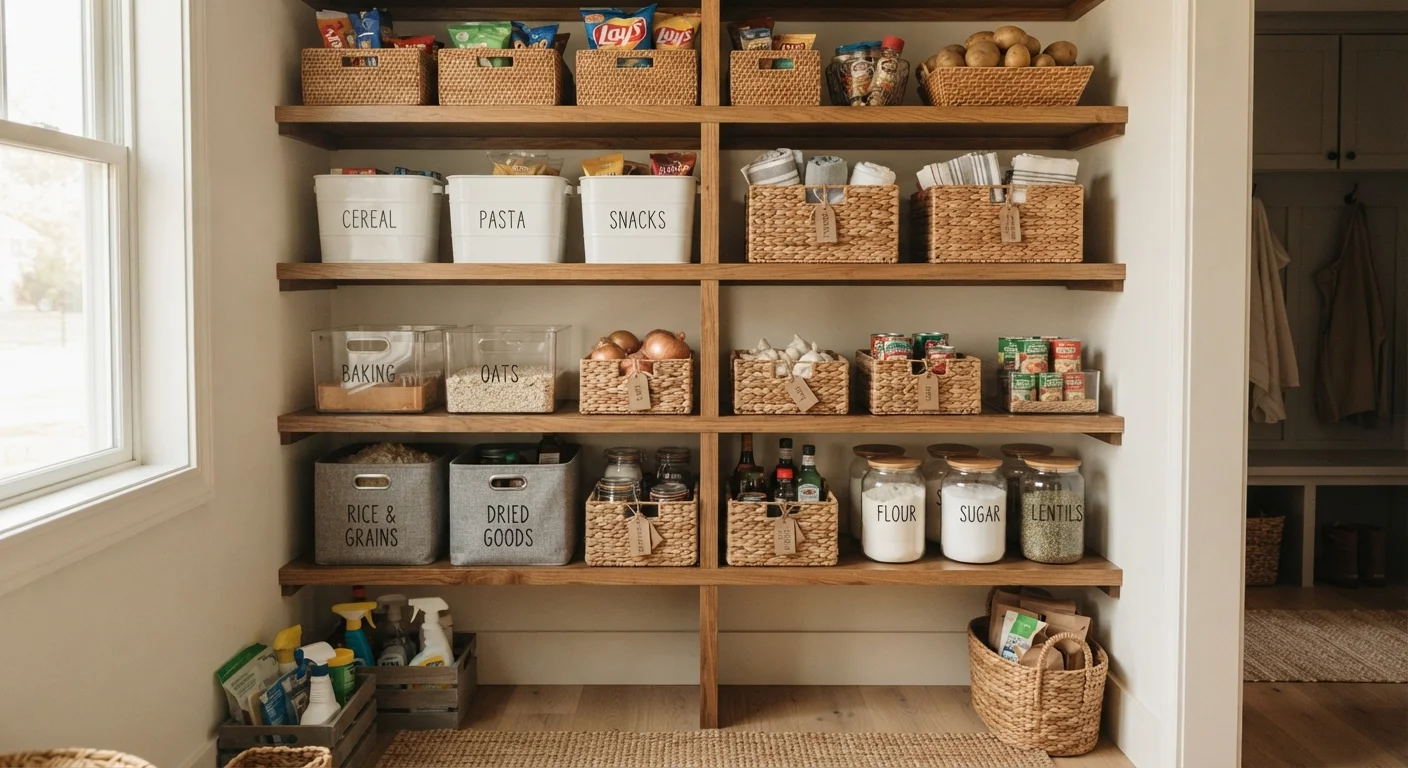
Our Verdict
Neither labeled nor unlabeled storage is universally superior. Labeled systems shine in shared, high-traffic areas where multiple users need clear guidance. Unlabeled approaches work well in personal, frequently changing, or visually obvious storage setups. Most homes benefit from a deliberate mix of both, applied where each genuinely helps.
| Best for | Recommended |
|---|---|
| Shared household spaces accessed by multiple people or children | Labeled storage |
| Personal spaces and items you access and reorganize frequently | Unlabeled storage |
| Long-term storage like seasonal items, garage bins, or archives | Labeled storage |
| Visual, open-basket systems where contents are obvious at a glance | Unlabeled storage |
Why This Choice Actually Matters
Walk into any home organization advice online and you'll find two camps: those who label absolutely everything and those who consider labeling an overcomplication. The truth is that both camps are partly right - and partly ignoring the other half of how real households work.
The purpose of any storage system is to make items easy to find and easy to put back. Labeling supports that goal under certain conditions, and actively undermines it under others. If you've ever opened a bin labeled "Craft Supplies" only to find holiday candles inside, you already know what a failed label system looks like. If you've ever dug through six identical unlabeled boxes in a garage to find the camping gear, you know the other failure mode.
Getting this right isn't about perfectionism - it's about choosing the approach that fits how your household actually behaves, not how you wish it behaved. For a broader grounding in the concepts behind storage systems, the home organization terminology guide is a useful starting point.
When Labeled Storage Earns Its Place
Labeled storage does its best work when more than one person needs to use a space independently. In a family pantry, a mudroom cubby system, or a shared office supply closet, labels remove the need for anyone to ask "where does this go?" That friction reduction is real and meaningful, especially with children who are learning to put things away themselves.
Labels also shine for infrequently accessed storage. Holiday decorations, seasonal gear, spare appliance parts, tax records - these are items you might not touch for months. Without a label, the contents of an opaque bin become genuinely uncertain over time. A clear label saves you from opening every box during a stressful moment.
Use Temporary Labels Before Committing
Before investing in permanent printed labels, run your system with masking tape and a marker for two to three weeks. This reveals which categories actually hold stable and which ones you kept changing. Only make labels permanent once you're confident the groupings are working. This approach also makes it easy to adjust without feeling like you've wasted money.
Long-term and archive storage is another strong case. If you've ever helped a family member sort through an estate or moved a household that had been in place for decades, you know the value of a bin that says exactly what's inside. That clarity costs almost nothing to create and pays off significantly later.
Labeled systems also support household routines for people with ADHD or executive function challenges, where reducing decision-making at the point of put-away lowers the barrier to staying organized.
When Labels Add Work Without Adding Value
Labels create a maintenance obligation. Every time a category changes, the label needs to change too - or the system starts lying to you. In spaces where contents shift frequently, like a junk drawer, a kids' art station, or a bathroom vanity, rigid labeling often breaks down within weeks. The junk drawer guide covers this dynamic well: some spaces need structure, but not necessarily labels.
Personal spaces are another area where labels can feel bureaucratic rather than helpful. If you're the only one who accesses a drawer, a shelf, or a closet section, you already know what's there. A label adds visual noise without adding information.
Open storage with transparent or obvious contents is also a candidate for going unlabeled. A basket of throw blankets in the living room doesn't need a sign. Clear bins in the refrigerator where you can see the contents directly don't require annotation. In these cases, labeling is effort spent solving a problem that doesn't exist.
| Labeled Storage | Unlabeled Storage | |
|---|---|---|
| Best suited for | Shared, multi-user spaces | Personal or single-user spaces |
| Access frequency | Infrequent or seasonal use | Daily or frequently rotated items |
| Maintenance required | Higher - labels must stay current | Lower - no upkeep needed |
| Container type | Opaque bins and boxes | Clear, open, or visible containers |
| Household benefit | Reduces guesswork for children and guests | Removes visual clutter in personal zones |
| Risk if neglected | Outdated labels cause confusion | Contents become unclear over time |
Building a Hybrid System That Actually Holds Up
The most durable home organization systems aren't fully labeled or fully unlabeled - they're intentional about which approach goes where. A practical way to think about it: label anything opaque that gets touched less than weekly, and leave visible or personal storage unlabeled unless confusion has actually occurred.
Zones help clarify this further. In a pantry, label the high shelves where bins are out of sightlines, and leave the eye-level shelves with open baskets that show their contents clearly. In a garage, label every closed bin but leave frequently used pegboard tools without tags - you can see them. This mirrors the logic in open shelving vs. cabinet storage: visibility changes what infrastructure you need.
One often-overlooked principle: involve everyone who uses the space in the labeling decisions. A label system that made sense to the person who created it but baffles everyone else hasn't solved the problem. When in doubt, test the system for two weeks before committing to permanent labels. Temporary tape and a marker reveal where the friction points actually are. For anyone reorganizing a whole household at once, the considerations in decluttering before a move vs. in place are worth reading alongside this one.
The content on this site is provided for informational purposes only and should not be considered a substitute for professional advice. While we strive to provide accurate and up-to-date information, we make no guarantees regarding its completeness or accuracy. Always consult a qualified professional for advice specific to your circumstances before making any decisions.