

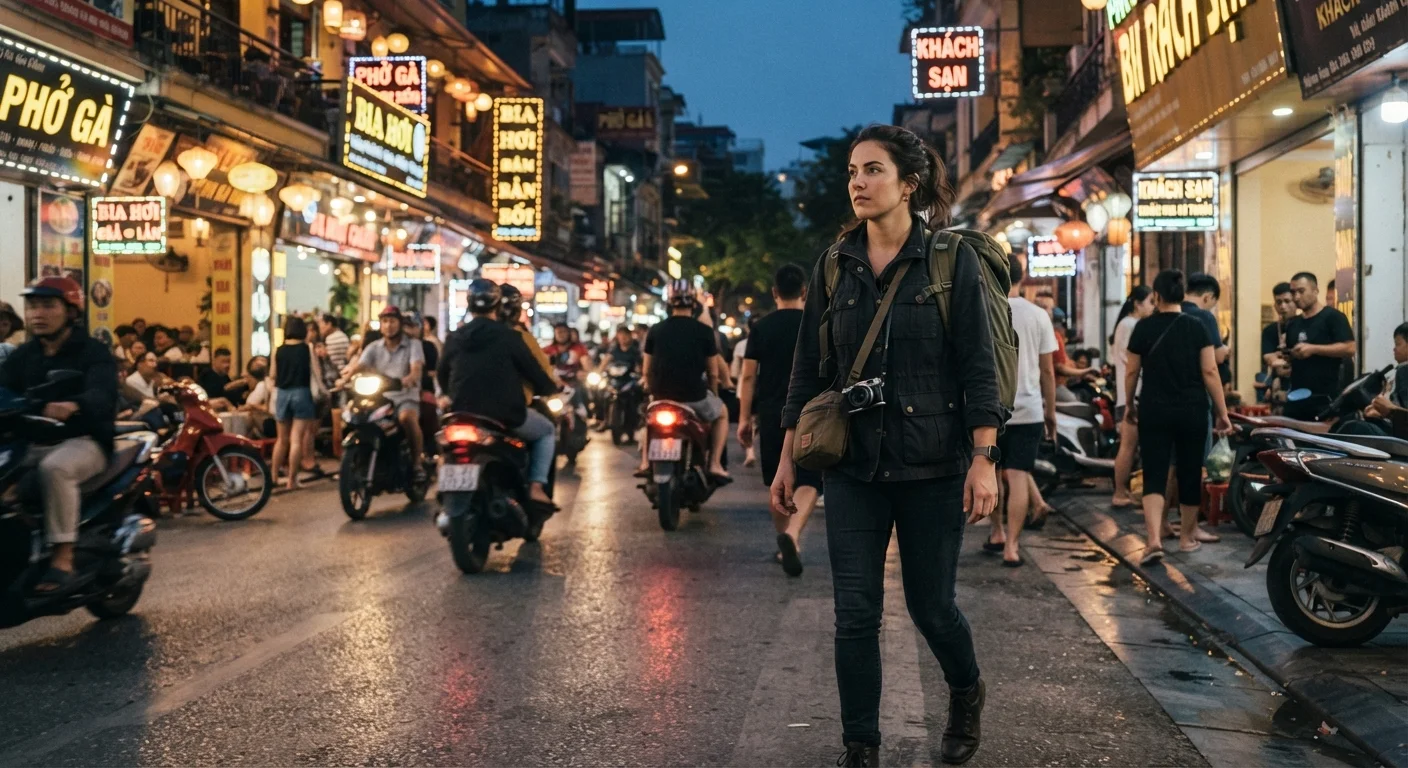
What Situational Awareness Actually Means on the Street
The phrase gets thrown around a lot, but situational awareness isn't about paranoia - it's about keeping your attention calibrated to your environment. When you arrive in a new city, your brain is overloaded with stimulation. Experienced travelers know to slow down during those first moments: step out of the flow of foot traffic, orient yourself physically, and take a few seconds to notice the general energy around you.
Ask yourself basic questions as you move: Who else is on this street, and are they local commuters or tourists? Does the block feel commercially active or quietly residential? Are people making eye contact, or is everyone avoiding it? These observations don't require training - they require attention. Over time, reading a neighborhood becomes nearly automatic.
One practical anchor: identify one or two reference points - a transit station, a well-lit café, a landmark - within each area you plan to spend time. If something feels off or you become disoriented, those anchors give you somewhere purposeful to walk toward rather than standing still looking confused. See our guide to handling common travel emergencies for how to respond when disorientation escalates.
Reading a Neighborhood Before You Walk Into It
Savvy travelers don't rely solely on travel forums or star ratings to gauge a neighborhood. Before arriving, cross-reference a few sources: look at satellite street-view imagery to understand the built environment, check local news for any current advisories, and note what types of businesses anchor each block. A neighborhood with active street-level retail, open cafes, and steady foot traffic at the hour you'll be there reads very differently from one that empties out after 6 p.m.
This isn't about avoiding entire areas - it's about timing and preparation. Many neighborhoods that feel quiet or unfamiliar are perfectly fine with a bit of context. The mistake is arriving with no mental map at all. Building solid pre-trip habits includes this kind of neighborhood-level research, and it pays dividends the moment you step off the train.
Check Official Travel Advisories Before You Go
Government travel advisory sites - such as travel.state.gov for U.S. citizens - publish destination-specific safety information. These are worth checking before any international trip, but verify the currency of any posting before acting on it, as conditions change.
Government travel advisory sites - such as travel.state.gov for U.S. citizens - publish destination-specific safety information. These are worth checking before any international trip, but verify the currency of any posting before acting on it, as conditions change.
Behavioral Habits That Reduce Friction
Move at the pace of locals, not the pace of sightseers.
Walking slowly, stopping abruptly, or gazing upward signals unfamiliarity and draws attention. Matching the natural tempo of foot traffic helps you blend in and keeps you more attuned to what's happening around you.
Store your phone before you need it in the open, not after.
The moment of vulnerability isn't when you're looking at your phone - it's the seconds you spend searching your bag or pocket for it while standing still in an exposed location.
Keep one low-profile backup form of payment separate from your main wallet.
Losing access to all your funds at once - through theft, a lost bag, or a frozen card - is one of the most disruptive things that can happen mid-trip. A small amount of local currency stored separately provides a meaningful buffer.
Establish a check-in rhythm with someone at home.
A simple, consistent check-in system - even a brief message once a day - means someone notices quickly if you go quiet. This isn't about micromanagement; it's about creating a safety net with minimal overhead.
Trust discomfort as useful information, not as overreaction.
A vague sense that something is off - an interaction that feels pressured, a route that feels wrong, a crowd that has a different energy - is worth acting on by changing course, not dismissing. Most experienced travelers cite this instinct as one they've learned to respect.
The behaviors that experienced urban travelers internalize aren't dramatic - they're small, repeatable habits that reduce the chances of being targeted or caught off-guard. When combined, they create a posture of confident, low-profile movement through any city.
Digital preparedness is an underrated part of physical safety. Downloading offline maps before you leave your accommodation means you can navigate without staring at a data connection in the open. Pair that with protecting your devices and data while traveling and you're covered on both fronts. For first-time solo travelers, the full picture of daily safety habits is worth reviewing in our guide to solo international travel.
Start Applying These Habits Today
None of these practices require expensive gear or specialized training. They're habits of attention and preparation that compound over time. The more deliberately you practice them - even at home in familiar surroundings - the more naturally they surface when you actually need them abroad.
This article provides general travel safety information for educational purposes. Conditions in specific destinations vary and change. Always verify entry requirements, local laws, and safety advisories through official government and provider sources before traveling.
The content on this site is provided for informational purposes only and should not be considered a substitute for professional advice. While we strive to provide accurate and up-to-date information, we make no guarantees regarding its completeness or accuracy. Always consult a qualified professional for advice specific to your circumstances before making any decisions.