

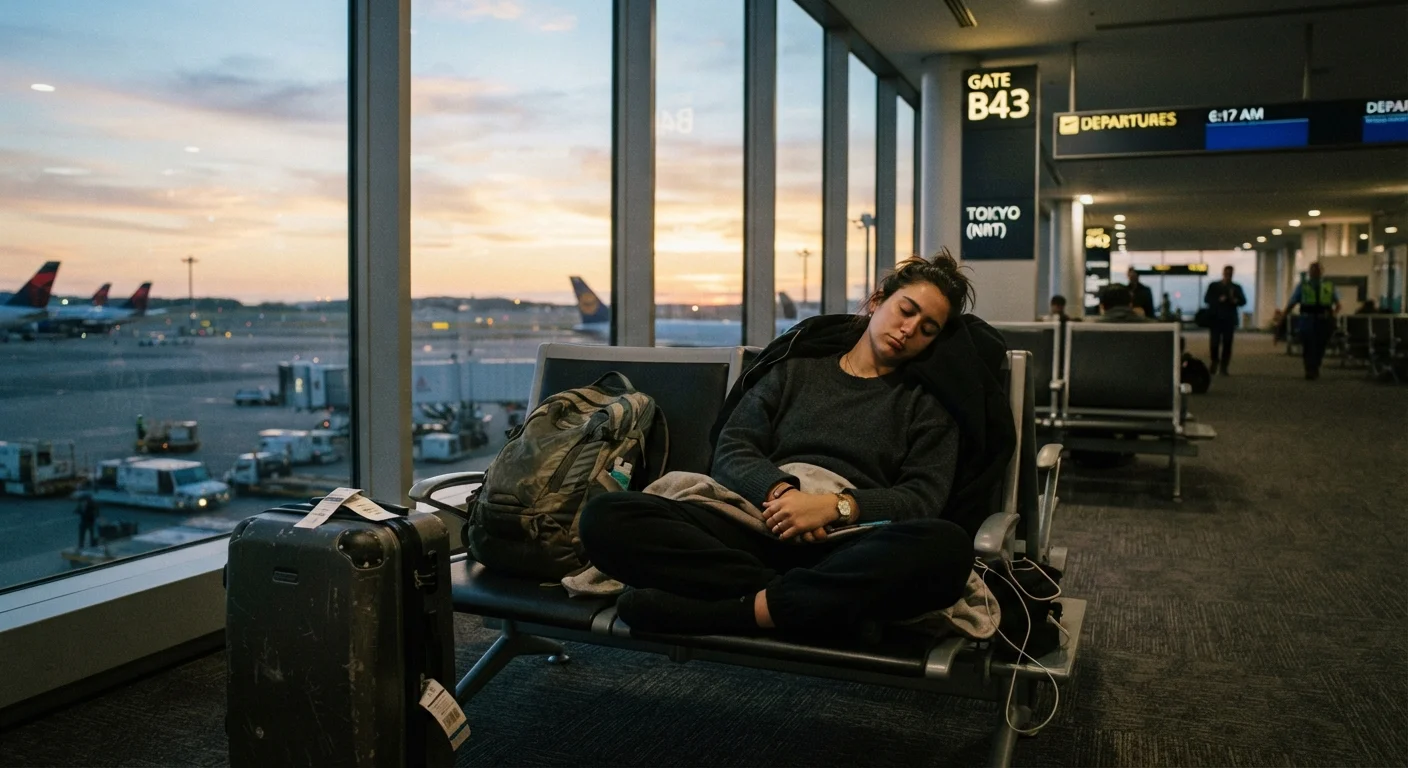
Your Body Has a Clock - and Planes Confuse It
Every cell in your body runs on a roughly 24-hour cycle governed by your circadian rhythm. This internal clock regulates when you feel alert, when you feel sleepy, when your digestion activates, and even when your immune system peaks. It calibrates itself primarily through light - specifically, the wavelengths that hit your eyes at different times of day.
When you board a flight from New York to Paris, your body doesn't know it's crossing five time zones in eight hours. Your SCN (suprachiasmatic nucleus) - the tiny brain region that coordinates your circadian rhythm - is still running on Eastern Time when you land in a city where the sun is already high. The mismatch between your internal clock and local environmental cues is the root cause of jet lag. It's a physiological conflict, not a personal failing.
International trip planning involves a layer of biological preparation that domestic travel rarely demands - and understanding why is the first step to managing it.
Why Some Trips Hit Harder Than Others
Not all time zone crossings are equally disruptive. Several variables determine how hard jet lag hits:
- Direction of travel: Eastward flights - say, from Los Angeles to Tokyo - require your body to advance its clock. That means trying to feel sleepy earlier than your biology wants. Westward travel, which delays the clock, tends to feel more natural for most people because staying awake longer is easier than forcing sleep early.
- Number of time zones crossed: Crossing two zones may leave you mildly groggy; crossing ten or eleven zones can feel genuinely disorienting for days.
- Pre-trip sleep debt: Arriving at the airport already exhausted means you're starting with a deficit. Your body has fewer cognitive and physiological resources to adapt.
- Age and individual biology: Circadian flexibility tends to decrease with age, and some people are simply more sensitive to disruption than others.
~1 day
Recovery time per time zone crossed
A widely cited clinical rule of thumb suggests the body needs approximately one day per time zone crossed to fully resynchronize its circadian rhythm.
10-20%
Typical cabin humidity level
Relative humidity inside commercial aircraft cabins is significantly lower than the roughly 30-60% found in most indoor environments, contributing to dehydration during long-haul flights.
~4 mph
Maximum natural circadian shift per day
Research suggests the human circadian clock can naturally advance or delay by roughly 1-2 hours per day, far slower than the time zone shifts modern air travel imposes.
The cabin environment itself layers additional stress onto your system. Low humidity, reduced oxygen pressure, and limited movement compound fatigue. For a deeper look at what happens physiologically during long flights, see our article on how cabin air and circulation affect your body.
Light Is the Most Powerful Reset Tool You Have
Your circadian clock resets primarily through light exposure - not through caffeine, sheer determination, or pushing through fatigue. Strategically timing when you seek or avoid bright light can meaningfully shift your body clock in the direction you need.
The basic principle: bright light in the morning advances your clock (helpful after westward travel), while bright light in the evening delays it (helpful after eastward travel). Conversely, avoiding light at the wrong times matters just as much as seeking it at the right ones. Wearing sunglasses during peak daylight hours at your destination, if your body clock still thinks it's nighttime, can prevent your rhythm from resetting in the wrong direction.
Time Your Light Exposure Strategically
After an eastward flight, seek bright outdoor light in the morning at your destination and avoid it in the evening for the first couple of days. After a westward flight, do the opposite - get evening light and use blackout curtains in the morning if possible. Even a 30-minute morning walk outside can meaningfully accelerate your clock reset.
Apps and online calculators based on circadian science can generate personalized light exposure schedules based on your specific departure city, destination, and flight times. These aren't magic, but they do translate the science into actionable guidance - a meaningful step up from simply hoping for the best when you land.
Practical Strategies That Actually Work
Managing jet lag requires planning before, during, and after your flight - not just powering through once you arrive. A few approaches that research and travel experience consistently support:
- Shift sleep gradually before departure. If flying east, start going to bed 30-60 minutes earlier each day for two or three days before your trip. Westward travelers can do the reverse. Small pre-adjustments reduce the size of the gap your body has to close on landing.
- Stay hydrated throughout the flight. Dehydration worsens nearly every jet lag symptom. Cabin humidity is low - typically between 10% and 20% - so consistent water intake matters more than it does on the ground.
- Avoid alcohol and limit caffeine in-flight. Both interfere with sleep quality, which is your body's primary repair mechanism during travel.
- Anchor to local time on arrival. Resist the urge to nap extensively at the wrong times. Staying awake until a reasonable local bedtime - even if it's hard - helps reset your clock faster.
- Build buffer time into your itinerary. Arriving without a plan is risky enough on its own; arriving without accounting for jet lag recovery adds another real vulnerability, especially in the first 24-48 hours.
This article is for general informational purposes only and is not medical advice. If you have health conditions that may be affected by long-haul travel or circadian disruption, consult a qualified healthcare professional before your trip.
Frequently Asked Questions
Flying east asks your body to advance its clock - essentially waking and sleeping earlier than it wants to. Most people find it easier to stay up later (delay the clock) than to go to bed earlier (advance it), making westward travel more forgiving for the majority of travelers.
A commonly cited rule of thumb is about one day of adjustment per time zone crossed, though individual responses vary widely. Age, overall health, sleep debt before travel, and direction of travel all influence recovery time. There are no guarantees of a specific timeline.
Melatonin is a hormone the body naturally produces to signal nighttime. Some travelers find low-dose melatonin supplements helpful for shifting their sleep timing, but research results are mixed and dosing matters. Always consult a healthcare professional before starting any supplement.
Full prevention is unlikely, but strategic preparation - adjusting your sleep schedule before departure, timing light exposure carefully, and staying hydrated - can significantly reduce severity. Managing expectations and building recovery time into your itinerary also helps.
Many experts suggest that circadian rhythms may become less flexible with age, which can make adjustment harder for older travelers. If you have underlying health conditions, it's wise to discuss long-haul travel plans with a healthcare provider before your trip.
Yes, alcohol can worsen jet lag. It disrupts sleep architecture - particularly deep and REM sleep - which are critical for feeling restored. Cabin air also dehydrates you faster than ground-level air, and alcohol compounds that dehydration.
The content on this site is provided for informational purposes only and should not be considered a substitute for professional advice. While we strive to provide accurate and up-to-date information, we make no guarantees regarding its completeness or accuracy. Always consult a qualified professional for advice specific to your circumstances before making any decisions.