

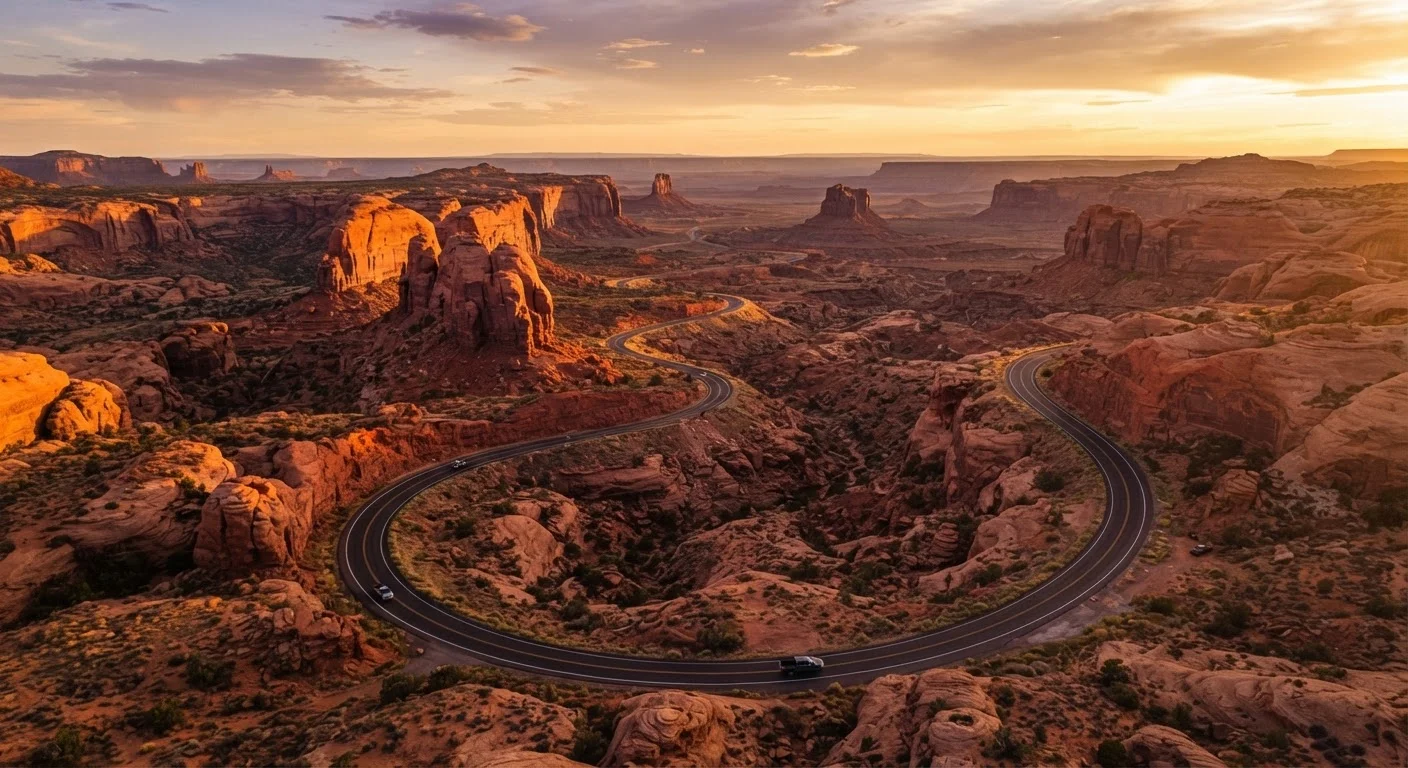
Why the Southwest Rewards Road Trippers Specifically
The American Southwest - broadly encompassing Arizona, Utah, Nevada, New Mexico, and portions of Colorado - is one of the few regions where the journey between destinations is as compelling as the destinations themselves. Landscapes shift from saguaro-studded Sonoran Desert to alpine forests to slot canyons within a few hours of driving. That variety is exactly what makes a car the right vehicle for exploring it.
Public transit options in this region are minimal outside of a handful of cities. Most national parks, monuments, and scenic byways are simply inaccessible without a vehicle. Road tripping here isn't a lifestyle choice - it's the practical baseline. If you're working through your broader trip-planning process, our complete domestic trip-planning guide provides useful grounding before you zoom in on a specific region.
The Four Core Destination Clusters
Rather than thinking in individual stops, experienced Southwest road trippers mentally group sites into clusters that share geography and driving logic.
1. Utah's Canyon Country
Zion, Bryce Canyon, Arches, Canyonlands, and Capitol Reef form a loose arc across southern Utah. These parks are distinct in character - Zion is lush and dramatic with a river running through it, Bryce Canyon features surreal pink hoodoos, and Arches is more open and exposed. They're within two to four hours of each other, making multi-park trips feasible.
2. The Grand Canyon and Colorado Plateau
Northern Arizona anchors this cluster. The South Rim is the most visited and accessible. The North Rim offers a quieter experience but is only open roughly mid-May through mid-October. Monument Valley, Page (home to Antelope Canyon and Horseshoe Bend), and the Navajo Nation lands extend this cluster considerably.
Treat Las Vegas as a logistics hub rather than a destination anchor - flying in and out of McCarran while spending the majority of your nights in Utah or Arizona is a completely reasonable strategy that many experienced Southwest road trippers use.
Las Vegas has abundant flight options and competitive car rental availability, making it a practical entry point even if the city itself isn't the focus of your trip.
When booking park lodges, check cancellation lists regularly in the weeks before your trip - reservations inside parks get canceled frequently as plans change, and availability does open up.
Park lodge inventory is genuinely limited, but last-minute slots appear more often than travelers expect because the booking window is long and people's plans shift.
3. Las Vegas as a Gateway, Not Just a Destination
Las Vegas sits within driving range of Zion, Death Valley, Valley of Fire, and the Grand Canyon's South Rim. Many travelers fly into Las Vegas and use it as a launch point rather than a focal point - an approach that often makes logistical sense.
4. New Mexico's Cultural Corridor
Albuquerque, Santa Fe, and Taos form the core of this cluster, complemented by White Sands National Park and the Carlsbad Caverns to the south. This cluster tends to be less crowded and rewards travelers interested in Indigenous history, Spanish colonial architecture, and art. It pairs naturally with a loop through southeastern Colorado.
Driving Distances You Should Actually Know
Southwest distances are consistently underestimated. The region looks manageable on a map, but the actual time behind the wheel tells a different story.
425 miles
Las Vegas to Moab, Utah driving distance
A commonly traveled Southwest road trip segment that takes roughly 6 hours of driving time without stops.
6+ months
Advance booking lead time for peak park lodges
Popular in-park lodges like Zion Lodge and The Lodge at Bryce Canyon often fill their peak-season inventory within days of reservations opening.
5 states
States spanning the Southwest road trip region
Arizona, Utah, Nevada, New Mexico, and Colorado each contribute distinct terrain and destinations to a Southwest itinerary.
- Las Vegas to the Grand Canyon South Rim: approximately 4 hours via US-93 and I-40.
- Grand Canyon South Rim to Zion National Park: approximately 2.5 to 3 hours.
- Zion to Bryce Canyon: approximately 1.5 hours - one of the shorter legs in the region.
- Bryce Canyon to Arches: approximately 3.5 hours.
- Albuquerque to Santa Fe: approximately 1 hour. Albuquerque to the Grand Canyon: approximately 4 hours.
Gas stations and cell service are genuinely sparse between clusters. The stretch between Page, Arizona, and Kayenta, for example, has limited services across roughly 90 miles. Download offline maps and check your fuel before leaving any town of meaningful size.
Where to Stay: Honest Accommodation Overview
Lodging strategy in the Southwest requires more advance planning than most domestic destinations.
Inside National Parks
Park lodges (like The Lodge at Bryce Canyon or Zion Lodge) often book out six months or more ahead for peak season. If you have flexibility on dates and book early, staying inside a park is genuinely special - easier trailhead access, no commute, and immersive evenings. But don't count on last-minute availability.
Gateway Towns
Every major park has a nearby town offering a range of lodging. Springdale serves Zion; Kanab is a central hub for Utah's southern parks; Tusayan sits just outside the Grand Canyon's South Rim. These towns vary considerably in character - Kanab has become increasingly popular and has a wider range of options than it did a decade ago.
Camping
Campsite reservations through Recreation.gov are competitive for popular parks, particularly Arches and Zion. Some first-come, first-served sites exist, but arriving before 8 a.m. on busy weekends is often necessary. Dispersed camping on Bureau of Land Management land offers a more flexible alternative in certain areas - verify rules for the specific area before planning on it.
Book Campsites and Lodges Early
Recreation.gov reservations for Arches, Zion, and Bryce Canyon campgrounds open months in advance and fill rapidly for spring and fall weekends. Set a calendar reminder for the earliest available booking date for your target parks. Gateway town motels and vacation rentals also fill faster than most travelers expect during peak season.
Seasonality and Safety Considerations
The Southwest's climate is not uniform across the region, and the difference between a great trip and a genuinely dangerous one often comes down to timing.
Spring (March-May) is widely considered the most reliable season for low-elevation desert parks. Temperatures are moderate, wildflowers are possible, and the light is exceptional. Crowds build through May.
Summer (June-August) brings extreme heat to low-elevation areas. Phoenix and the Sonoran Desert can exceed 110°F. Even Zion's canyon floor can reach the upper 90s. Hikers underestimate this regularly - heat-related illness is one of the most common reasons for park rescues. High-elevation destinations like Bryce Canyon remain more manageable. Flash flooding is also a real risk in slot canyons during monsoon season (roughly July-September).
Fall (September-November) is increasingly popular, with cooler temperatures and thinning crowds. Cottonwoods turn gold along canyon floors. October is often considered a sweet spot.
Winter (December-February) closes some facilities and makes certain roads impassable, but snow-dusted red rock is visually stunning and crowds are minimal at most parks.
Always verify current conditions and any permit requirements with the specific park or monument before arriving - conditions and policies change. Check official National Park Service resources and, for anything entry- or safety-related, consult official government sources directly.
Building Your Southwest Route
The most common mistake Southwest road trippers make is overloading their itinerary. A week that tries to hit all four clusters will be spent almost entirely in a car. A week spent in Utah's canyon country alone, or in the Grand Canyon and Page area, typically produces a more satisfying trip.
A useful planning heuristic: pick no more than two clusters per week of travel and budget at least two nights per major park. This leaves time for unexpected stops, weather delays, and the slower pace that the landscape actually invites.
For help thinking through how to structure days and flexibility into your route, our guide to building a well-structured travel itinerary walks through the planning logic step by step. And if budgeting for a road trip of this scale feels uncertain, our practical trip-budget guide can help you estimate real costs across lodging, fuel, and park fees before you commit to a route.
The Southwest is one of the most geographically dramatic regions in the United States. Approached with realistic expectations about distances, temperatures, and booking lead times, it consistently delivers on its reputation.
The content on this site is provided for informational purposes only and should not be considered a substitute for professional advice. While we strive to provide accurate and up-to-date information, we make no guarantees regarding its completeness or accuracy. Always consult a qualified professional for advice specific to your circumstances before making any decisions.