

Our Verdict
Fixer-uppers can offer genuine value for buyers who go in with clear eyes, realistic budgets, and the patience to manage a renovation. For those who underestimate costs, timelines, or the emotional toll of living through - or funding - major repairs, the math rarely works out as planned.
Best suited to buyers with construction experience or trusted contractor relationships, a financial cushion beyond the renovation estimate, and flexibility around move-in timelines.
What Qualifies as a Fixer-Upper?
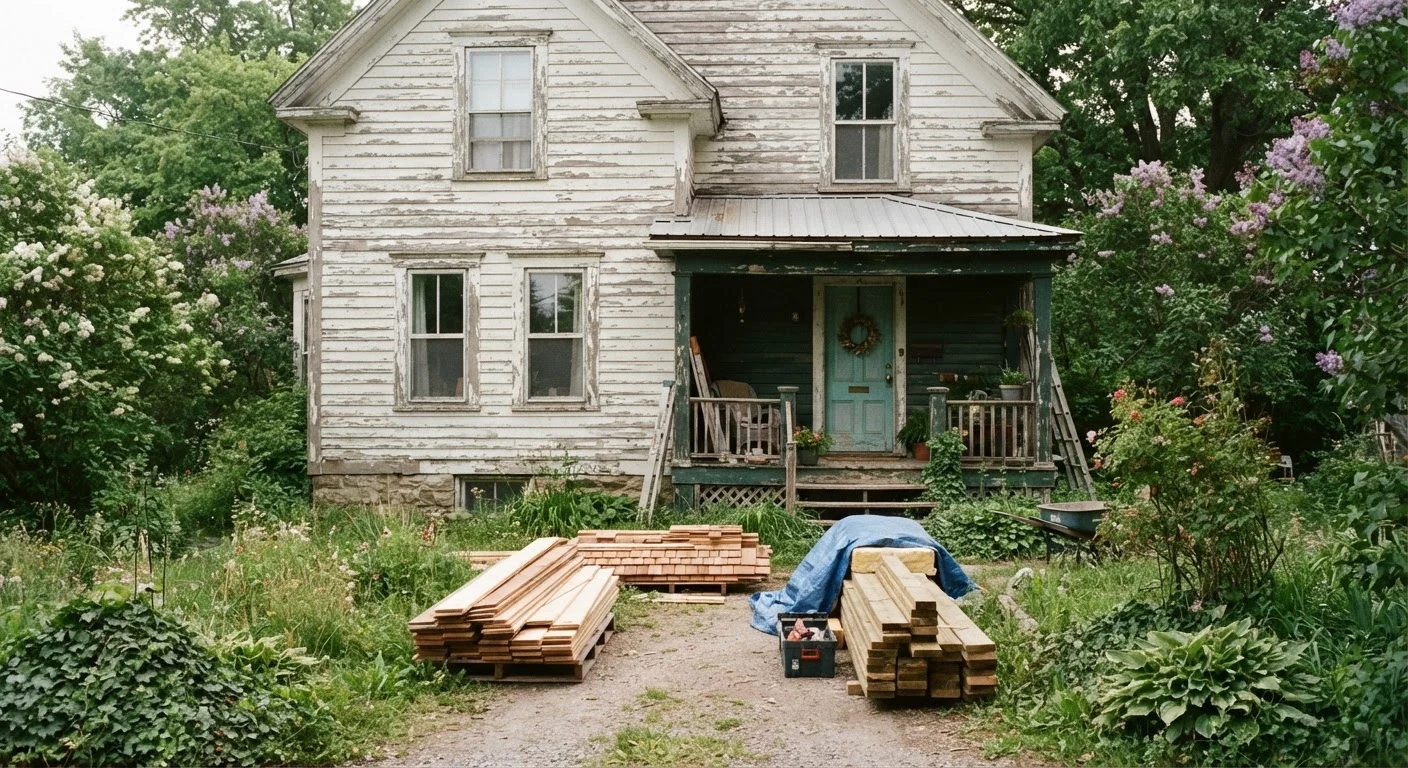
The term "fixer-upper" covers a wide spectrum. At one end, you have homes that need cosmetic work - new flooring, a kitchen refresh, fresh paint. At the other end are properties with deferred maintenance so severe that the roof, foundation, plumbing, or electrical systems require complete overhaul. The distinction matters enormously for budgeting and financing.
Most buyers picture the cosmetic end of the spectrum when they imagine buying a fixer-upper. Many end up on the more expensive end. Before making an offer, it helps to understand which category a property actually falls into - something only a qualified home inspector and, in some cases, a licensed contractor can determine with confidence.
For a broader look at assumptions that trip buyers up, see our piece on homebuying myths that mislead even experienced buyers.
The Real Advantages
The financial appeal is legitimate under the right conditions. A distressed home priced below market gives buyers an entry point that a move-in-ready property in the same neighborhood typically won't offer. If renovations are completed thoughtfully and costs are controlled, there is genuine potential to build equity faster than simply buying a finished home.
Lower purchase price than comparable move-in-ready homes
Distressed properties are typically priced below neighborhood comps, giving buyers an entry point that can be financially meaningful in high-cost markets.
Potential to build equity through strategic renovations
Improvements that raise the home's appraised value above total acquisition and renovation costs can accelerate equity growth compared to buying a finished home.
Greater customization and design control
Buyers can choose finishes, layouts, and upgrades that match their own preferences rather than inheriting a previous owner's decisions.
Access to desirable neighborhoods with limited inventory
In markets where turnkey homes are scarce or priced out of reach, a fixer-upper may be the only realistic path into a preferred location.
Buyers also gain customization control that turnkey homes rarely allow - choosing finishes, layouts, and upgrades that reflect their own priorities rather than a previous owner's taste. In competitive markets where move-in-ready inventory is scarce, a fixer-upper may be one of the few realistic paths to homeownership in a desired area.
The Honest Disadvantages
The risks are just as real as the opportunities. Renovation budgets routinely exceed initial estimates - industry professionals commonly suggest adding 10-20% above contractor quotes as a contingency buffer, and even that can fall short when structural or systems issues are uncovered mid-project.
Renovation costs frequently exceed initial estimates
Even experienced buyers and contractors encounter surprises - especially in older homes where issues behind walls or beneath floors only emerge once work begins.
Hidden structural and systems problems are common
Foundation issues, outdated electrical panels, failing HVAC systems, and compromised plumbing are expensive to fix and not always visible during a standard walkthrough.
Specialized financing adds complexity and time
Renovation loan products carry additional requirements - including contractor approvals and detailed scope-of-work documentation - that extend the purchase timeline.
Living through a renovation is costly and stressful
Buyers who occupy the home during construction face noise, disruption, and safety considerations, while those who wait face dual housing costs until the work is complete.
Timelines almost always run longer than projected
Contractor availability, permit delays, materials backlogs, and unforeseen complications routinely push project completion dates back by weeks or months.
Beyond the money, there is the time cost. Renovations take longer than projected in the vast majority of cases. Buyers who plan to live in the home during construction should factor in the practical difficulty - and genuine stress - of that arrangement. Those who can't move in until work is complete face carrying both housing costs and mortgage payments simultaneously.
Understanding the hidden costs of DIY renovation is essential reading before deciding how much of the work to handle yourself.
Financing Considerations
Standard mortgage products often cannot be used to purchase homes in poor condition - lenders require properties to meet minimum habitability standards. Buyers typically need specialized loan products such as an FHA 203(k) rehabilitation loan or a conventional renovation mortgage, both of which bundle the purchase price and estimated renovation costs into a single loan.
FHA 203(k) Loans: Key Points to Know
The FHA 203(k) program allows buyers to finance both a home's purchase price and eligible renovation costs in a single loan, subject to FHA lending limits and eligibility requirements. Two versions exist: a streamlined option for smaller cosmetic projects and a standard version for larger structural work. Both require working with FHA-approved lenders and, in many cases, using licensed contractors who submit bids for review. Consult a HUD-approved housing counselor or licensed mortgage professional to determine whether this product fits your situation.
These loans involve additional underwriting steps, require approved contractors in some cases, and can take longer to close than conventional mortgages. Buyers should confirm lender requirements and timelines early in the process - ideally before making an offer.
Making the Decision
A fixer-upper is not inherently a good or bad choice - it depends almost entirely on the buyer's financial position, risk tolerance, and accurate information about the property's condition. The buyers who regret the decision most often are those who relied on wishful estimates rather than actual contractor bids.
10-20%
Recommended renovation budget contingency
Real estate and construction professionals commonly advise buyers to add at least 10-20% above contractor estimates to account for unexpected costs.
~$50,000
Median US home renovation spend
According to the Harvard Joint Center for Housing Studies, the median US homeowner renovation project spend has risen significantly over the past decade, with major remodels often exceeding this figure.
Get a full home inspection before finalizing any offer. Negotiate based on documented repair costs, not assumptions. And weigh the fixer-upper against what else the same budget could achieve - including renting while the market shifts, a path explored in our comparison of renting versus buying.
This article is for general informational purposes only and does not constitute financial, legal, or real estate advice. Consult a qualified real estate professional before making any purchase decisions.
The content on this site is provided for informational purposes only and should not be considered a substitute for professional advice. While we strive to provide accurate and up-to-date information, we make no guarantees regarding its completeness or accuracy. Always consult a qualified professional for advice specific to your circumstances before making any decisions.