

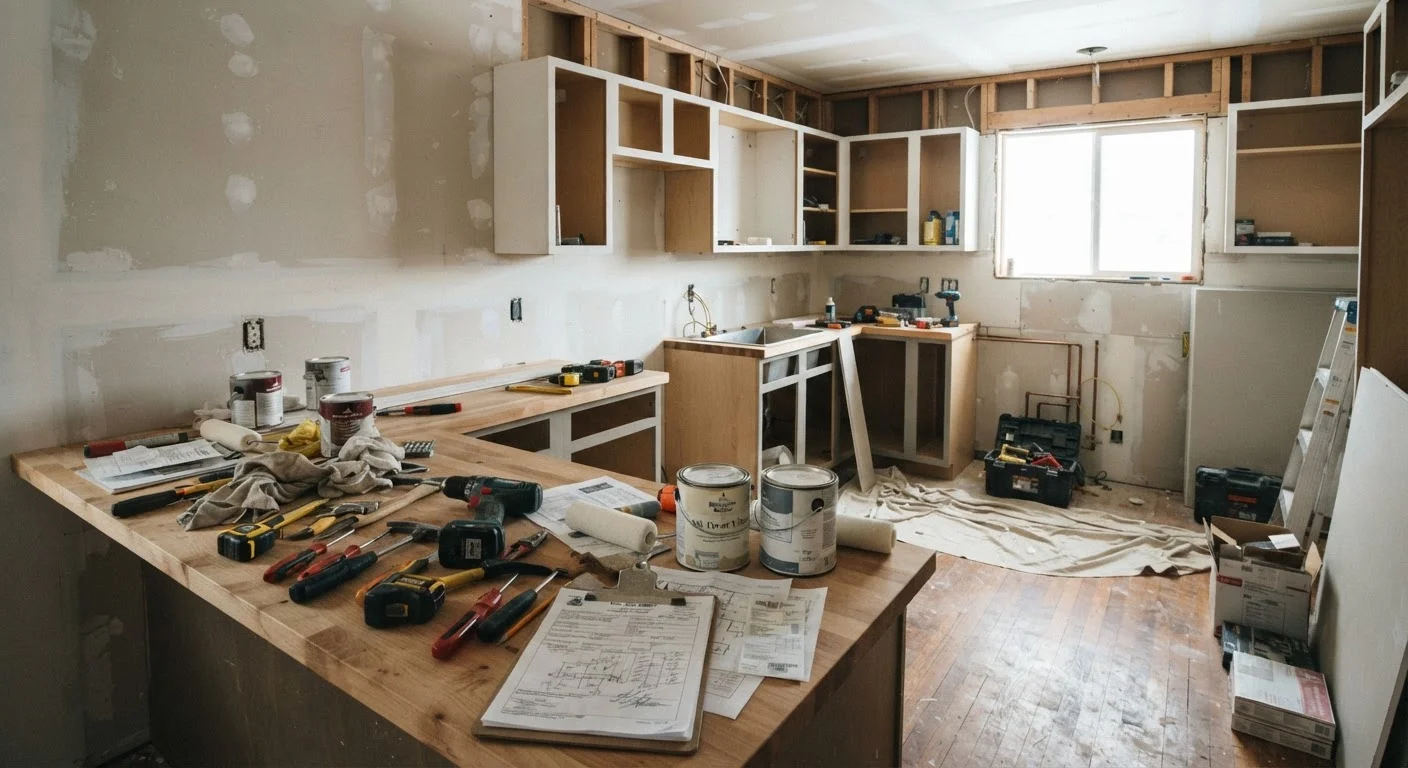
The Price Tag You See vs. the One You Pay
Walk into any home improvement store and it's easy to do quick mental math: tiles at $2 a square foot, a box of screws, some grout - and you have a rough number in your head. That number is almost always wrong, and not because you miscounted the tiles.
The sticker price of materials is just the floor of what a DIY renovation costs. The real figure includes a constellation of smaller expenses that individually seem minor but collectively can add 30-50% to your original estimate. Before you pull up the first floorboard, it pays to understand exactly what you're signing up for financially.
For a broader look at preparing your home before any work starts, the room-by-room renovation readiness checklist walks through permits, utilities, and safety steps worth completing first.
10-20%
Standard contingency buffer in renovation budgets
Professional contractors routinely build a 10-20% contingency into project budgets; most DIYers skip this buffer entirely.
30-50%
Typical hidden cost addition over material estimates
Permit fees, tool rentals, disposal, and rework commonly add 30-50% above initial DIY material-only estimates, based on general construction budgeting guidance.
10%+
Recommended material overage for tile projects
Industry guidance for tile installation typically recommends purchasing at least 10% extra to account for cuts, breakage, and pattern waste.
Permits, Inspections, and Code Compliance
Many homeowners skip the permit step entirely, assuming it's optional or that small projects don't qualify. In reality, permit requirements vary by locality but commonly apply to electrical work, plumbing changes, window replacements that alter openings, deck construction, and any structural modifications. Permit fees themselves range from modest to several hundred dollars depending on project scope and jurisdiction.
The bigger financial risk isn't the fee - it's skipping the permit and getting caught. Unpermitted work can trigger fines, mandatory demolition of completed work, and serious complications when you sell your home. Title companies and buyers' inspectors routinely flag unpermitted additions. Always verify requirements with your local building department before breaking ground.
Unpermitted Work and Home Sales
Unpermitted renovations - even well-executed ones - can complicate or derail a home sale. Buyers' inspectors and lenders may flag unapproved work, and sellers are often required to disclose known improvements. In some cases, retroactive permitting requires opening walls or undoing finished work. The permit fee almost always costs less than the remediation.
Tools, Rentals, and Equipment You Didn't Plan For
Experienced tradespeople show up with a truck full of specialized tools built up over years. Most homeowners have a drill, a hammer, and maybe a circular saw. The gap between what you own and what a project actually requires gets filled with rental fees - or purchases you'll rarely use again.
Tile saws, floor sanders, demolition hammers, pneumatic nailers, and scaffolding all appear on rental menus for good reason: they're expensive to buy for one job. A weekend tile project, for instance, might require a wet saw rental that adds $50-$80 per day to your costs. Compound this across a larger renovation and the tool budget rivals what you'd have spent on labor.
It's worth noting that the same calculus applies in other DIY contexts. The DIY car maintenance trade-off guide explores a similar question about when doing it yourself genuinely saves money versus when it costs more.
Mistakes, Rework, and the Second Trip to the Store
Every experienced DIYer has a story about the measurement they got wrong, the tile they cracked, or the drywall patch that required three rounds of compound. Rework isn't a sign of failure - it's a predictable feature of learning a trade on the job. What it is, financially, is expensive.
Over-purchasing materials to account for breakage is standard advice, but many homeowners underestimate how much extra is needed. A 10% overage allowance for tile is a common recommendation; for complex patterns or diagonal layouts, that figure climbs higher. Beyond materials, mistakes sometimes require calling in a professional to undo what went wrong - which means paying both for the original attempt and the correction.
A homeowner budgets $400 for a bathroom tile floor replacement, purchasing materials and planning a weekend install. By project end, they've spent $180 on a wet saw rental, $60 on a second bag of thinset after misjudging coverage, and $75 on disposal of old tile - bringing the actual cost to $715.
A homeowner removes a wall to open up a living space without pulling a permit, completing the project successfully. Two years later, during a home sale, the buyers' inspector flags the unpermitted structural change, requiring a retroactive permit, inspection, and minor remediation - delaying closing by three weeks.
A first-time DIYer attempts to install recessed lighting, purchasing fixtures and following online tutorials. After an unsuccessful first attempt, they hire an electrician to correct the wiring - paying both for the materials already used and the professional's labor.
If you're weighing DIY against hiring out from the start, understanding what the contractor hiring process looks like gives useful context for comparison.
Disposal, Delivery, and the Costs Nobody Mentions
Demo day generates debris. A bathroom gut-out can produce hundreds of pounds of tile, drywall, fixtures, and old plumbing. Hauling that away costs money - either in dumpster rental fees, multiple truck trips to a transfer station, or a junk removal service. These costs rarely appear in online project cost calculators.
Delivery fees for heavy materials like concrete board, lumber, or stone can also add up, especially if multiple deliveries are needed as the project evolves. And if the renovation touches any systems - ventilation, for example - overlooked steps create additional costs down the road. Proper ventilation in renovations is one area where skipping a step leads to mold, air quality issues, and code violations that are expensive to correct after the fact.
The honest takeaway isn't that DIY is a bad idea - it's that informed DIY is a fundamentally different financial proposition than optimistic DIY. Building a realistic budget that accounts for permits, tools, waste, and contingency puts you in control of the project rather than the other way around.
This article is for general informational purposes only. Permit requirements, codes, and costs vary by location. Always consult your local building department and, where required, a licensed professional before beginning renovation work.
Frequently Asked Questions
Most homeowners budget only for materials and underestimate permit fees, tool rentals, disposal costs, and the price of fixing mistakes. Inexperience with a trade also means tasks take longer, sometimes requiring additional material purchases. A realistic budget accounts for these variables before work begins.
Permit requirements depend on your local municipality and the scope of the work. Structural changes, electrical upgrades, plumbing alterations, and HVAC work typically require permits in most jurisdictions. Always check with your local building department before starting - unpermitted work can complicate home sales and insurance claims.
A common rule of thumb in construction budgeting is to set aside an additional 10-20% of your projected materials cost as a contingency. For first-time DIYers or older homes, erring toward the higher end is prudent. This buffer covers rework, additional materials, and unforeseen structural discoveries.
When mistakes require professional correction, when rented tools cost nearly as much as contractor labor, or when unpermitted work triggers fines or required demolition, DIY can exceed the cost of hiring out. Complex trades like electrical, gas, and structural work are particularly prone to this outcome.
Electrical panel work, gas line modifications, load-bearing wall removal, and major plumbing connections into the main supply are generally considered beyond safe DIY scope for most homeowners. These tasks carry real safety risks and are commonly regulated or permitted. See <a href="/home-garden/home-improvement/signs-a-home-repair-job-is-beyond-the-diy-threshold">signs a job needs a licensed professional</a> for more guidance.
It can. Unpermitted or improperly completed work may reduce coverage or complicate claims if damage results from that work. Some insurers require disclosure of significant renovations. Consulting your insurance provider before major work begins is a worthwhile step.
The content on this site is provided for informational purposes only and should not be considered a substitute for professional advice. While we strive to provide accurate and up-to-date information, we make no guarantees regarding its completeness or accuracy. Always consult a qualified professional for advice specific to your circumstances before making any decisions.