

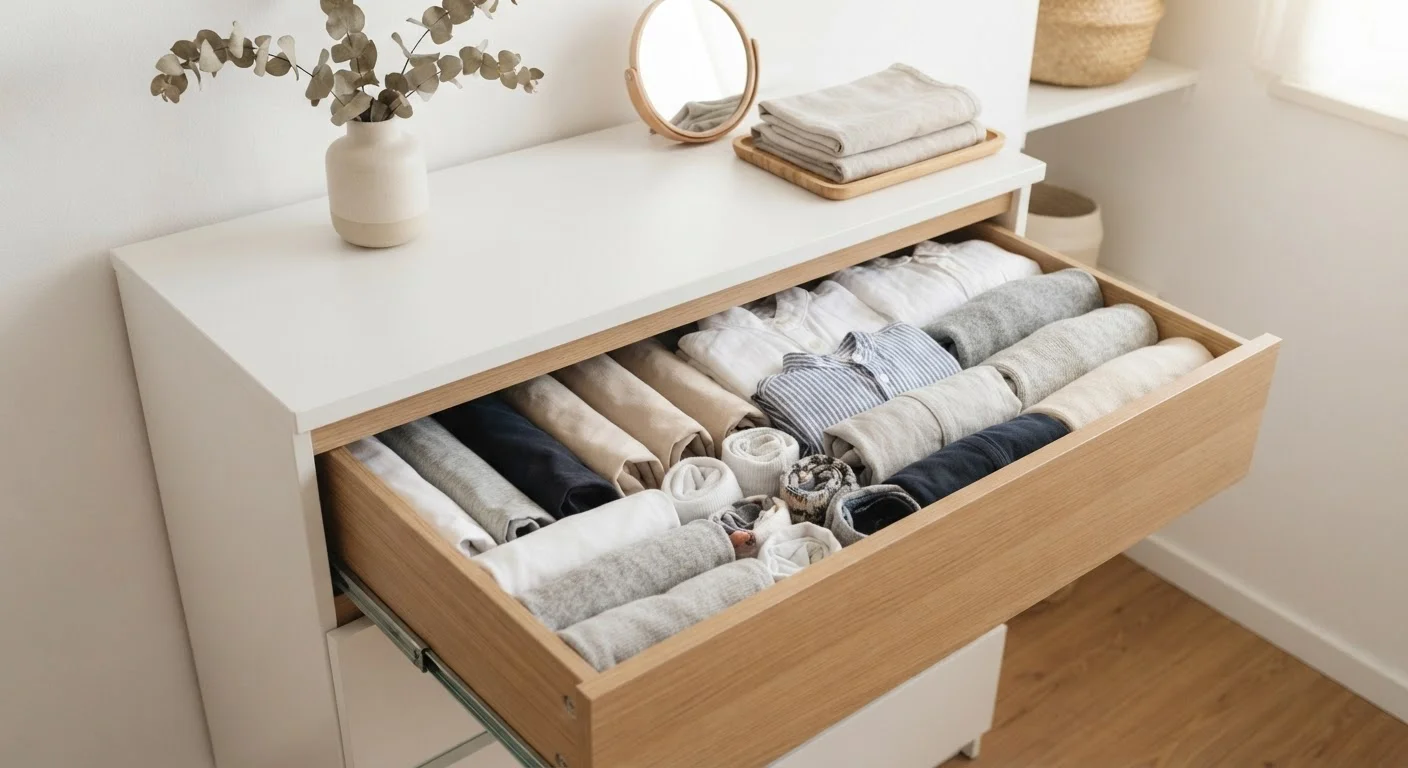
The Core Philosophy Behind KonMari
At its heart, the KonMari Method is built on a single organizing principle: surround yourself only with things that serve or genuinely delight you. Marie Kondo developed the system after years working as a professional organizer in Japan, and it gained international attention following the publication of her book The Life-Changing Magic of Tidying Up.
What separates KonMari from most tidying advice is its emphasis on mindset before method. Before touching a single drawer, practitioners are encouraged to visualize their ideal living environment-what they want their home to feel like, not just look like. This framing shifts decluttering from a chore into a deliberate, values-driven process.
The method also treats tidying as a discrete event rather than a habit. The idea is that a thorough, category-by-category sort done properly should create conditions that naturally resist future clutter-though most organizers note that follow-up maintenance habits still matter considerably. See the one-in-one-out rule and other habits for strategies that complement the method long-term.
“The question of what you want to own is actually the question of how you want to live your life.”
— Marie Kondo, Author and professional organizer, creator of the KonMari Method
The Five-Category Process, Step by Step
KonMari does not organize room by room. Instead, it moves through five categories in a fixed sequence, each chosen because it builds emotional decision-making capacity for the next:
- Clothing - Gather every piece of clothing in the home into one pile. Hold each item and assess whether it sparks joy. This category is first because most people have an easier time making decisions about clothes than about emotionally loaded items.
- Books - Collect all books from every room before sorting. The question isn't whether you might read it someday; it's whether it earns space in your home right now.
- Papers - The general rule is to discard nearly all papers unless they are actively needed or legally required. This includes old mail, instruction manuals, expired warranties, and accumulated notes.
- Komono (miscellaneous) - This large category covers kitchen items, tools, hobby supplies, electronics, and similar items. It's sorted last among everyday objects because it requires the most subcategory judgment.
- Sentimental items - Saved for last because these are the hardest decisions. By this point, practitioners have practiced the joy-based assessment enough to approach sentimental objects more clearly.
This sequence is notably different from a room-by-room organization framework, which is better suited to households that want to maintain ongoing order rather than conduct a one-time reset.
5
Fixed categories in the KonMari sequence
Clothing, books, papers, komono, and sentimental items - always sorted in this specific order per Kondo's framework.
~25%
Average share of items people keep after a full KonMari sort
Reported anecdotally by professional organizers trained in the method; individual results vary widely based on starting volume of possessions.
Who the Method Works For - and Where It Has Limits
KonMari is genuinely effective for certain households and certain situations. It tends to work well for:
- Solo dwellers or couples who can make decisions independently
- People who are ready for a full reset rather than incremental improvements
- Households where clutter has accumulated significantly and a clean-slate approach feels motivating
It has real limitations too. The method is designed around a single practitioner making solo decisions, which can create friction in homes with partners, children, or roommates who have different attachments to shared possessions. The intensive, all-at-once format also doesn't suit everyone's schedule or energy level.
If your home tends to accumulate clutter in specific spots rather than everywhere, a targeted approach-like taming a junk drawer without a full purge-may be more practical. And if you're in a season-to-season cycle of accumulation, a quarterly declutter approach may fit better than a one-time intensive event.
Start Small to Build Momentum
If committing to the full KonMari process feels overwhelming, begin with just one clothing subcategory - socks, for example. Completing one small round of the joy-based sort gives you a concrete experience of the method before scaling up to larger categories.
Frequently Asked Questions
KonMari specifies a five-category sequence: clothing, books, papers, komono (miscellaneous items), and sentimental items. This order is intentional-starting with lower-stakes categories helps you build your decision-making instincts before tackling emotionally complex objects.
It can, but it requires more coordination. Children's belongings ideally involve the child in age-appropriate decisions. Many families adapt the process by working through categories together rather than following the solo-practitioner model exactly.
Most decluttering asks 'Should I get rid of this?' KonMari flips the question: you hold each item and ask whether it sparks joy, keeping it only if the answer is yes. The category-based sequence and the gratitude element toward discarded items are also distinctive features.
The method is designed as an intensive, time-limited project rather than a gradual process. Depending on household size and volume of possessions, the complete process can take anywhere from several days to a few months of dedicated sessions.
Kondo describes it as a physical sensation-a sense of lightness or excitement when you hold an object. In practice, it's a gut-check: does this item add something meaningful to your daily life, or are you keeping it out of guilt or habit?
Yes, though the context matters. KonMari is best suited to organizing a home you plan to stay in. If you're preparing to move, the process and priorities differ in important ways-see our guide on <a href="/home-garden/home-organization/decluttering-before-a-move-vs-decluttering-in-place-two-very-different-processes">decluttering before a move</a> for a fuller comparison.
The content on this site is provided for informational purposes only and should not be considered a substitute for professional advice. While we strive to provide accurate and up-to-date information, we make no guarantees regarding its completeness or accuracy. Always consult a qualified professional for advice specific to your circumstances before making any decisions.