

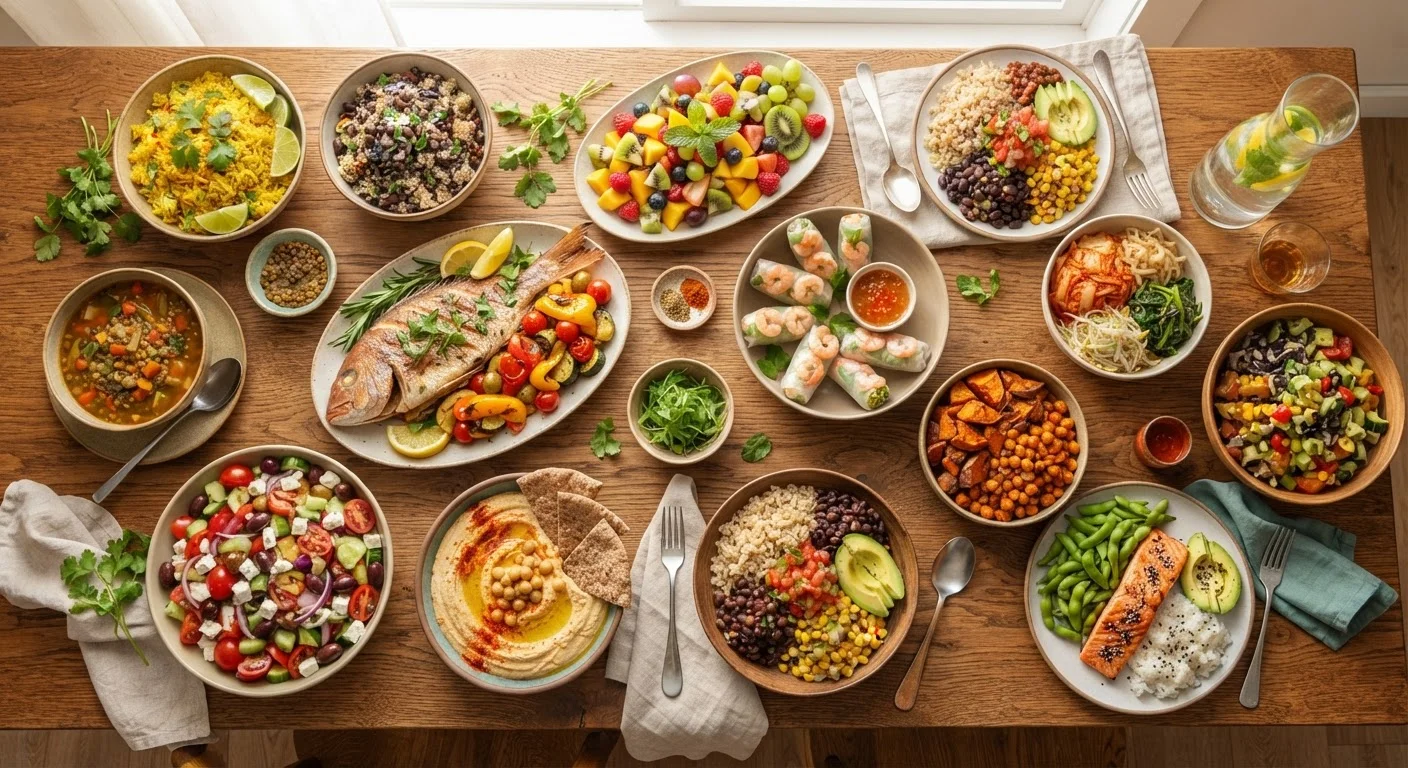
The Myth of the One-Size-Fits-All Healthy Diet
Ask ten people what eating healthy means and you will likely get ten different answers. Some point to cutting carbohydrates; others emphasize plant-based eating; still others follow the guidance of their cultural heritage. The reality is that all of them may be partly right - because what constitutes a healthy diet is deeply shaped by individual circumstances.
Mainstream nutrition messaging tends to speak in universals: eat more vegetables, limit added sugar, avoid ultra-processed foods. These broad principles have solid evidentiary backing. But when they are applied as blanket prescriptions - without accounting for who is eating and why - they can miss the mark or even be counterproductive.
Understanding why healthy eating looks different for different people helps readers approach food choices with more nuance and less guilt. It also explains why conflicting nutrition headlines are so common. Nutrition myths that keep circulating often survive precisely because they feel universal when the underlying evidence is actually more complicated.
~10%
Americans meeting daily vegetable intake recommendations
According to CDC data, only about 1 in 10 American adults consumes the recommended amount of vegetables - yet that recommendation itself is a general population guideline, not an individualized target.
80%+
Of chronic diseases linked to lifestyle and diet factors
The CDC estimates that a large majority of chronic diseases, including heart disease and type 2 diabetes, are associated with lifestyle factors - but the specific dietary risks vary by individual health profile.
60+
Recognized dietary patterns with research support
A 2020 review in the journal Nutrients identified more than 60 dietary patterns studied in the scientific literature, reflecting the breadth of evidence-based approaches to healthy eating globally.
How Individual Factors Shape Nutritional Needs
Age is one of the most significant variables. Growing children need different macronutrient and micronutrient profiles than working-age adults or older adults managing age-related muscle and bone changes. Protein and calcium needs, for example, shift meaningfully across the lifespan.
Activity level alters how much energy a person needs and how they process carbohydrates and fats. Someone doing endurance exercise has legitimate reasons to eat differently from someone with a largely sedentary lifestyle - not because one approach is morally better, but because their physiology is operating under different demands.
Health conditions can make standard advice inappropriate. A person managing chronic kidney disease may need to limit potassium and phosphorus - nutrients often found in foods widely praised as healthy, such as bananas and whole grains. People with celiac disease must avoid gluten entirely, regardless of its general nutritional profile. Dietary guidance that does not account for these conditions can be misleading or harmful.
Gut microbiome differences are an emerging area of research. Early evidence suggests people can have meaningfully different blood sugar and other metabolic responses to identical foods, though this science is still developing and has not yet translated into standardized clinical guidance.
A 68-year-old retired woman with osteoporosis is told by a wellness blog to reduce dairy for better health.
A competitive distance runner dramatically increases refined carbohydrate intake during training.
A family of Mexican heritage centers their diet around beans, corn tortillas, and fresh salsa.
A person with type 2 diabetes is advised by a coworker to follow a high-fruit diet for 'natural sugar.'
Culture, Access, and the Social Dimension of Food
Nutrition science developed largely within Western academic contexts, and much of its most-cited research reflects the foods and eating patterns common in those settings. This has sometimes led to the marginalization of traditional food cultures that are, in fact, nutritionally sound.
Traditional diets from Japan, Mexico, India, West Africa, and many other regions feature whole grains, legumes, vegetables, and fermented foods - often with strong health associations. Framing these as inferior to a standardized Western conception of healthy eating is both culturally reductive and nutritionally inaccurate.
Food access is also inseparable from what healthy eating can realistically look like. Guidance centered on fresh produce, specialty ingredients, or significant meal-prep time reflects a level of resource availability that is not universal. Eating well on a budget is possible with the right principles, but it requires practical strategies, not idealized shopping lists.
“The best diet is the one that meets your nutritional needs, fits your lifestyle, aligns with your preferences, and is something you can sustain. There is no single pattern that achieves all of that for every person.”
— Academy of Nutrition and Dietetics, Leading U.S. professional organization for registered dietitians and nutrition professionals
What Evidence-Based Nutrition Actually Supports
Despite individual variation, nutrition research does converge on several durable principles. Diets rich in vegetables, fruits, whole grains, legumes, and lean protein sources - and lower in ultra-processed foods and added sugars - are consistently associated with better health outcomes across diverse populations. These are patterns, not prescriptions.
Two of the most rigorously studied dietary approaches - the Mediterranean and DASH patterns - share core features while differing in emphasis. How these two well-studied dietary patterns compare illustrates how even among evidence-backed approaches, there is room for individual fit.
Getting adequate dietary fiber is one of the most consistent gaps in American eating regardless of other dietary choices, and it is one area where general guidance applies broadly.
Eating out is another context where general principles can be applied flexibly. Reading a restaurant menu with nutrition in mind without rigid rules is a practical skill most people can develop.
This article is for general informational purposes only and is not a substitute for personalized medical or nutritional advice. Readers with specific health conditions or dietary needs should consult a qualified healthcare provider or registered dietitian.
Frequently Asked Questions
No single diet is universally optimal for every person. Nutrition researchers generally support dietary patterns rich in vegetables, whole grains, legumes, and lean proteins - but the specific foods, portions, and balance depend on individual health status, age, and other factors.
Yes. Many traditional food cultures around the world have developed eating patterns that support good health. Cultural foods are not inherently less nutritious than Western diet staples, and incorporating them can support both nutrition and wellbeing.
Older adults often need more calcium, vitamin D, and protein to support bone and muscle health, while calorie needs may decrease. Children and adolescents have different growth-related needs. A healthcare provider or dietitian can offer age-appropriate guidance.
Often, yes. Conditions like type 2 diabetes, kidney disease, celiac disease, and heart disease all have specific dietary implications. General healthy eating advice may not apply or could be harmful in some cases - always consult your doctor or a registered dietitian.
Nutrition science is a relatively young field and evidence evolves as more rigorous studies are conducted. Some earlier conclusions were based on limited data. This doesn't mean all advice is unreliable - it means the field is refining its understanding over time.
Start with broadly supported principles - more whole foods, less ultra-processed food - then consider your specific health conditions, cultural preferences, and activity level. A registered dietitian can offer individualized guidance that general articles cannot.
The content on this site is provided for informational purposes only and should not be considered a substitute for professional advice. While we strive to provide accurate and up-to-date information, we make no guarantees regarding its completeness or accuracy. Always consult a qualified professional for advice specific to your circumstances before making any decisions.