

The Cost Myth Around Healthy Eating
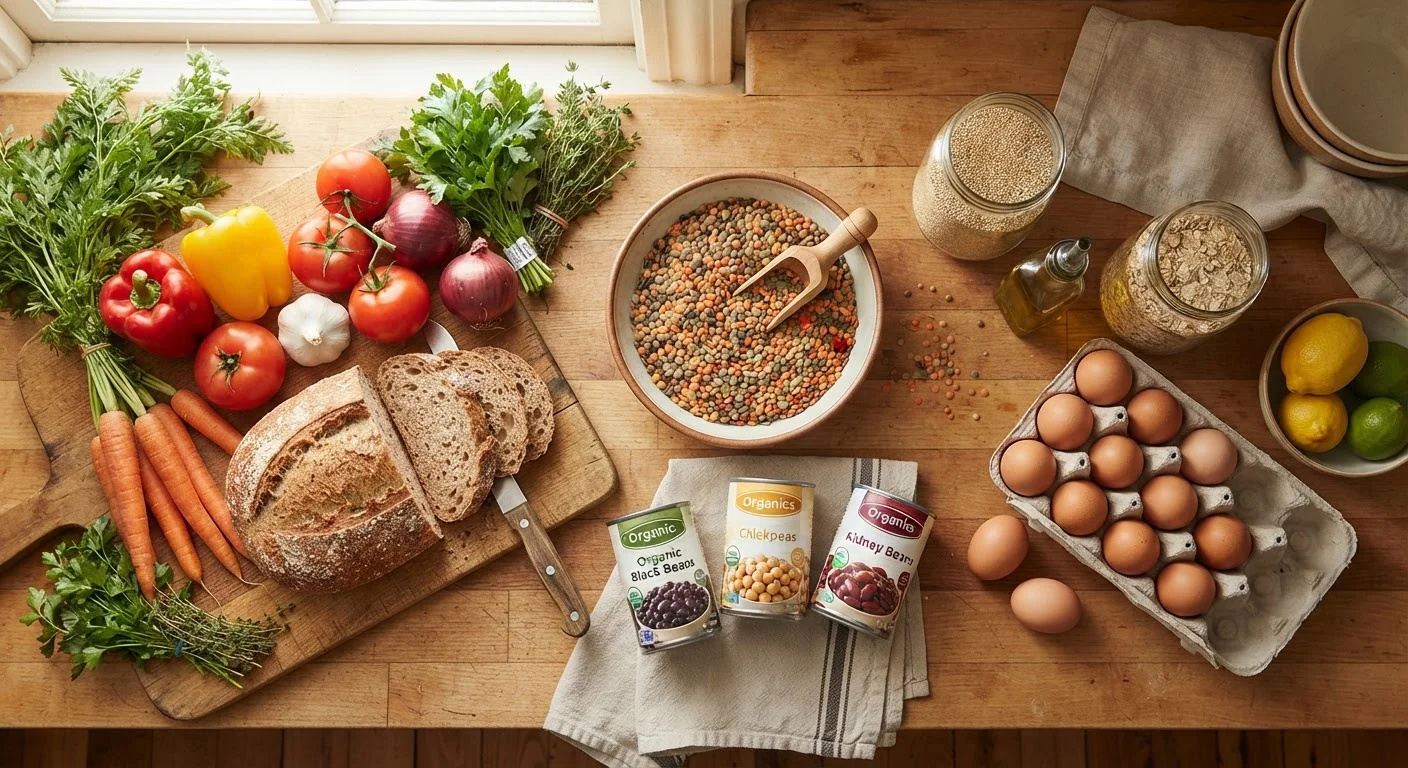
A persistent belief holds that eating nutritiously is inherently expensive - that good food is the domain of specialty grocery stores and premium price tags. Research and nutrition experts consistently challenge this framing. Many of the most nutrient-dense foods available - dried beans, lentils, oats, eggs, canned tomatoes, frozen spinach - are also among the most affordable items in any grocery store.
What often drives up food costs isn't the pursuit of health; it's convenience foods, pre-portioned packaging, and a tendency to shop without a plan. Understanding this distinction is the first step toward eating well on a realistic budget. For broader context on aligning your food spending with your overall financial picture, the Budgeting Basics hub offers helpful frameworks for tracking and planning.
Core Practices for Budget-Conscious Nutrition
The following evidence-informed practices reflect how nutrition researchers and registered dietitians approach the challenge of eating well without overspending. These are general principles - individual needs vary based on health status, age, and other factors, so consult a qualified healthcare professional for personalized guidance.
Build meals around low-cost, high-nutrient staples
Dried legumes, whole grains like oats and brown rice, eggs, and frozen vegetables consistently rank among the most nutritionally dense foods per dollar. Anchoring weekly meals around these staples provides fiber, protein, vitamins, and minerals without premium pricing. Relying on variety within this category prevents dietary monotony.
Plan meals before you shop - and write a list
Unplanned grocery trips consistently lead to higher spending and more food waste, both of which undermine a budget-conscious approach. Deciding what you'll eat for the week before entering the store allows you to buy only what you need and use ingredients across multiple meals. Research on household food waste suggests planning is one of the most effective interventions available to consumers.
Choose frozen and canned produce without hesitation
Frozen vegetables and fruits are typically flash-frozen at peak ripeness, which preserves most of their nutritional value. Canned options, especially low-sodium varieties, offer similar benefits. Both formats are significantly cheaper than fresh equivalents and have a much longer shelf life, reducing spoilage. Nutrition researchers have found no meaningful evidence that frozen or canned produce is nutritionally inferior for most everyday purposes.
Shift protein sources toward plant-based options
Animal proteins - especially fresh meat - are often the single most expensive item in a grocery basket. Swapping some meals to beans, lentils, tofu, or eggs can substantially reduce costs while maintaining adequate protein intake for most healthy adults. Well-studied dietary patterns like the Mediterranean and DASH approaches both emphasize plant proteins, which is one reason they're associated with favorable health outcomes. See how these patterns compare in Mediterranean Diet vs. DASH Diet.
Buy in bulk for shelf-stable staples
Items like oats, dried beans, lentils, rice, and pasta are often cheaper per unit when purchased in larger quantities, especially from bulk bins or warehouse-style stores. Because these foods store well for months, buying more upfront reduces cost without risk of spoilage. This strategy works best when applied selectively to foods you regularly consume.
Compare store-brand and generic products without assuming lower quality
Store-brand canned beans, tomatoes, pasta, and frozen vegetables are often produced by the same manufacturers as name-brand equivalents and must meet the same food safety standards. Nutritional profiles between store-brand and name-brand versions of the same product are generally comparable. Defaulting to store brands across staples can meaningfully reduce total grocery spending over time.
Making It Work Week to Week
Applying these principles is easier when built into a consistent routine. Batch cooking on a single day - preparing a large pot of grains, roasting a tray of vegetables, or cooking a big batch of beans - means nutritious components are ready to assemble into meals throughout the week with minimal effort. This approach also reduces the temptation to reach for expensive convenience options when time is short.
For a practical framework on how to think through the week's meals systematically, see Building a Balanced Plate: A Week of Practical Meal-Planning Principles. And if you're interested in how plant-forward eating fits into budget cooking, Plant-Based Eating for Beginners covers common questions and starting points.
~30-40%
U.S. household food wasted annually
The USDA estimates that American households waste between 30 and 40 percent of the food supply, much of which is tied to lack of meal planning and overbuying.
$1-2
Cost per serving of dried legumes
Dried beans and lentils typically cost between one and two dollars per serving in U.S. grocery stores, making them among the most affordable protein sources available.
This article is for general informational and educational purposes only and is not a substitute for professional medical or nutritional advice. Consult a registered dietitian or qualified healthcare provider for guidance tailored to your individual health needs.
The content on this site is provided for informational purposes only and should not be considered a substitute for professional advice. While we strive to provide accurate and up-to-date information, we make no guarantees regarding its completeness or accuracy. Always consult a qualified professional for advice specific to your circumstances before making any decisions.