

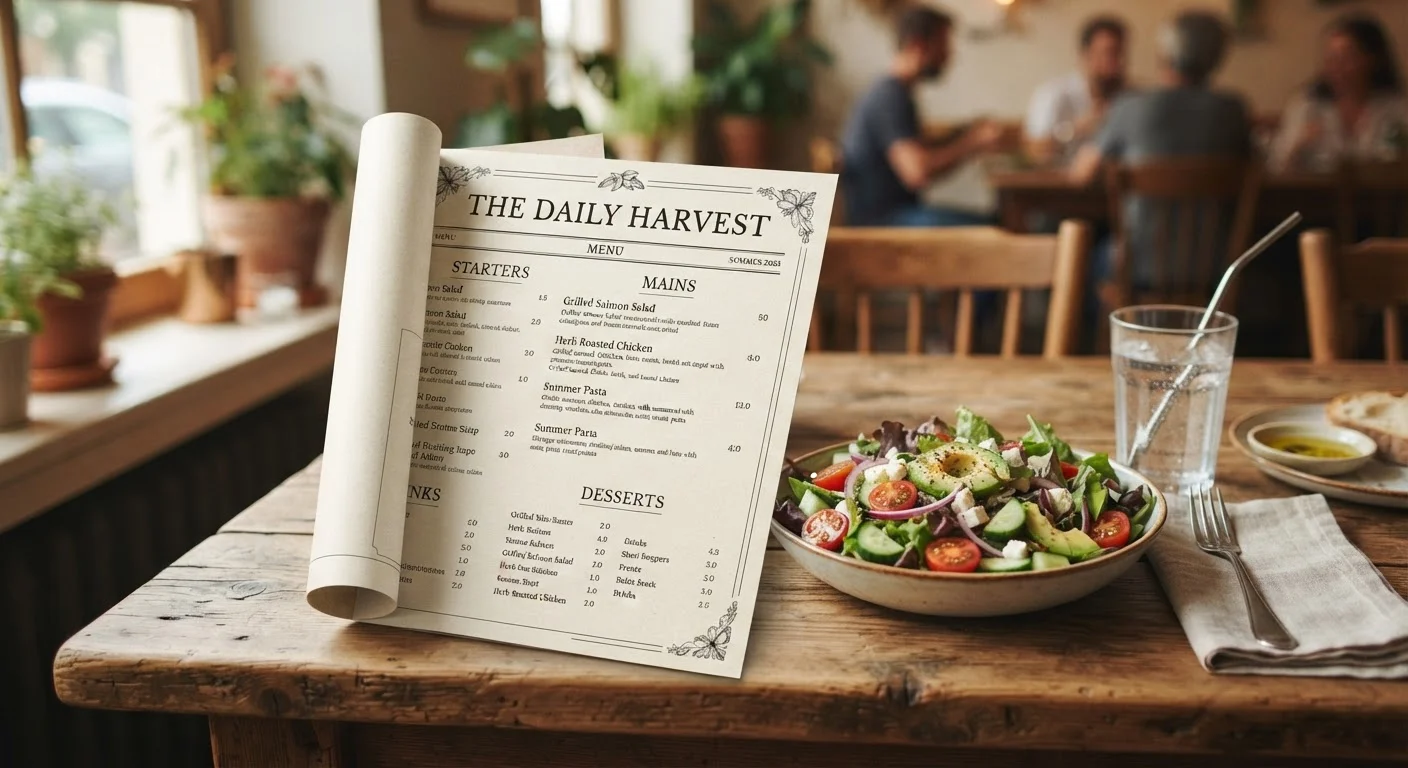
Why Restaurant Menus Can Be Hard to Navigate Nutritionally
Eating out is a normal, enjoyable part of life for most Americans - and it doesn't have to conflict with your nutrition goals. The challenge is that restaurant menus are designed to sell food, not to make nutritional decision-making straightforward. Dish names often emphasize indulgence or flavor rather than ingredients, descriptions can be vague or misleading, and portion sizes frequently exceed what most people need in a single sitting.
None of this means restaurants are adversarial. It simply means that a little structured attention goes a long way. If you've ever found yourself wanting to understand more about what's actually in your food, the same analytical mindset that helps with reading a nutrition label can be applied - in adapted form - to a menu.
This Is General Nutrition Information
This article is intended to provide general, evidence-informed guidance for healthy adults eating out. It is not a substitute for personalized dietary advice. If you have a medical condition, food allergy, or specific health goal, consult a registered dietitian or your healthcare provider before making significant changes to your diet.
The goal here isn't to avoid restaurants or turn every meal into a health optimization exercise. It's to feel more confident and informed when you're making choices, so that eating out fits naturally into an otherwise balanced approach to eating.
A Step-by-Step Approach to Menu Reading
The following steps are designed to be practical at the table - or better yet, before you even arrive. They work across cuisine types and restaurant formats, from casual chains to sit-down independents.
Preview the Menu Before You Arrive
Most restaurants post their menus online. Reviewing options ahead of time removes the pressure of deciding quickly at the table, which research on decision-making suggests can lead to more deliberate choices. It also gives you a chance to identify which modifications to request without feeling rushed.
What you will need
Restaurant's Online Menu
Allows you to review options in advance and plan a balanced order without time pressure.
Restaurant's Nutrition Information PDF
Many chains publish detailed nutrient breakdowns beyond calorie counts, including sodium and saturated fat.
Scan the whole menu before deciding
Resist the instinct to lock onto the first item that sounds appealing. Give yourself a full pass through the menu - appetizers, mains, sides, and salads - before narrowing down. This broader view helps you spot options you might otherwise miss, such as a protein-rich grain bowl buried in the sides section or a lighter entrée listed without obvious fanfare.
Decode cooking method language
Menu descriptions use specific words that signal preparation methods. Terms like grilled, baked, roasted, steamed, poached, and broiled generally indicate less added fat than fried, crispy, battered, sautéed in butter, or smothered. This isn't about ruling out certain methods entirely - it's about understanding what you're ordering so you can make an informed choice rather than an accidental one.
Look for vegetables and fiber sources
A meal that includes a meaningful quantity of vegetables or legumes tends to provide more fiber, vitamins, and minerals relative to its caloric load. When reviewing the menu, ask yourself: does this dish contain a vegetable component, or would adding a side salad or steamed vegetables round it out? Many restaurants allow simple substitutions - swapping fries for a side salad or mixed greens is often possible without a major upcharge.
Assess portion framing and plan ahead
Restaurant portions in the U.S. are frequently larger than standard serving sizes. Rather than feeling obligated to finish everything, consider splitting an entrée with a dining companion, requesting a to-go box at the start of the meal, or ordering an appetizer as your main. Portions labeled as "shareable" or "for two" give you a natural cue to adjust accordingly.
Make targeted, low-friction customizations
Most restaurants accommodate reasonable modification requests. Common ones with meaningful nutritional impact include: asking for dressings and sauces on the side (so you control how much is used), requesting that a dish be prepared with less salt, swapping a refined grain side for a whole grain where available, or asking for extra vegetables in place of a starch. The key is choosing one or two adjustments rather than over-engineering your order in a way that disrupts your enjoyment of the meal.
Factor in the whole meal, not just the entrée
Drinks, appetizers, bread, and desserts all contribute to a meal's overall nutritional profile. Sweetened beverages - including some that sound healthy, like lemonades or specialty iced teas - can add significant sugar. Shared appetizers intended as starters often function as a second full course. If you're ordering multiple courses, think about balance across the whole meal rather than optimizing each item in isolation.
Menu Calorie Counts Have Real Limitations
Under federal rules, chain restaurants with 20 or more locations are required to post calorie counts. However, research suggests actual calorie content can vary meaningfully from posted figures due to portion variability and preparation differences. Use these numbers as rough guides, not precise targets, and resist using them as the sole basis for every food decision.
If you're also thinking about how these habits fit into a broader eating pattern, it's worth knowing that well-studied dietary approaches like those covered in our comparison of the Mediterranean and DASH diets both emphasize vegetables, lean proteins, and modest portions - principles that translate naturally to restaurant ordering.
Keeping Perspective: Nutrition Isn't Only About Single Meals
One restaurant meal - however it's composed - doesn't define your overall dietary pattern. Nutrition research consistently shows that what matters most is the cumulative quality of eating habits over time, not the perfection of any individual food choice. If you enjoy a richer dish on occasion, that fits within a healthy overall approach for most people.
This is also relevant if you're managing food costs: making nutritious choices at restaurants doesn't require ordering the most expensive items. Our guide on eating well on a budget explores how the same practical principles apply when cost is a primary consideration.
Finally, it's worth being skeptical of common claims you may encounter - like certain foods being universally "bad" or specific restaurant choices being "clean eating." If you're curious about separating evidence from popular nutrition narratives, nutrition myths worth reconsidering offers a grounded look at what research actually supports.
This article is for general informational purposes only and does not constitute medical or dietary advice. Consult a qualified healthcare professional or registered dietitian for guidance tailored to your individual health needs.
The content on this site is provided for informational purposes only and should not be considered a substitute for professional advice. While we strive to provide accurate and up-to-date information, we make no guarantees regarding its completeness or accuracy. Always consult a qualified professional for advice specific to your circumstances before making any decisions.