

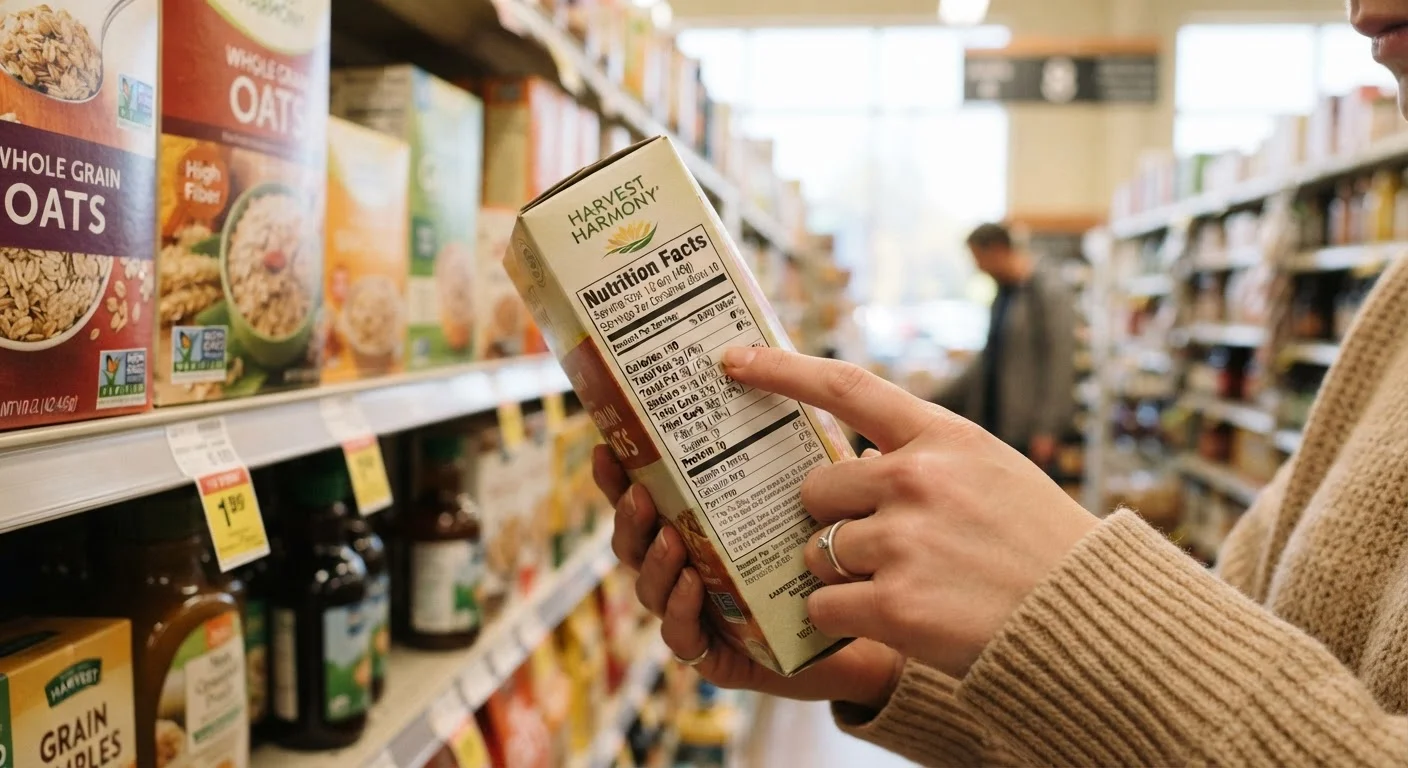
Start Here: Serving Size and Calories
The first thing to find on any Nutrition Facts panel is the serving size. Every number that follows - calories, fat, sodium, vitamins - is calculated for that one serving. The serving size is not a recommendation of how much to eat; it is a standardized reference set by the FDA so that all similar products can be compared on equal footing.
Directly below the serving size, you'll see the calorie count. This figure represents the total energy provided by one serving of the food. If a bag of chips lists 150 calories per serving but contains 3 servings per container, the entire bag delivers 450 calories. This is easy to overlook - the FDA updated labels to display servings per container prominently to reduce this confusion.
Check Servings Per Container First
Before reading any other number, look at how many servings are in the package. A product that looks moderate in calories might contain two or three servings in what most people would eat in one sitting. Multiplying the per-serving figures by actual servings consumed gives a much more accurate picture.
Calories alone don't tell the full story. Two foods with the same calorie count can have very different nutritional profiles depending on their fat, sugar, fiber, and protein content.
Understanding % Daily Value
% Daily Value (% DV) is one of the most useful - and most misunderstood - parts of the label. It shows what percentage of the recommended daily amount of a nutrient one serving provides, based on a reference diet of 2,000 calories per day. Most adults don't eat exactly 2,000 calories, but the scale still works as a reliable comparison tool.
A simple rule of thumb used by nutrition educators: 5% DV or less means a food is low in that nutrient; 20% DV or more means it is high. Use this to quickly identify foods that are high in nutrients you want more of - like fiber, calcium, and vitamin D - or to spot products that are high in nutrients most Americans are advised to moderate, like sodium and saturated fat.
70%+
Of Americans exceed recommended sodium intake
According to CDC data, the vast majority of U.S. adults consume more than the 2,300mg daily sodium limit recommended in the Dietary Guidelines for Americans.
5% or 20%
DV thresholds for low vs. high nutrient content
The FDA's own guidance uses these benchmarks to help consumers quickly interpret % Daily Value figures without needing to do calculations.
17 teaspoons
Average daily added sugar intake for U.S. adults
Research published using NHANES data found the average American adult consumes roughly 17 teaspoons of added sugar daily - well above the American Heart Association's general guidance.
The Nutrients Worth Paying Attention To
The label separates nutrients into two groups, though this framing isn't always spelled out:
- Nutrients to moderate: Saturated fat, trans fat, sodium, and added sugars. High intakes of these are linked by substantial evidence to elevated risk of cardiovascular disease, high blood pressure, and other chronic conditions.
- Nutrients to prioritize: Dietary fiber, vitamin D, calcium, iron, and potassium. These are nutrients many Americans under-consume, which is why the FDA requires them to be listed.
The added sugars line - indented below total sugars - is a particularly useful addition to the updated label format. Naturally occurring sugars (from fruit or plain dairy, for example) behave differently in the body than sugars added during manufacturing. For a closer look at where added sugars hide, see where added sugars hide in packaged foods.
Fiber deserves special attention. Most Americans fall well short of recommended intake levels - something explored in depth in why fiber matters and how to get more of it.
The Ingredient List: What's Actually in the Food
The ingredient list sits below the Nutrition Facts panel and follows one consistent rule: ingredients are listed in descending order by weight. The first ingredient makes up the largest proportion of the product; the last makes up the least. If sugar, refined flour, or a partially hydrogenated oil appears near the top, that ingredient is a major component of the food.
Ingredient lists can also help you identify nutrients that don't appear on the label - like the specific types of oils used or the presence of whole grains versus refined grains. Understanding how to read macronutrients in context is useful here; what protein, carbs, and fat each do in your body provides helpful background.
Front-of-Package Claims Aren't the Same as Labels
Terms like 'natural,' 'light,' 'low-fat,' or 'multigrain' on the front of a package are marketing descriptions, not standardized nutritional designations. Some terms like 'low sodium' and 'fat-free' do have FDA definitions, but many others do not. The Nutrition Facts panel and ingredient list on the back of the package are the regulated, reliable sources of information.
Putting the Label in Context
No single food makes or breaks an overall diet, and no single number on a label tells the whole story. Nutrition labels are tools for comparison and awareness - not scorecards. A food high in sodium might still be a reasonable choice for someone who eats very little sodium elsewhere; a food low in calories might offer very little nutritional value.
Labels are most useful when you use them consistently: to compare similar products, to keep an eye on nutrients relevant to your own health context, and to build broader awareness of what packaged foods contain. If you find yourself questioning common nutrition narratives, nutrition myths and what evidence actually shows is a helpful companion read.
This article is for general informational purposes only and does not constitute medical or dietary advice. For personalized guidance about your nutrition and health, consult a registered dietitian or qualified healthcare provider.
Frequently Asked Questions
% Daily Value (% DV) shows how much of a nutrient one serving provides relative to the daily recommended amount for an adult eating roughly 2,000 calories per day. It's a quick way to gauge whether a food is high or low in a particular nutrient. As a general guide, 5% DV or less is considered low and 20% DV or more is considered high.
No. The serving size reflects a standardized reference amount that the FDA bases on how much people typically eat in one sitting, not a dietary recommendation. All calorie and nutrient figures on the label are calculated per that serving, so if you eat more or less, the numbers scale accordingly.
Total sugars include all sugars in the food - both those naturally present (like in fruit or milk) and those added during processing. Added sugars appear on a separate indented line below total sugars and represent sweeteners introduced by the manufacturer. Dietary guidelines generally recommend limiting added sugars specifically.
Current dietary guidance generally suggests limiting saturated fat, sodium, and added sugars, as high intakes are associated with increased risk of cardiovascular disease and other chronic conditions. Trans fat should be minimized as much as possible. That said, individual health needs vary - a qualified healthcare provider can offer personalized guidance.
Fresh, single-ingredient fruits, vegetables, and meats are generally exempt from mandatory Nutrition Facts labeling under FDA rules, though many stores voluntarily post nutrition information nearby. Processed or packaged versions of these foods do require labels.
FDA regulations allow a margin of variation - typically up to 20% - in the nutrient values printed on labels. The figures are close approximations based on testing or calculation, and actual values can differ slightly between batches. Still, labels provide a consistently useful reference for comparing products and tracking intake patterns.
The content on this site is provided for informational purposes only and should not be considered a substitute for professional advice. While we strive to provide accurate and up-to-date information, we make no guarantees regarding its completeness or accuracy. Always consult a qualified professional for advice specific to your circumstances before making any decisions.