

Start here
Why Strength Training Is Worth Starting
Learn the basics
The Core Movements Every Beginner Should Know
Build your plan
How to Structure Your First Routine
Train smart
Staying Safe and Avoiding Common Mistakes
Make it last
Building a Habit That Actually Sticks
Why Strength Training Is Worth Starting
Strength training - using resistance to challenge your muscles - delivers benefits well beyond appearance. Research links regular resistance exercise to improved bone density, better blood sugar regulation, reduced risk of injury, and enhanced mood. It also supports metabolic health and functional independence as people age.
You don't need to be an athlete or own any equipment to begin. The barrier to entry is lower than most people assume. If you've been away from exercise for a while, our guide on starting over after a long break from exercise offers useful context on setting realistic expectations. Before beginning any new fitness program, it's also worth completing a readiness check - see this readiness checklist to assess your starting point.
This article is for general informational and educational purposes only and is not a substitute for medical advice. If you have any health conditions or concerns, consult a qualified healthcare professional before starting a new exercise program.
The Core Movements Every Beginner Should Know
Strength training is built on a small set of fundamental movement patterns. Mastering these covers nearly everything your body needs:
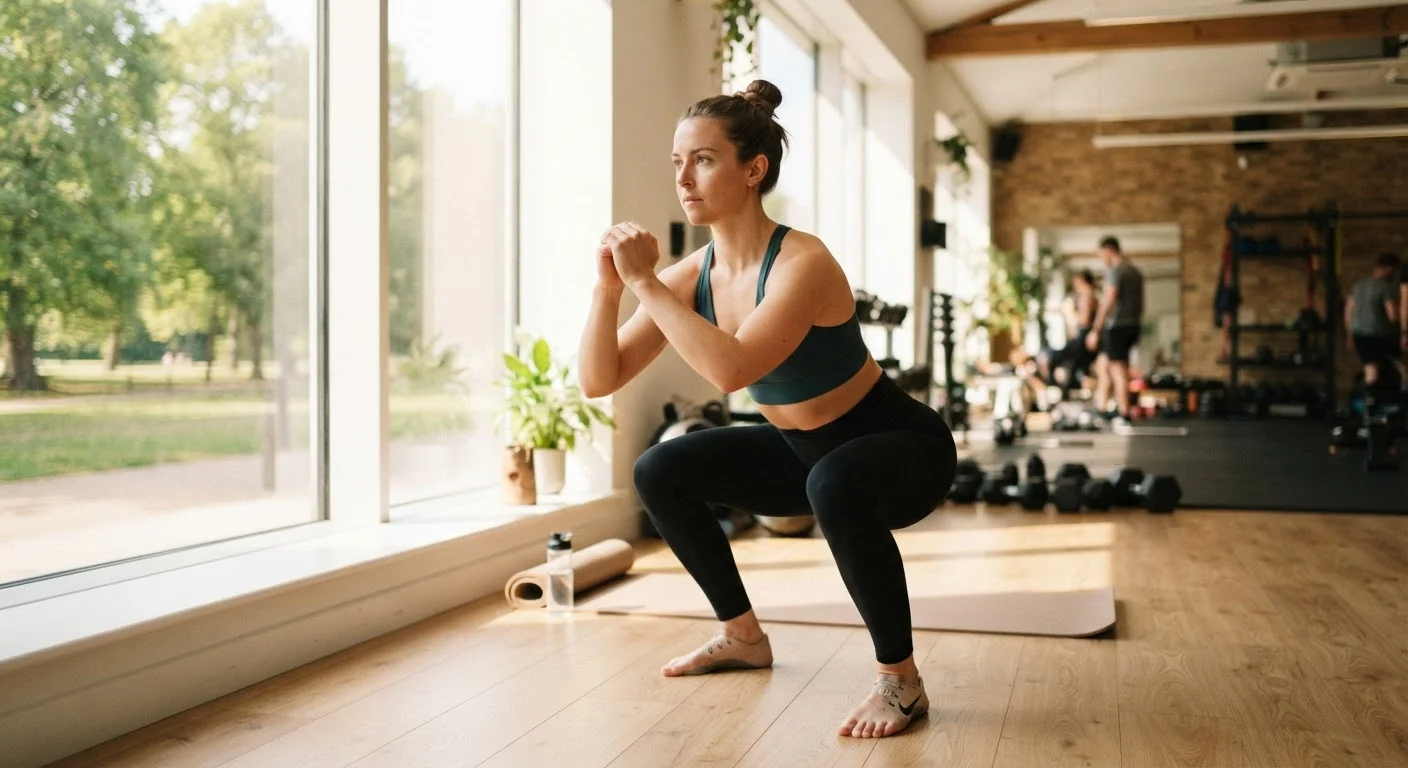
- Squat - lowering and raising your body by bending at the hips and knees. Builds leg and glute strength.
- Hinge - pushing your hips back while keeping a neutral spine, as in a deadlift or Romanian deadlift. Targets the posterior chain: hamstrings, glutes, and lower back.
- Push - pressing away from your body, horizontally (push-up) or vertically (overhead press). Works chest, shoulders, and triceps.
- Pull - drawing weight toward your body, such as a row or pull-up. Develops the upper back and biceps.
- Carry - walking while holding weight. Builds core stability and grip strength with minimal technique required.
Beginners can start all five patterns using only bodyweight. If you're unsure whether to use free weights or machines when you're ready to add resistance, our article on free weights vs. machines explains the tradeoffs clearly.
Progressive Overload
Gradually increasing the challenge placed on your muscles over time - through more weight, more reps, or less rest - so that they continue to adapt and grow stronger.
Rep (Repetition)
One complete execution of an exercise movement, from start position back to start position. For example, one full squat counts as one rep.
Set
A group of consecutive repetitions performed without stopping to rest. Doing 10 squats, then resting, is one set of 10 reps.
DOMS
Delayed Onset Muscle Soreness - the muscle ache that typically appears 24-48 hours after an unfamiliar or intense exercise session. It's common and usually harmless.
Posterior Chain
The group of muscles running along the back of the body, including the hamstrings, glutes, and lower back. These muscles are key to posture, lifting, and athletic movement.
Neutral Spine
A natural, aligned position of the spine during exercise - not excessively rounded or arched - that reduces stress on the vertebrae and surrounding tissue.
How to Structure Your First Routine
A simple full-body routine performed two or three times per week is an effective and manageable starting structure. Each session might include one exercise from each movement pattern, performed for two to three sets of eight to twelve repetitions, with about 60-90 seconds of rest between sets.
For example, a beginner session could look like: bodyweight squats, push-ups, a resistance band row, a glute bridge (a hip hinge variation), and a short farmer's carry with light dumbbells or water jugs. That's roughly 20-30 minutes of actual training - achievable even on a busy schedule.
If a full gym isn't accessible, a bodyweight-only approach works well. Our guide on building a home workout routine without equipment shows how to structure effective sessions at home.
Start With What You Can Actually Do
If a standard push-up is too difficult, do it with your knees on the floor or hands elevated on a bench. If bodyweight squats feel unstable, hold a doorframe for balance. Modifying an exercise to match your current ability is not cutting corners - it's how you build toward the full movement safely.
Staying Safe and Avoiding Common Mistakes
The most common beginner mistakes aren't about effort - they're about skipping steps. Here's what to watch for:
- Adding weight too soon. Master the movement pattern with bodyweight or light resistance first. Rushing to heavier loads is a primary cause of early injury.
- Neglecting the warm-up. Five to ten minutes of light movement - walking, leg swings, arm circles - prepares joints and raises muscle temperature before loading them.
- Ignoring discomfort signals. Muscle fatigue is normal. Sharp, joint-based, or sudden pain is not. Stop if something feels wrong and seek guidance.
- Skipping recovery. Muscles adapt during rest, not during training. Lifting every day without adequate recovery can stall progress and increase injury risk.
When to Consult a Healthcare Professional
If you have a history of heart disease, joint problems, osteoporosis, or other chronic conditions, talk to your doctor before beginning a strength training program. Certain exercises may need to be modified or avoided depending on your health history. This article provides general information only and is not a substitute for personalized medical guidance.
Building a Habit That Actually Sticks
Consistency is the primary driver of long-term results. The research on behavior change suggests that attaching a new habit to an existing routine - sometimes called habit stacking - improves follow-through. Keeping sessions short and manageable at the start also reduces the friction that causes many beginners to quit.
Track your sessions simply: note the exercises, sets, and reps you completed. Over time, gradually increasing that workload - adding a rep, a set, or a small amount of weight - is the principle of progressive overload, and it's what drives continued adaptation. See our glossary of key gym terms for a clear explanation of this and other foundational concepts.
Give yourself a realistic timeline. Noticeable changes in strength and endurance often emerge within four to eight weeks of consistent training, though individual results vary. The goal at the start is simply to keep showing up.
Frequently Asked Questions
No. Many effective beginner routines require no equipment at all. Bodyweight exercises like squats, push-ups, and lunges can build real strength at home. If you eventually want to add resistance, resistance bands and adjustable dumbbells are affordable options.
Two to three days per week is a well-supported starting point for beginners. This allows adequate recovery time between sessions, which is when muscle adaptation actually occurs. Doing more isn't necessarily better when you're just starting out.
Building significant muscle mass requires sustained, deliberate effort over a long period - it doesn't happen accidentally. For most people, strength training produces a leaner, more toned appearance rather than bulk. Body composition changes depend on training volume, nutrition, and individual biology.
Some muscle soreness after new exercise, called delayed onset muscle soreness (DOMS), is common but not a reliable marker of progress. Soreness typically decreases as your body adapts to training. Severe or sharp pain during exercise is a signal to stop and reassess.
Research consistently supports strength training as beneficial for older adults, helping maintain muscle mass, bone density, and functional independence. Anyone with existing health conditions or concerns should speak with their healthcare provider before starting a new exercise program.
A rep (repetition) is one complete movement - one squat, one push-up. A set is a group of reps performed consecutively. For example, doing 10 squats, resting, then doing 10 more equals two sets of 10 reps. See our <a href="/health-wellness/fitness-movement/key-terms-every-new-gym-goer-should-understand">fitness terminology guide</a> for more definitions.
The content on this site is provided for informational purposes only and should not be considered a substitute for professional advice. While we strive to provide accurate and up-to-date information, we make no guarantees regarding its completeness or accuracy. Always consult a qualified professional for advice specific to your circumstances before making any decisions.