

How the Original Cash System Works
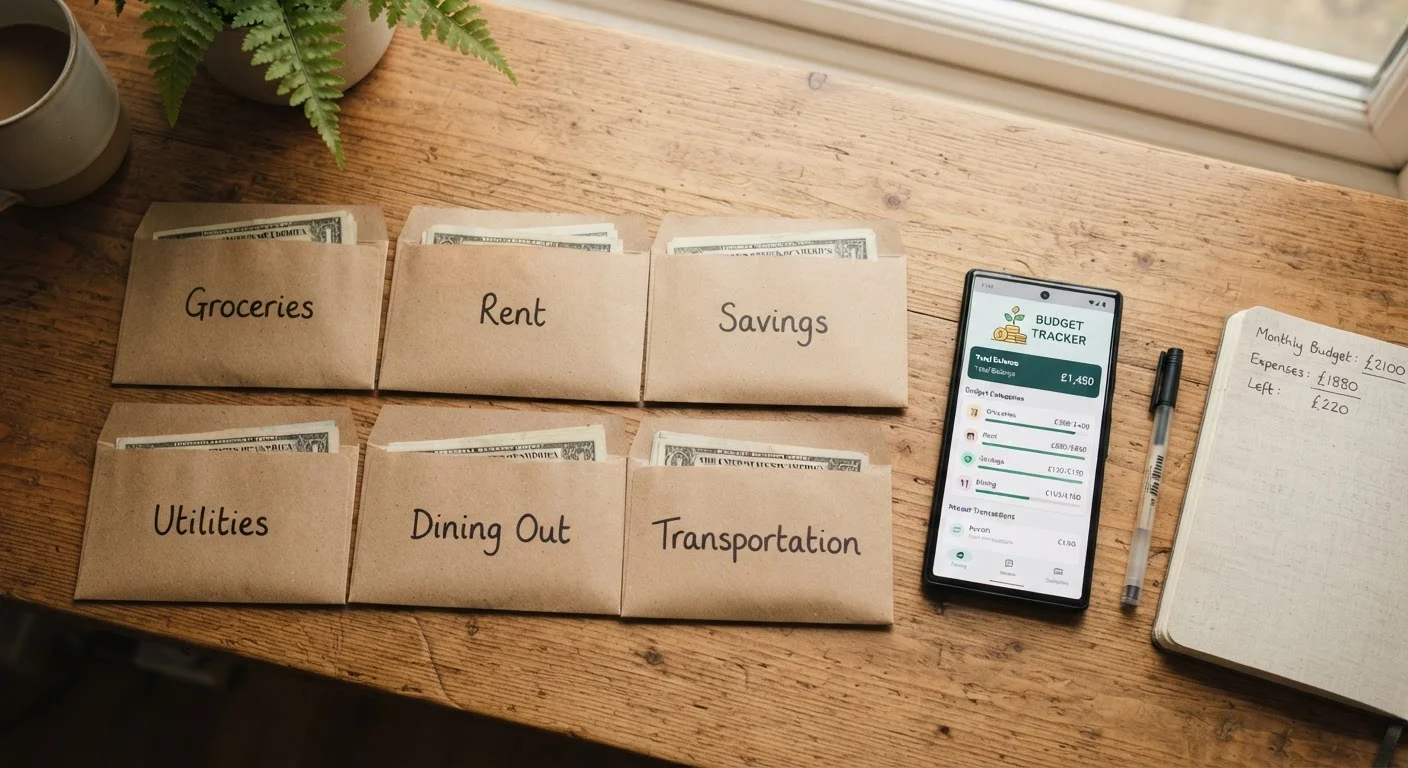
The envelope method dates back to a time when most households were paid in cash. The mechanics are straightforward: at the start of each pay period, you withdraw your spending money and physically sort it into labeled envelopes - one for groceries, one for gas, one for dining out, and so on. Each envelope holds only what you've budgeted for that category. When the cash is gone, spending in that category stops.
This simplicity is its strength. There's no abstraction between you and your money. You can see and feel the balance shrinking, which creates an immediate, tangible connection to spending decisions that a credit card statement reviewed three weeks later simply cannot replicate.
Fixed expenses - rent, insurance premiums, loan payments - generally aren't suited to the envelope approach because they don't flex. The system is most powerful for discretionary categories: the variable, day-to-day spending where choices happen in real time. Understanding these terms clearly is worth the effort; our glossary of key budgeting terms defines discretionary spending and related concepts.
Start With Just Three or Four Envelopes
New users often create too many categories, which makes the system feel burdensome. Begin with the two or three areas where your spending feels most out of control - typically groceries, dining, and entertainment. Add more categories only once the habit is established. Simplicity is what makes the system stick.
Why the Psychology Works
Behavioral economists have long documented that people spend more freely when using cards or digital payments than when using cash - a pattern sometimes called the "pain of paying." Physical cash triggers a stronger emotional response to loss, which makes people more deliberate about each purchase.
Envelope budgeting harnesses this effect by design. Even in its digital form, breaking spending into named, limited buckets preserves some of that psychological friction. Seeing a grocery envelope show $12 remaining before the end of the week prompts a real decision: adjust the meal plan, or pull from another category and accept that trade-off.
“The reason most people fail at budgeting isn't math - it's that the numbers never feel real. A system that forces you to confront the remaining balance before every purchase changes the equation entirely.”
— Behavioral Finance Researcher, Academic researcher studying consumer spending and financial decision-making
This is why the method tends to help people who know their budget on paper but still overspend in practice. Knowing a limit exists is different from feeling it. The envelope system makes the limit visceral rather than abstract.
Translating the System Into Digital Tools
Most Americans no longer carry meaningful amounts of cash, which makes the original system impractical for everyday use. The digital translation preserves the core logic - fixed allocations, category-level tracking, visible balances - while adapting to how people actually spend.
In a digital setup, each "envelope" is a labeled budget category tracked in an app or spreadsheet. Every transaction is assigned to a category, and the remaining balance updates accordingly. Some apps automate transaction imports from linked bank accounts; others require manual entry, which many users find reinforces the intentionality the system is designed to build.
36%
Americans with a written monthly budget
A Gallup survey found that fewer than four in ten Americans follow a detailed household budget, suggesting most people manage spending without a structured system.
83%
Transactions made without cash in the U.S.
According to the Federal Reserve's Diary of Consumer Payment Choice, the vast majority of U.S. payment transactions are now made electronically or by card rather than cash.
For a detailed look at how paper, spreadsheet, and app-based tracking compare in practice, see our article on budgeting across different formats. The right tool is ultimately the one you'll actually use consistently.
Who Benefits Most - and Where the Method Has Limits
Envelope budgeting is well-suited to people who:
- Consistently overspend in specific, variable categories like dining or entertainment
- Find abstract numbers in a bank app easy to ignore
- Prefer a simple, low-maintenance system over detailed financial tracking
- Are building their first structured spending plan
It works less well for households with highly irregular income, since pre-allocating envelopes requires knowing what you'll earn. It also adds friction for people whose spending is already disciplined and who benefit more from forward-looking planning tools.
No budgeting framework is universally superior. Envelope budgeting is one approach within a broader set of options covered in our complete personal budgeting resource. The method that produces results is the one you engage with regularly - not the one that looks best on paper.
This article is for general informational and educational purposes only and does not constitute personalized financial advice. Consider consulting a qualified financial professional for guidance specific to your situation.
Frequently Asked Questions
No. The cash version is the original, but digital apps and spreadsheets can replicate the same logic without physical bills. Many people find digital tracking easier to maintain since most spending now happens on cards or online.
Common categories include groceries, dining out, transportation, entertainment, clothing, and personal care. Fixed bills like rent or loan payments don't typically need envelopes since they don't vary. Focus envelopes on the spending areas where you tend to overspend.
You have two honest options: stop spending in that category until the month resets, or consciously transfer money from another envelope. The decision forces a real trade-off, which is exactly the discipline the system is designed to build.
They share the same core principle - assigning every dollar a job - but aren't identical. Zero-based budgeting is a broader framework; envelope budgeting is a specific implementation method. You can learn more about how these approaches differ in our <a href="/finance/budgeting-basics/zero-based-budgeting-vs-percentage-based-budgeting">comparison of zero-based and percentage-based budgeting</a>.
Several personal finance apps are built around envelope-style allocation, though we don't endorse specific products. Look for apps that allow you to create named spending categories with individual limits and track your remaining balance in each. A spreadsheet can work just as well for many people.
It can be a strong starting point because it's simple and visual. If you've never built a budget before, pairing envelope budgeting with a broader introduction can help. Our <a href="/finance/budgeting-basics/your-first-personal-budget-a-ground-up-walkthrough">first personal budget walkthrough</a> covers the foundational steps.
The content on this site is provided for informational purposes only and should not be considered a substitute for professional advice. While we strive to provide accurate and up-to-date information, we make no guarantees regarding its completeness or accuracy. Always consult a qualified professional for advice specific to your circumstances before making any decisions.