

Our Verdict
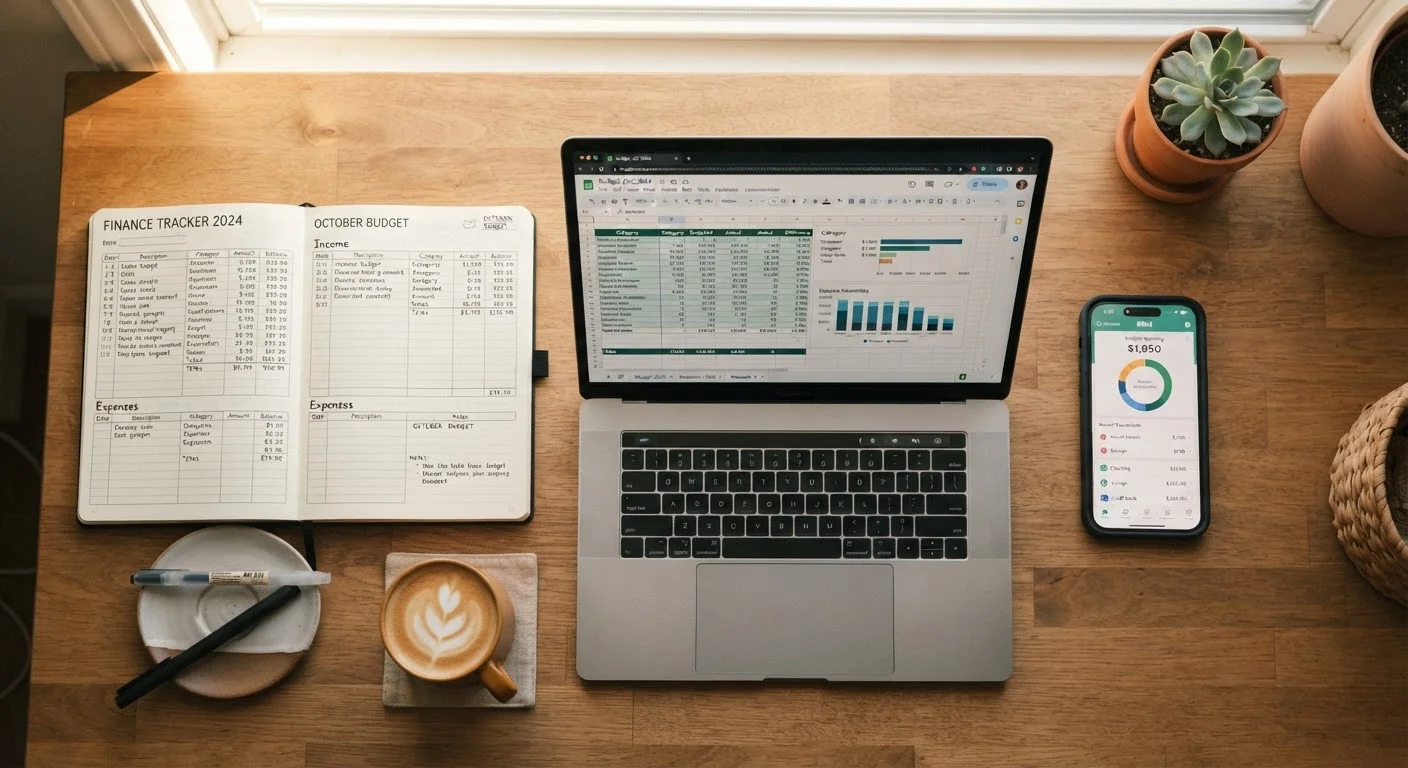
No single budgeting format is objectively superior - each works well for a different type of person. Paper is best for hands-on learners who want to feel every dollar. Spreadsheets suit analytical thinkers who want full control. Apps fit busy people who need automation to stay consistent. The right choice is the one you'll open week after week.
| Best for | Recommended |
|---|---|
| Those who learn best by writing things out and want zero privacy concerns | Paper budgeting |
| Analytical users who want complete customization without subscription costs | Spreadsheet budgeting |
| Busy individuals who need automated tracking and real-time spending alerts | App-based budgeting |
| Beginners who have never tracked spending before | Paper budgeting or a simple spreadsheet |
Why the Format Matters More Than You Think
Most budgeting advice focuses on what to track - income, fixed expenses, discretionary spending - but glosses over how you track it. That's a mistake. The format you choose shapes how often you engage with your budget, how much friction stands between you and your numbers, and ultimately whether the habit sticks at all.
Before comparing the three main approaches, it helps to understand what you're actually evaluating: not which method is theoretically best, but which one fits your habits, your schedule, and your comfort with technology. If you're new to budgeting altogether, the ground-up walkthrough for first-time budgeters covers the foundational steps that apply regardless of which format you pick.
Paper Budgeting: The Case for Going Analog
Writing a budget by hand - in a notebook, a printed template, or a dedicated planner - is the oldest approach, and it still has genuine advantages. Research in cognitive science consistently suggests that the physical act of writing reinforces memory and engagement, which may explain why many people feel more connected to a paper budget than a digital one.
Advantages:
- No software, subscription, or internet connection required
- Complete privacy - your financial data stays entirely offline
- The friction of writing by hand slows you down, which can deepen awareness of spending patterns
- Easy to customize with any layout you prefer
Limitations:
- Recalculating totals manually after every change is time-consuming
- No automatic transaction imports - every entry is manual
- Easy to lose or forget to update if you skip a few days
- Difficult to run historical comparisons across multiple months
Paper works best for people who want a tactile, low-tech relationship with their money or who are starting from scratch and want to understand the basics before adding complexity. It pairs naturally with a 30-day spending observation period before you formalize any budget categories.
Start Simple, Then Add Complexity
If you're uncertain which format fits you, start with a paper budget for one full month. The low barrier to entry means you'll get real data about your spending patterns without committing to software or a subscription. Once you know your baseline numbers, you can decide whether a spreadsheet or app would add genuine value - or whether paper is already working well enough.
Spreadsheet Budgeting: Power and Flexibility at a Cost
A spreadsheet - whether in Google Sheets, Microsoft Excel, or a similar tool - sits between paper and an app in terms of automation. You set up the structure once, enter your own data, and the formulas do the math. That combination of manual input and automatic calculation gives spreadsheets a unique middle-ground appeal.
Advantages:
- Fully customizable: build any category, formula, or chart you want
- Free or very low cost with tools like Google Sheets
- Powerful for month-over-month comparison and trend analysis
- Your data stays with you, not in a third-party app's servers
Limitations:
- Requires some comfort with formulas and spreadsheet logic to set up effectively
- Still relies entirely on manual data entry - no bank syncing
- Templates can feel overwhelming or unnecessarily complex for beginners
- Errors in formulas can silently skew your numbers
Spreadsheets are a natural fit for people who are comfortable with numbers and want granular control without paying subscription fees. If you're also evaluating how to structure the budget itself - not just the format - comparing zero-based versus percentage-based budgeting methods can help you decide what categories and logic to build into your sheet.
| Paper | Spreadsheet | App | |
|---|---|---|---|
| Setup effort | Very low | Medium to high | Low |
| Ongoing time required | High (all manual) | Medium (formulas help) | Low (auto-syncing) |
| Cost | Near zero | Free to low | Free to $10+/month |
| Customization | Unlimited | Unlimited | Limited to app features |
| Privacy | Fully private | Fully private | Requires data sharing |
| Best for | Hands-on beginners | Analytical, detail-oriented users | Busy, tech-comfortable users |
| Trend analysis | Difficult | Strong | Built-in dashboards |
App-Based Budgeting: Automation With Trade-Offs
Budgeting apps connect directly to your bank accounts and credit cards to import transactions automatically, categorize spending, and display real-time summaries. For people with busy schedules or inconsistent budgeting habits, this automation can be the difference between a budget that gets checked weekly and one that's abandoned by February.
Advantages:
- Automatic transaction syncing reduces manual entry to a minimum
- Real-time alerts for overspending in a category
- Visual dashboards make trends easier to spot quickly
- Many apps offer goal-tracking tied directly to spending behavior
Limitations:
- Requires sharing banking credentials or read-only account access with a third party
- Monthly or annual subscription costs vary and can add up
- Automatic categorization is often inaccurate and needs regular correction
- If the app shuts down or changes pricing, you may lose your historical data
Privacy is the most significant concern with apps. Understand what data the app collects, how it's stored, and whether it's sold before linking your accounts. This is general information - for guidance on your specific situation, consulting a financial professional is worthwhile. Apps also work best once you already understand your fixed versus variable expenses so you can verify whether automatic categorization is sorting things correctly.
Choosing the Right Format for Your Situation
The most effective budgeting format is the one you'll actually use over time. A few practical questions can help narrow it down:
- How tech-comfortable are you? If syncing accounts and navigating dashboards sounds stressful, start with paper or a simple spreadsheet.
- How important is privacy to you? Paper and spreadsheets keep your data entirely in your hands. Apps do not.
- Do you have irregular income or complex finances? Spreadsheets give you the most flexibility to accommodate unusual situations.
- Are you frequently forgetting to check in? An app with push notifications can act as a prompt that paper and spreadsheets cannot.
You can also combine formats - for example, doing a high-level monthly plan on paper and using an app to track day-to-day spending. There's no rule against it. What matters is building a habit you can sustain, and that often starts with understanding the core budgeting vocabulary so you know what you're measuring in the first place.
This article is for general informational and educational purposes only and does not constitute personalized financial advice. For guidance specific to your financial situation, consider consulting a qualified financial professional.
The content on this site is provided for informational purposes only and should not be considered a substitute for professional advice. While we strive to provide accurate and up-to-date information, we make no guarantees regarding its completeness or accuracy. Always consult a qualified professional for advice specific to your circumstances before making any decisions.