

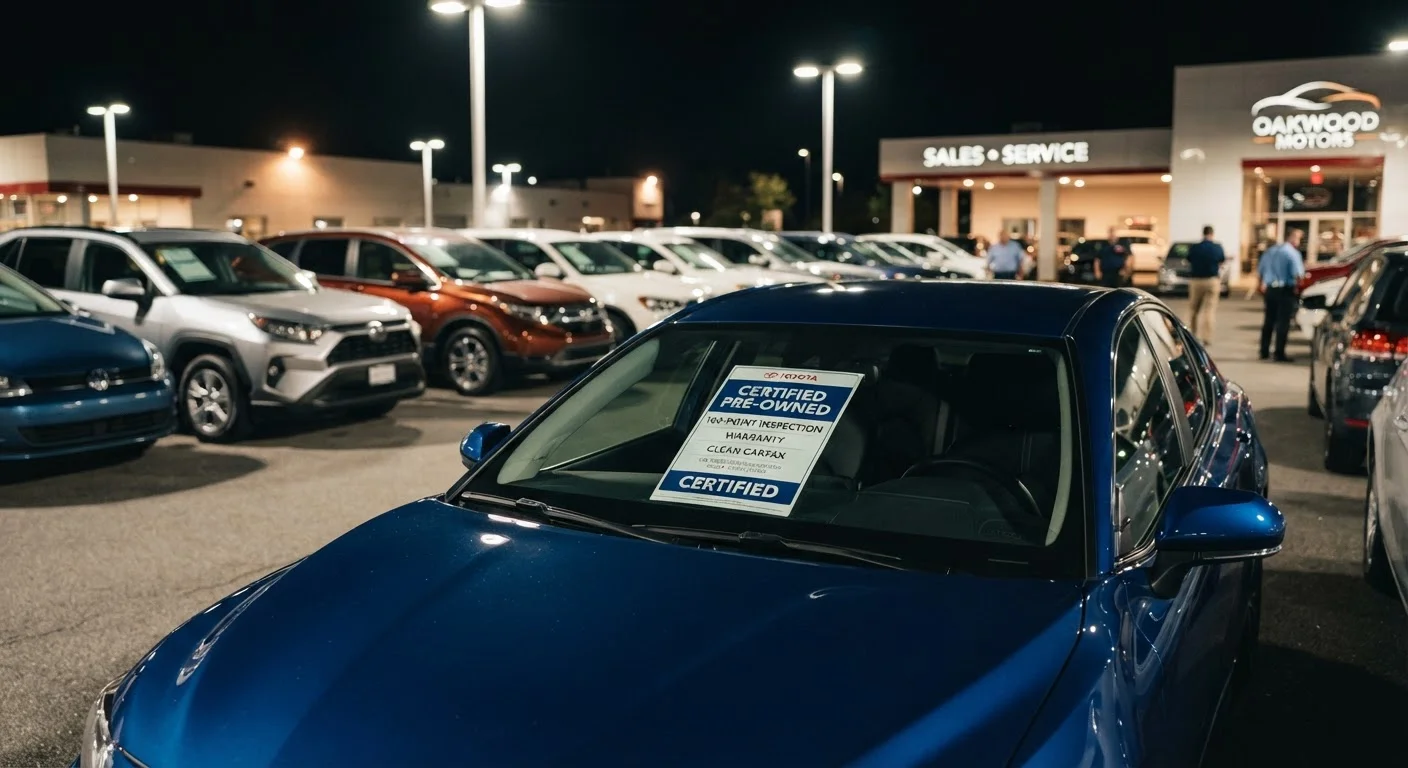
Option A
Certified Pre-Owned (CPO)
The manufacturer-backed, inspected, and warrantied option.
Best for: Buyers who want used-car pricing with added peace of mind and some warranty coverage remaining.
Option B
Regular Used
The straightforward, unenhanced pre-owned vehicle.
Best for: Budget-conscious buyers willing to do their own due diligence or pay for a third-party inspection.
What "Certified Pre-Owned" Actually Means
The term Certified Pre-Owned - commonly abbreviated as CPO - refers to a used vehicle that has passed a manufacturer-defined inspection process and is being sold with some form of extended warranty or additional consumer protection. The key phrase there is manufacturer-defined: there is no federal standard governing what a CPO program must include. Each automaker sets its own rules, which means a CPO label from one brand may cover significantly more - or less - than one from another.
Genuine manufacturer CPO programs are only available through franchised dealerships authorized to sell that brand. You cannot buy a CPO Toyota from an independent used-car lot or a private seller. If you see "certified" language outside that context, it typically reflects a dealer's own internal inspection - a process with no manufacturer backing and no standardized requirements. Understanding that distinction is the foundation of making an informed decision. For a plain-English breakdown of other terminology you'll encounter during the buying process, see our car-buying terms reference guide.
"Dealer Certified" Is Not the Same as Manufacturer CPO
Some independent dealerships use terms like "dealer certified" or "pre-inspected" to describe vehicles they've checked internally. These labels carry no manufacturer backing and no standardized warranty. They reflect the dealership's own process, which may be thorough - or minimal. Always ask specifically whether a vehicle is part of the manufacturer's official CPO program and request documentation to confirm.
How CPO and Regular Used Cars Compare Side by Side
The practical differences between a certified and a standard used vehicle come down to three areas: inspection documentation, warranty coverage, and price. Here's how they stack up:
| Criterion | Certified Pre-Owned | Regular Used |
|---|---|---|
| Inspection requirement | Mandatory multi-point manufacturer inspection | None required; condition varies |
| Warranty coverage | Extended manufacturer warranty included | As-is unless dealer adds one |
| Vehicle history documentation | Typically required as part of certification | Optional; buyer must request |
| Typical price premium | Higher - reflects certification costs | Lower - no certification markup |
| Age and mileage limits | Yes - manufacturer sets thresholds | None - any age or mileage |
| Where it can be purchased | Franchised dealerships only | Dealers, private sellers, auctions |
| Roadside assistance | Often included in CPO package | Not included by default |
CPO vehicles are generally limited to models within a certain age and mileage threshold - commonly under six years old and under 80,000 miles, though this varies by manufacturer. Regular used cars face no such restrictions, giving buyers access to a wider range of makes, model years, and price points. That flexibility is one of the main reasons the regular used market remains robust even as CPO programs expand.
What CPO Inspections Actually Cover
Most manufacturer CPO programs advertise a multi-point inspection - commonly cited as anywhere from 100 to 200+ inspection points. In practice, these checklists verify that a vehicle meets acceptable standards across major systems: engine, transmission, brakes, suspension, electrical components, and exterior and interior condition. Items that don't meet the standard must be repaired before the vehicle earns the CPO designation.
However, the depth of each check matters as much as the number of items on the list. Confirming that a brake light functions is technically an inspection point - but it tells you less than a measured brake pad thickness reading. Before relying on CPO documentation, request a copy of the actual inspection report and look for specifics rather than checkboxes. If the report is vague or unavailable, that warrants caution.
Warranty terms deserve the same scrutiny. Some programs offer bumper-to-bumper coverage for a set period after the certified sale date; others extend only the powertrain warranty from the original sale. Deductibles, covered components, and what voids coverage all vary. For comparison purposes, our article on new vs. used car trade-offs covers how manufacturer warranties on new vehicles differ from both CPO and standard used coverage.
When a Regular Used Car Is the Smarter Move
A regular used car without CPO status is not inherently riskier - it's simply unverified by the manufacturer's program. The risk level depends almost entirely on what due diligence you perform before buying. A thorough pre-purchase inspection by an independent mechanic can surface most of the same concerns a CPO inspection would catch, often for a relatively modest flat fee.
Combining an independent inspection with a vehicle history report gives you a clear picture of accident history, reported odometer readings, and service records. For buyers who are comfortable coordinating these steps, the savings from avoiding a CPO premium - which can range from a few hundred to several thousand dollars depending on the vehicle - may outweigh the added warranty coverage, particularly if the vehicle is already near the end of what CPO coverage would provide anyway.
Once you've done your research and are ready to finalize the deal, the questions you ask at the table matter significantly. Our guide to questions worth asking before signing can help you protect yourself in those final moments regardless of whether you're buying CPO or regular used.
This article is for general informational and educational purposes only. Vehicle pricing, program terms, and coverage details vary by manufacturer, dealership, and individual vehicle. Always review actual program documentation and consult with a qualified automotive professional before making a purchase decision.
The content on this site is provided for informational purposes only and should not be considered a substitute for professional advice. While we strive to provide accurate and up-to-date information, we make no guarantees regarding its completeness or accuracy. Always consult a qualified professional for advice specific to your circumstances before making any decisions.