

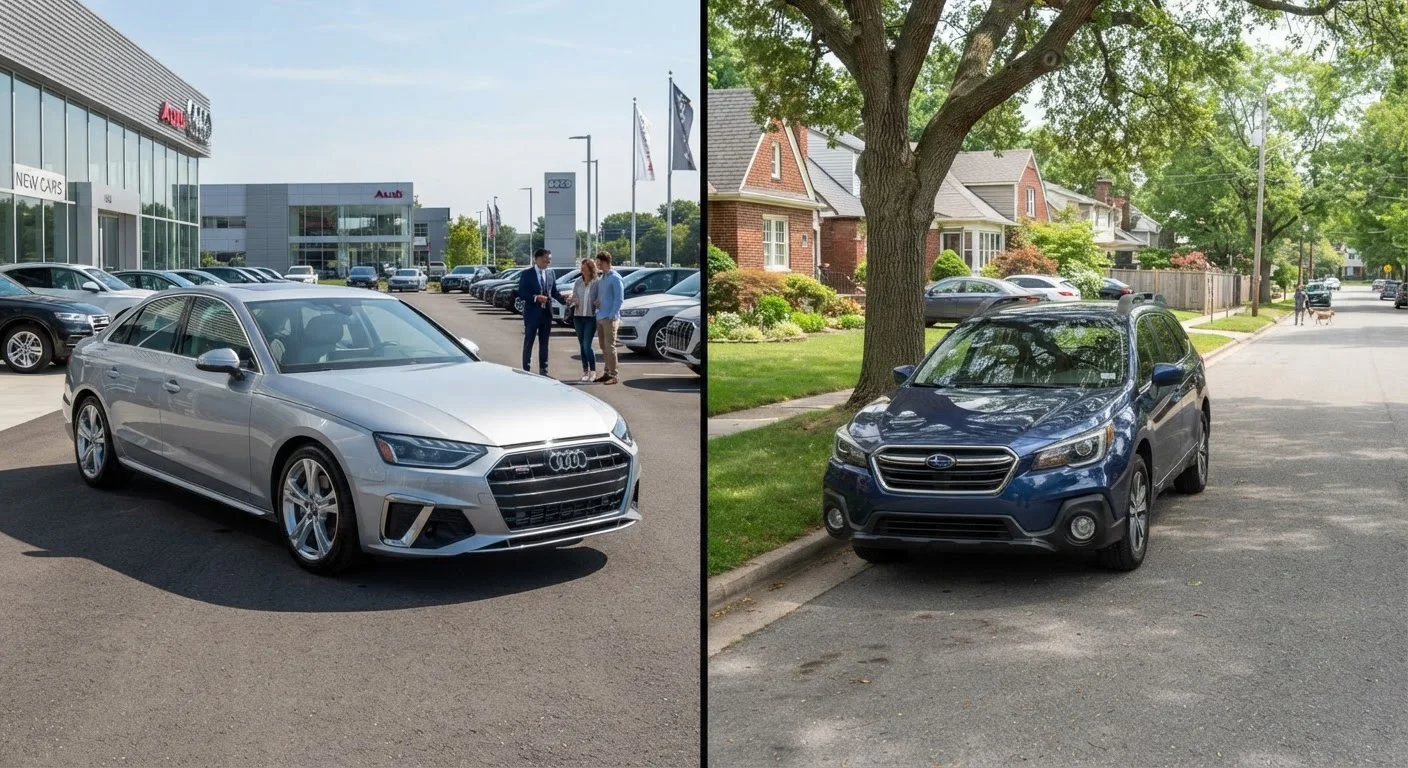
Option A
New Car
The full-warranty, latest-tech, higher-cost choice.
Best for: Buyers who want complete peace of mind, the latest safety features, and plan to own a vehicle long-term.
Option B
Used Car
The value-focused, depreciation-savvy alternative.
Best for: Budget-conscious buyers who want lower monthly costs and are comfortable with some trade-offs in age or mileage.
Depreciation: The Single Biggest Financial Factor
Depreciation - the loss of a vehicle's market value over time - is where the new vs. used financial equation is most starkly decided. New vehicles typically lose a substantial portion of their value in the first one to three years of ownership. By contrast, a used car that's already experienced that initial drop lets the next buyer avoid absorbing it.
This matters most if you plan to sell or trade the vehicle within a few years. If you intend to drive a car until it's no longer economical to repair, the depreciation curve is less consequential - what matters more is reliability and long-term maintenance cost. For a deeper look at how depreciation figures into the full picture, see our guide on total cost of ownership.
| Criterion | New Car | Used Car |
|---|---|---|
| Purchase Price | Higher (full MSRP) | Lower (post-depreciation) |
| Depreciation Exposure | Absorbs initial drop | Prior owner absorbed it |
| Manufacturer Warranty | Full coverage included | Expired or limited (CPO varies) |
| Typical Financing Rate | Generally lower APR | Generally higher APR |
| Technology & Safety Features | Latest generation | Varies by model year |
| Ownership History | None - clean slate | Unknown or documented |
| Insurance Costs | Typically higher | Typically lower |
| Maintenance Risk | Low in early years | Varies by age and mileage |
Warranties, Reliability, and the Risk Question
A new car comes with a manufacturer's warranty - typically a bumper-to-bumper coverage period plus a longer powertrain warranty - giving buyers a defined window of protection against defects. Used cars sold privately or through independent dealers carry no such assurance unless separately negotiated.
That said, modern vehicles are more durable than earlier generations. A well-maintained three- to five-year-old car from a reliable manufacturer can offer years of dependable service. The key is due diligence: a pre-purchase inspection by an independent mechanic, a vehicle history report, and an understanding of the model's known issues go a long way toward reducing risk.
Buyers who want both value and warranty protection should explore certified pre-owned (CPO) programs. These manufacturer-backed programs apply inspection standards and extend coverage, though the details vary significantly. See our breakdown of what CPO really means before assuming all programs are equal.
~20%
Average first-year depreciation on new vehicles
Industry estimates from automotive valuation sources consistently place new-car depreciation in the 15-25% range within the first year of ownership.
3-5 yrs
Age range where used-car value tends to be strongest
Vehicles in this age window have absorbed significant depreciation but typically retain modern safety features and remaining reliability.
1-2%+
Common APR gap between new and used auto loans
Federal Reserve consumer credit data has historically shown used auto loan rates running higher than new vehicle rates from the same lenders.
Financing Rates and the True Monthly Cost
Lenders typically offer lower annual percentage rates (APRs) on new vehicles than on used ones, partly because new cars are considered lower-risk collateral. Manufacturers also periodically offer promotional financing rates through their captive lenders, though these offers depend on credit qualification and market conditions.
For used vehicles, interest rates from banks and credit unions tend to be higher, and they rise further for older or higher-mileage cars. A buyer financing a used car at a meaningfully higher rate over the same term could end up paying more in total interest than expected - partially eroding the savings from the lower purchase price.
Running the actual numbers - loan amount, rate, and term - for both scenarios is essential before assuming used is automatically cheaper per month. First-time buyers in particular should read our practical orientation for first-time buyers to understand how credit history affects these rates.
Making the Decision That Fits Your Situation
Neither choice is universally superior. A new car makes the most financial sense when you plan to own it long-term, qualify for competitive financing, and value minimizing maintenance uncertainty. A used car makes sense when upfront cost is a priority, you're comfortable managing some mechanical risk, or you can access a significantly higher trim level than your budget would otherwise allow.
Before committing, look beyond the sticker price and monthly payment. Factor in insurance costs (which differ between new and used), registration fees in your state, expected maintenance, and how quickly you'd want to upgrade. Our complete car-buying walkthrough covers every stage from budgeting to signing, and is worth reading before you set foot in a dealership. If you plan to trade in a vehicle, also review common trade-in myths to avoid avoidable negotiation missteps.
Don't Overlook Total Cost of Ownership
Sticker price and monthly payment are only part of what you'll actually spend. Insurance premiums, state registration fees, fuel costs, and expected maintenance all vary between new and used vehicles - and can shift the financial comparison significantly. Building a full cost estimate before you buy gives you a much clearer picture of your actual annual outlay.
The content on this site is provided for informational purposes only and should not be considered a substitute for professional advice. While we strive to provide accurate and up-to-date information, we make no guarantees regarding its completeness or accuracy. Always consult a qualified professional for advice specific to your circumstances before making any decisions.