

Why an Independent Inspection Is Worth Arranging
Buying a used car based on a test drive and a clean exterior is a gamble. What you see on the surface rarely tells the full story. A pre-purchase inspection (PPI) gives you an expert, unbiased look at what's actually going on under the hood - and beneath the car - before any money changes hands.
Unlike a test drive, which captures how a car feels to drive, a PPI documents what a trained mechanic can observe, measure, and diagnose. These are often very different pictures. A vehicle can drive smoothly while quietly harboring a cracked frame, a leaking transmission, or poorly repaired collision damage. A structured test drive is still essential, but it complements rather than replaces a professional inspection.
The cost - typically $100 to $200 at an independent shop - is modest compared to the potential cost of a transmission replacement, brake system overhaul, or structural repair that could run into thousands of dollars. Viewed as basic due diligence, a PPI is one of the smartest investments in the used car buying process.
Arrange the Inspection Before Negotiating Price
It's generally best to conduct a PPI before finalizing any price agreement. Inspection findings give you concrete, documented leverage to negotiate. If you've already agreed to a price and then discover problems, renegotiating becomes more difficult and may feel adversarial to the seller.
What a Mechanic Examines During a PPI
A thorough pre-purchase inspection covers several major systems and categories. Here's what a qualified mechanic will typically evaluate:
- Engine and drivetrain: The mechanic looks for oil leaks, unusual fluid levels or colors, belt and hose condition, and signs of overheating. Engine mounts, the timing belt or chain, and the condition of the cooling system are also assessed.
- Transmission: Both automatic and manual transmissions are checked for smooth shifting, fluid condition, and signs of slipping or hesitation - problems that can be expensive to repair.
- Brakes: Pad thickness, rotor condition, and brake fluid quality are measured. Worn rotors or contaminated brake fluid are safety concerns that must be addressed.
- Suspension and steering: Ball joints, tie rods, control arms, and shocks or struts are inspected for wear. Poor suspension affects both safety and ride quality.
- Tires: Tread depth, uneven wear patterns, and sidewall condition are checked. Irregular wear can indicate alignment or suspension problems.
- Body and frame: The mechanic looks for signs of rust, corrosion, prior collision damage, or mismatched panel gaps - all of which can signal past accidents or structural issues.
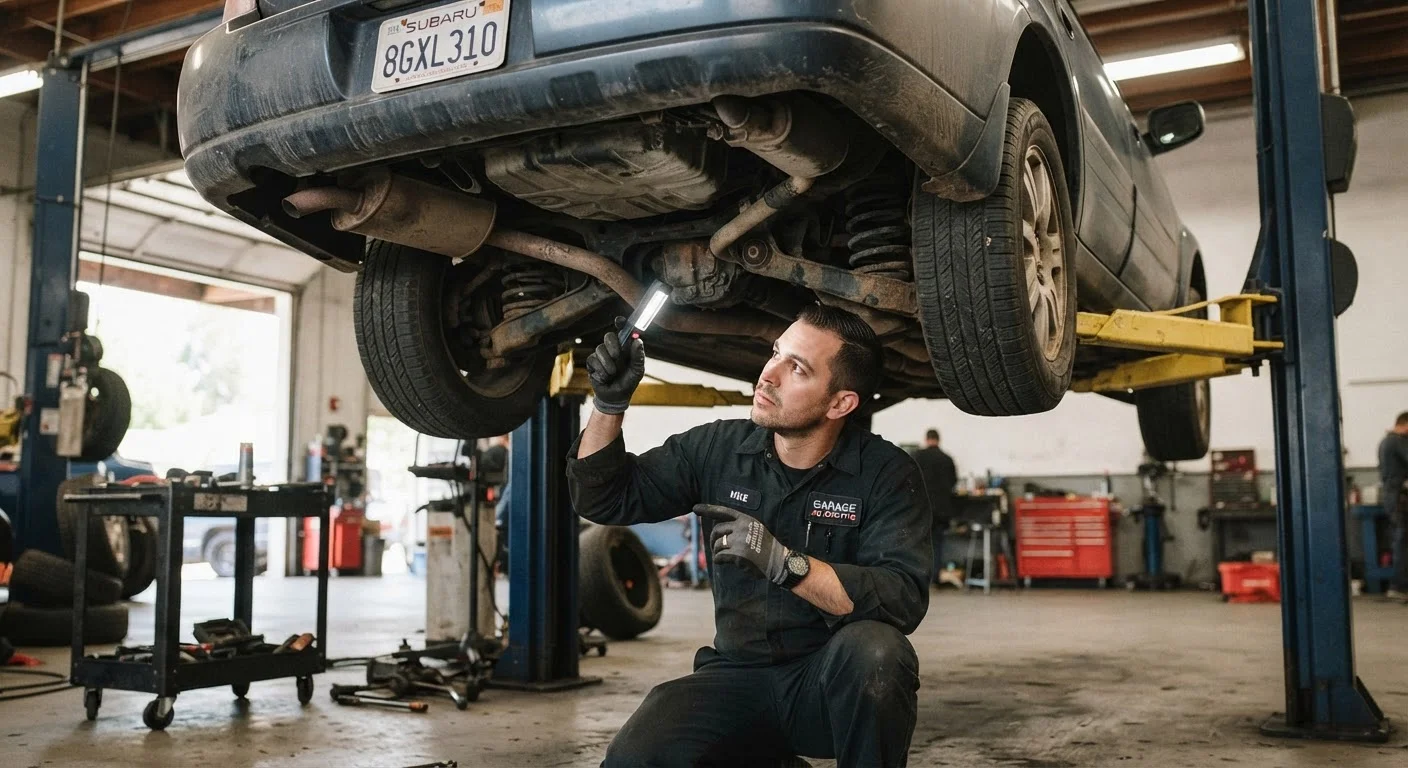
- Undercarriage: Raising the car on a lift allows a full view of the exhaust system, fuel lines, CV axles, and structural components that aren't visible from ground level.
- Electrical systems and HVAC: Lights, windows, climate control, and dashboard warning indicators are all tested.
Many shops also perform an OBD-II scan - plugging a diagnostic tool into the car's onboard computer - to check for stored fault codes, even if no warning light is currently active on the dash.
$100-$200
Typical cost of a pre-purchase inspection
Most independent repair shops charge within this range for a standard PPI, according to widely reported industry estimates.
1 in 3
Used cars with undisclosed prior damage
Vehicle history data from providers like Carfax has indicated that a significant share of used vehicles have accident records not disclosed upfront by sellers.
How to Arrange a Pre-Purchase Inspection
Setting up a PPI is straightforward, but there are a few practical steps to follow. First, choose an independent mechanic - one with no connection to the seller. ASE (Automotive Service Excellence) certification is a useful indicator of technical competence. Avoid using a shop recommended by the dealer or private seller, as that undermines the independence you're paying for.
Once you've identified a vehicle you're seriously considering, notify the seller that you'd like an inspection before making an offer. Most legitimate sellers - private or dealer - will agree. If a seller refuses without a reasonable explanation, treat that resistance as a warning sign and walk away.
Coordinate logistics between the seller and the shop. You'll need to determine whether the seller will deliver the car, whether you'll transport it, or whether you'll all meet at the shop together. Get a written report from the mechanic after the inspection - not just a verbal summary - so you have documentation to reference during price negotiations.
If the inspection reveals significant issues, you have options: renegotiate the price to reflect repair costs, ask the seller to fix specific items before purchase, or walk away entirely. Understanding a mechanic's written estimate will help you interpret what the report actually means in terms of urgency and cost.
First-time buyers especially benefit from this process. A practical orientation for first-time car buyers can help you navigate the full purchase process with confidence.
CPO Inspections Are Not the Same as a PPI
Certified pre-owned vehicles are inspected before sale, but those inspections are conducted on behalf of the dealer or manufacturer - not on your behalf. Understanding what a CPO label actually guarantees is important context before deciding whether a separate independent inspection is still warranted. For most buyers, the added peace of mind is worth the modest cost regardless of CPO status.
Frequently Asked Questions
Most independent shops charge between $100 and $200 for a standard pre-purchase inspection, though prices vary by location and what's included. Some shops offer more comprehensive inspections that include a lift, road test, and written report for a higher fee. The cost is usually well worth it given the potential savings from catching a serious problem before purchase.
Yes. Private-party sellers can agree to have the vehicle inspected at a shop of your choosing. You'll typically need to arrange a time when both you and the seller are available, or the seller may drop the car off. A seller who refuses to allow an inspection may have something to hide - that's a significant red flag.
No inspection is guaranteed to find every issue. Some problems only appear under specific driving conditions or over time. However, a thorough PPI by a qualified mechanic will uncover the most significant visible and testable issues. Think of it as dramatically reducing your risk, not eliminating it entirely.
CPO vehicles undergo manufacturer-approved inspections, but the mechanic conducting those works for the selling dealer, not for you. Getting your own independent inspection is still worthwhile for peace of mind. For more on what CPO programs actually cover, see resources explaining the difference between CPO and standard used cars.
Choose an independent repair shop - one with no financial relationship to the dealership or private seller. Look for ASE-certified technicians and shops with strong local reputations. Avoid using the seller's recommended mechanic, as that arrangement compromises your independent perspective.
The content on this site is provided for informational purposes only and should not be considered a substitute for professional advice. While we strive to provide accurate and up-to-date information, we make no guarantees regarding its completeness or accuracy. Always consult a qualified professional for advice specific to your circumstances before making any decisions.