

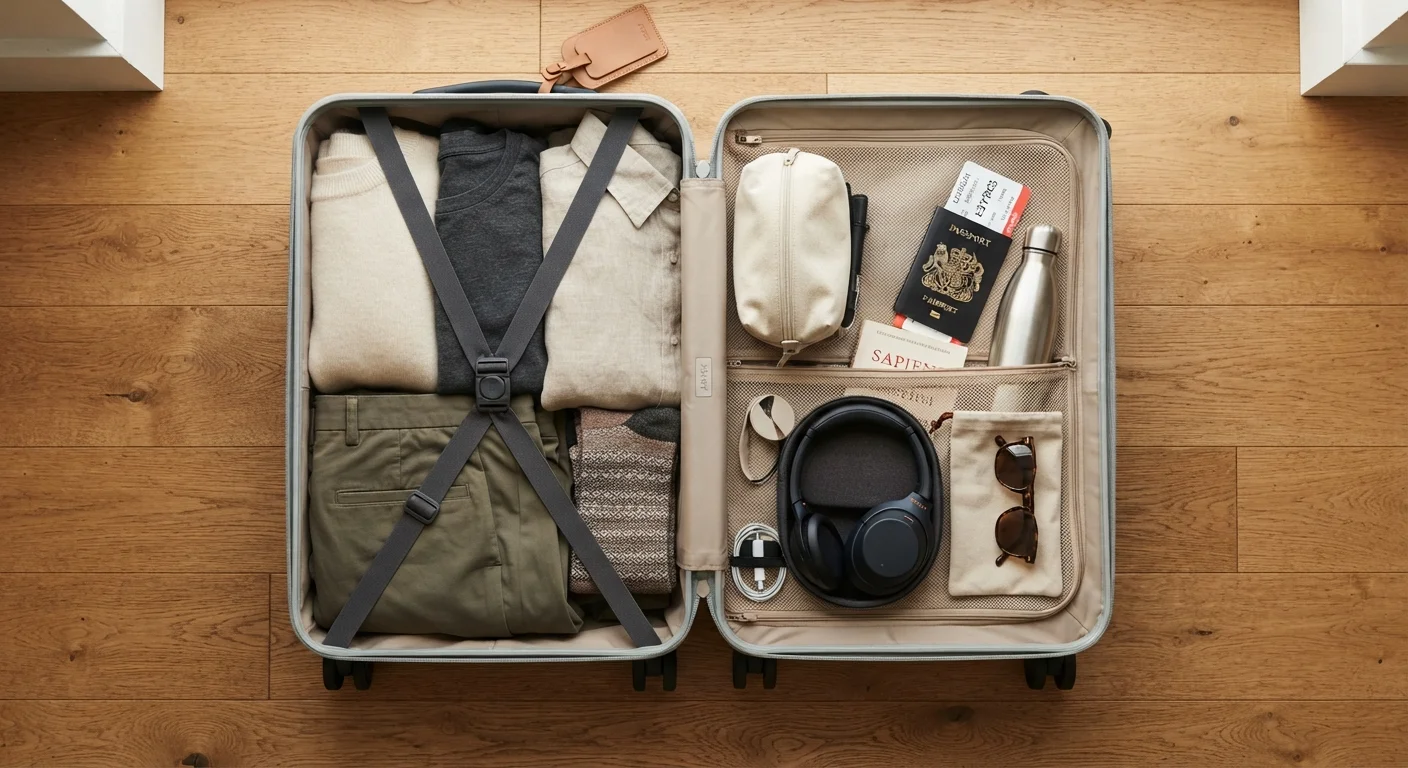
Why One Bag Is Worth the Effort
Checking a bag costs money, eats time at pickup, and introduces real risk of loss or delay. Fitting everything into a carry-on removes those friction points - but only if you pack with a system, not a wishlist. The goal isn't to go without; it's to go with exactly what serves you across every condition your trip throws at you.
Whether you're hopping between a beach town and a cold-weather capital or spending two weeks in a region with unpredictable weather, the core principle is the same: build a compact wardrobe that earns its weight at every stop. This guide walks you through that process step by step. For a broader picture of pre-trip planning, see our smart habits for every stage of trip planning.
What you will need
Building Your Climate-Proof Packing Strategy
The steps below will take you from a blank suitcase to a fully optimized carry-on ready for mixed-climate travel. Work through them in order - each step narrows your choices and builds on the one before it.
Map Your Temperature Range First
Before touching a single item of clothing, look up the expected temperature range across every destination on your trip. Write down the coldest low and the warmest high. This single step tells you exactly how much insulation you need - and prevents both overpacking warm layers and arriving somewhere cold with only summer clothes.
If your range is narrow (all warm, all cold), packing is straightforward. If you're crossing climate zones - say, a tropical beach followed by a mountain town - you're building for two environments, and layering becomes your core strategy.
Choose a Neutral Color Palette
Select three or four base colors that mix and match easily - think navy, white, olive, grey, or tan. Every piece of clothing you pack should work with at least two other pieces. This approach multiplies your outfit options without multiplying your item count, which is the arithmetic that makes carry-on travel possible.
Avoid packing items that only pair with one other thing. A statement piece that demands a specific bottom or top is a space liability.
Build Around Layering Pieces
The layering system - a base layer, a mid-layer, and an outer shell - handles the widest temperature range with the fewest items. A lightweight merino wool long-sleeve shirt, for example, works as a base in cold weather and a standalone top in mild conditions. A packable down or synthetic vest adds warmth without bulk. A water-resistant outer layer ties it together for rain or wind.
For warmer climates, the same logic applies in reverse: lightweight linen or quick-dry fabrics in the day, with one light layer for air-conditioned spaces or cooler evenings.
Limit Shoes to Two or Three Pairs
Shoes are the single heaviest and bulkiest category in any bag. Most trips genuinely require only two pairs: one comfortable walking shoe (which can double as a casual evening shoe) and one activity-specific shoe - sandals for beach trips, a light trail shoe for hiking destinations, or a dressier flat if your itinerary calls for it.
Wear your bulkiest pair on travel days to keep them out of your bag entirely. Pack lighter shoes inside your suitcase, stuffed with socks to preserve their shape and use dead space efficiently.
Use Packing Cubes and Roll, Don't Fold
Packing cubes compress your clothing into organized blocks and make unpacking and repacking at multiple stops dramatically faster. Assign each cube a category - tops, bottoms, undergarments - so you're never digging through a full bag to find one item.
Rolling clothes rather than folding them reduces wrinkles in most fabrics and typically allows you to fit 20-30% more into the same space. Heavier, denser items like jeans or a fleece should go at the bottom of the bag near the wheels to keep weight low and balanced.
Do a Test Pack the Day Before
Pack everything you intend to bring 24 hours before departure. Zip the bag fully. If it doesn't close without forcing it, something needs to come out - not get compressed harder. Open it and remove the items you're least sure about first.
Leave a small amount of empty space intentionally: you'll almost always acquire something during your trip (a souvenir, a local purchase, extra layers), and arriving home with no room is a predictable problem with an easy fix. A good itinerary and good packing go hand in hand - see our why overpacking your itinerary backfires for a parallel lesson about building breathing room into your schedule too.
Common Packing Pitfalls to Avoid
Even experienced travelers stumble in predictable ways. The single biggest mistake is packing for the worst-case version of every day rather than the most likely version. You almost certainly won't need a full rain suit, a formal outfit, four pairs of shoes, and a week of backup clothing - but many travelers pack as if they might.
The second most common trap is ignoring what's available at your destination. Most hotels provide hairdryers, and most cities have pharmacies and laundromats. Packing duplicates of items you can easily acquire or borrow wastes precious space.
Plan to Do Light Laundry Mid-Trip
On trips longer than five days, planning one mid-trip laundry session - at a hotel laundry, a local laundromat, or even hand-washing a few items - effectively doubles your wardrobe without adding a single item to your bag. Factor this into your packing count from the start and you'll find you need far fewer items than you initially assumed.
Finally, don't underestimate the value of trip structure when planning what to pack. A detailed itinerary - knowing roughly what you'll be doing each day - lets you pack with purpose rather than panic. Our guide to building a well-structured travel itinerary can help you map that out before you open your suitcase.
Packing and Your Overall Trip Budget
There's a financial angle to smart packing that's easy to overlook. Checked bag fees, overweight charges, and last-minute purchases at airports or tourist-area shops can quietly inflate your travel costs. Packing carry-on only eliminates most of those variables before your trip even begins.
If you're working with a tight travel budget, the savings compound: no checked bag fees each way, no rush shipping of forgotten items, and no panic-buying at inflated destination prices. For a deeper look at keeping trip costs in check overall, our trip budgeting guide covers how to estimate real costs across every spending category.
Airline Size and Weight Rules Vary Widely
Carry-on size and weight allowances differ significantly between airlines - and even between fare classes on the same airline. Budget carriers in particular have strict enforcement, and oversized carry-ons are often gate-checked at the owner's expense. Always verify your specific airline's current carry-on policy before finalizing your bag choice and packing approach.
The content on this site is provided for informational purposes only and should not be considered a substitute for professional advice. While we strive to provide accurate and up-to-date information, we make no guarantees regarding its completeness or accuracy. Always consult a qualified professional for advice specific to your circumstances before making any decisions.