

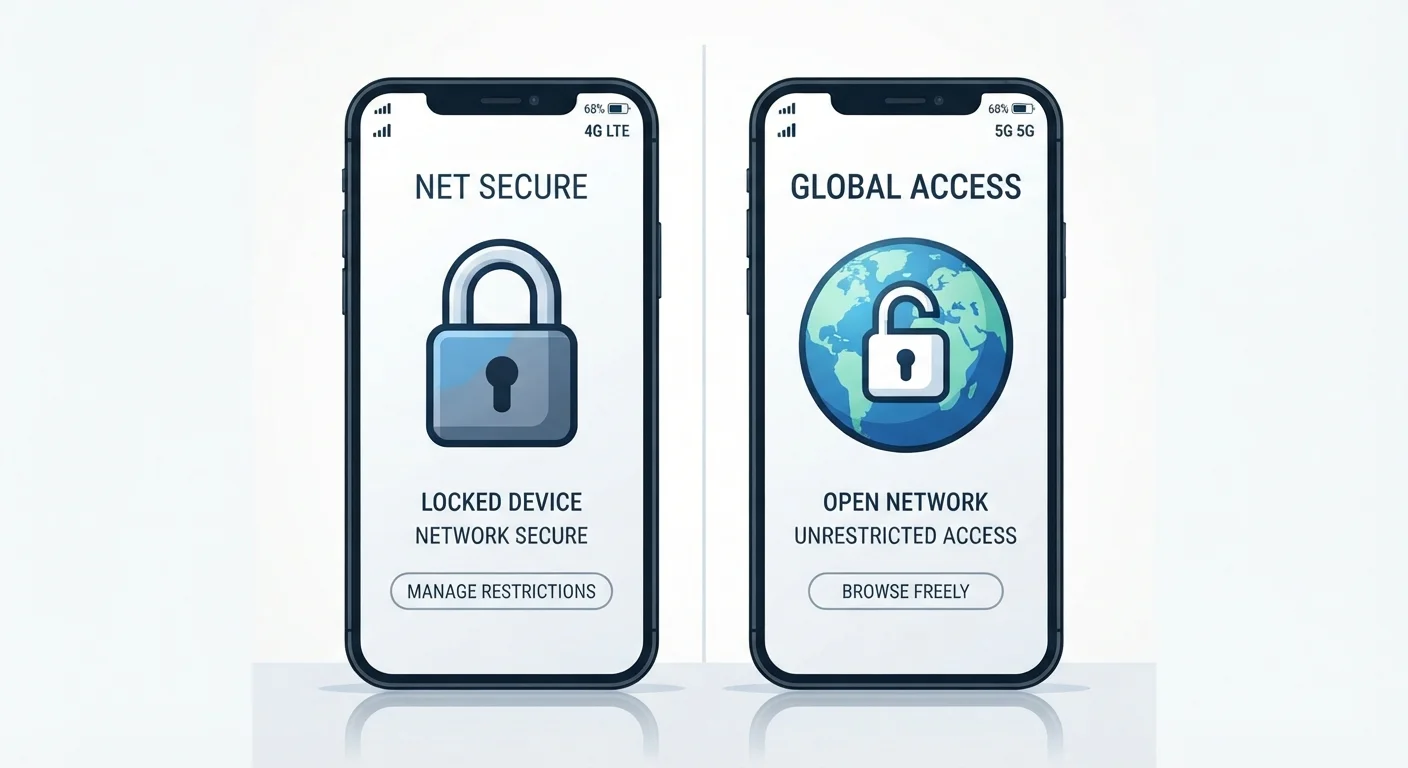
What Carrier Locking Actually Does
When a carrier locks a phone, it installs a software restriction that checks the SIM card inserted into the device. If the SIM belongs to an unauthorized carrier, the phone refuses to connect to that network - you'll see an error message instead of bars. The phone itself is fully functional otherwise; it's only the ability to switch networks that's blocked.
This restriction exists primarily for business reasons. Carriers often subsidize device costs or offer installment plans, and locking discourages customers from taking the device and immediately moving to a competitor. Once you've met a carrier's unlock eligibility requirements - which typically include completing a certain period of active service and paying off any device installments - you can request an unlock and the restriction is lifted.
It's worth understanding what locking does not do: it doesn't affect your apps, your data stored on the device, your Wi-Fi connectivity, or any feature unrelated to cellular network selection. The lock is narrow and targeted.
Locked Doesn't Mean Broken
A carrier-locked phone works perfectly on its original network - calls, data, apps, and features are fully operational. The restriction only surfaces when you insert a SIM from a different carrier. If you have no plans to switch or travel internationally, locking may never affect your day-to-day experience at all.
Unlock Eligibility and How to Request It
U.S. carriers are bound by commitments made to the FCC to unlock devices upon request once eligibility conditions are satisfied. The specific requirements vary by carrier but commonly include: the device is fully paid off or any installment agreement is complete, the account is in good standing, and the device has been active on the network for a minimum period (often 40-60 days for postpaid accounts, and longer for prepaid).
To unlock your phone, start with your carrier's official website, app, or customer support line. Most major carriers now offer a self-serve online unlock request. Once approved, the carrier submits the unlock to the device's IMEI (International Mobile Equipment Identity) - a unique device identifier - and the software restriction is removed, usually within a few hours to a couple of days.
For a thorough walkthrough of switching after you've unlocked, see how to switch wireless carriers without losing your number.
Check Your IMEI Before You Switch
Before requesting an unlock or switching carriers, note your phone's IMEI number (found in Settings > About or by dialing *#06#). Use your prospective carrier's online compatibility checker to confirm your device supports their network bands. This two-minute check can prevent unexpected coverage gaps after you switch.
When It Matters Most: Travel and Carrier Switching
Carrier locking has its sharpest practical impact in two situations: traveling internationally and switching domestic carriers.
International travel: Roaming charges on a locked phone can be substantial. Travelers with unlocked phones can instead purchase a local prepaid SIM at their destination, paying local data rates rather than international roaming rates. If your phone is locked, you're dependent on your home carrier's international plan - which may or may not be cost-effective depending on your destination and usage. For broader guidance on protecting your devices on the road, see keeping your devices and data safe while traveling.
Switching carriers: An unlocked phone gives you full flexibility to move to any carrier - including MVNOs, which often offer more affordable plans by leasing network capacity from major carriers. To understand how that model works, see how mobile virtual network operators work. A locked phone limits you to carriers that sell or explicitly support your device.
One important nuance: even after unlocking, your phone must support the frequency bands used by the new carrier. A phone built for one carrier's network may lack the radio hardware to access another carrier's 5G or certain LTE bands - meaning you could get reduced speeds or coverage even with a fully unlocked device. Always check band compatibility before switching.
Unlocked Phones: Where They Come From and What to Consider
Phones sold directly by manufacturers or through general retailers are typically sold in an unlocked state from the outset. Phones purchased through a carrier - especially on a promotional installment plan - are almost always locked until eligibility conditions are met.
When evaluating a device, consider the total cost of ownership rather than just the upfront price. A heavily discounted carrier-offered phone may carry trade-in requirements, service commitments, or line-count conditions that affect the real value of the deal. Reading a wireless plan's fine print carefully before committing can surface conditions that aren't obvious in the headline offer.
If flexibility is a priority - whether for travel, for trying different carriers, or for using your phone on resale - starting with an unlocked device avoids the waiting period entirely. Before committing to any plan, it also helps to work through key questions to answer before committing to a phone plan so your choice reflects your actual usage habits and coverage needs.
40-60 days
Typical minimum active service for postpaid unlock eligibility
Most major U.S. carriers require a device to be active on their network for this period before processing an unlock request, though exact terms vary by carrier and account type.
IMEI-based
How unlocks are registered and tracked
Carrier unlocks are tied to a device's unique IMEI number, meaning the unlock persists with the hardware even if you restore or reset the phone.
100+
Active MVNOs operating in the U.S.
MVNOs typically require or prefer unlocked devices, making device unlock status a practical prerequisite for accessing this broader range of plan options.
Frequently Asked Questions
The simplest test is to insert a SIM card from a different carrier and see whether the phone connects to that network. You can also check in your phone's settings under cellular or network options, or contact your carrier directly to confirm unlock status.
Carriers are required to unlock eligible devices upon request, and most offer an online or app-based unlock process. Third-party unlocking services exist but vary in reliability and legality - using your carrier's official process is always the safest route.
No. Unlocking a device does not cancel your service plan, terminate your contract, or affect any device payment installments you owe. You remain responsible for any outstanding financial obligations to your carrier.
Not necessarily. Carriers use different radio frequency bands for LTE and 5G, and a phone must support a carrier's specific bands to get full service. Always verify band compatibility before committing to a new carrier.
Phones sold unlocked by manufacturers or retailers are often priced at full retail, whereas carrier-sold devices may appear cheaper upfront because the cost is spread across a service contract or installment plan. The total cost of ownership can differ significantly.
Yes - in fact, MVNOs generally require or strongly prefer unlocked devices. Because MVNOs lease network capacity from major carriers, an unlocked phone that supports the right bands will work seamlessly on most of them.
The content on this site is provided for informational purposes only and should not be considered a substitute for professional advice. While we strive to provide accurate and up-to-date information, we make no guarantees regarding its completeness or accuracy. Always consult a qualified professional for advice specific to your circumstances before making any decisions.