

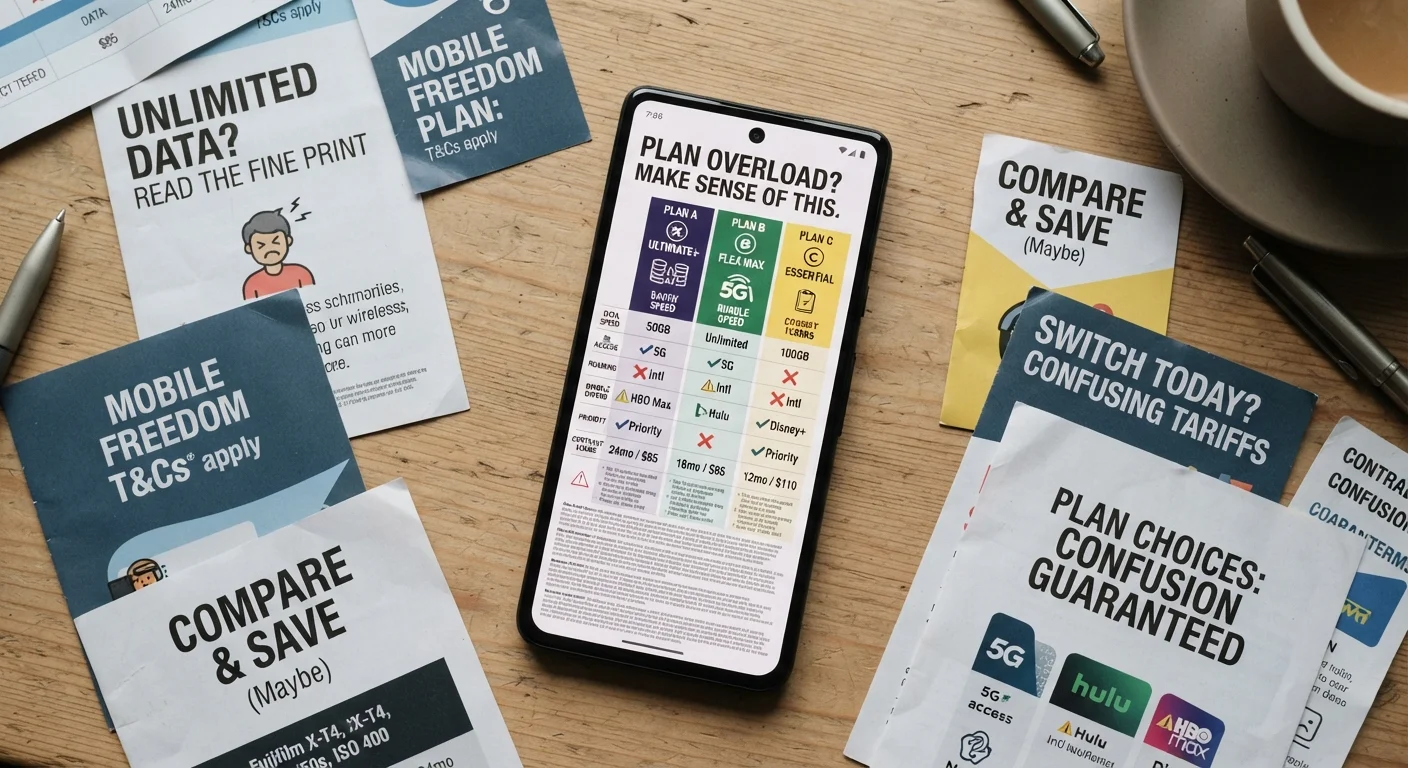
Why Carriers Load Plans With Features You May Never Use
Wireless carriers compete aggressively on perceived value, which means premium plans are routinely bundled with a long list of extras - streaming subscriptions, hotspot data, international coverage, and device protection, among others. On paper, these bundles can seem like clear wins. In practice, many subscribers never activate or meaningfully use a significant portion of those features.
That gap matters because you pay for bundled features whether you use them or not. Before assuming a higher-tier plan is automatically a better deal, it's worth asking a harder question: does this feature fit how you actually live? Our guide on matching a plan to your real habits walks through exactly that kind of audit.
The myth-versus-fact pairs below tackle the most commonly oversold features, so you can evaluate them with clear eyes.
Myth
Bundled streaming subscriptions make a premium plan a great deal because you're getting multiple services for free.
Fact
Bundled streaming perks only add value if you weren't already paying for those services and will actually use them consistently.
Carriers often include subscriptions to video, music, or gaming platforms as a headline perk on premium tiers. But if you already subscribe to those platforms independently, you're either paying twice or navigating an account-merging process that many subscribers find frustrating. And if you don't use a particular service, its inclusion adds nothing while the plan's price remains higher than a simpler alternative. Before crediting a bundle with savings, subtract the cost of any services you'd genuinely cancel - not ones you'd keep anyway.
Myth
Unlimited hotspot data means you can use your phone as a full home internet replacement without restrictions.
Fact
Hotspot allocations on most unlimited plans are speed-capped or subject to deprioritization after a set data threshold.
The word "unlimited" in a hotspot context almost always comes with a catch. Many plans provide a specific amount of high-speed hotspot data - often measured in gigabytes - after which speeds are throttled to levels (sometimes 600 Kbps or less) that make streaming or video calls impractical. Even within the high-speed window, hotspot traffic is frequently deprioritized below phone data during network congestion. For occasional use - sharing a connection on a trip or filling in a gap - mobile hotspot is genuinely useful. As a primary home internet substitute, the limitations are significant. For a thorough look at how ISP and wireless fine print compares, see reading an ISP plan's fine print.
Myth
International data and texting perks on premium plans mean you can travel abroad without worrying about your phone bill.
Fact
Most included international features operate at reduced speeds or only in select countries, and voice calls often incur per-minute charges.
International coverage sounds reassuring, but the details vary considerably. Many plans include international data at 2G speeds, which is suitable for maps and basic messaging but not video calls or large file transfers. Voice calls in many international destinations still carry per-minute fees even on plans marketed as globally capable. Coverage also depends heavily on roaming partner agreements that shift over time. If international travel is a regular part of your life, it's worth verifying the specific countries and speeds covered rather than assuming broad, high-speed access. What carrier coverage maps don't show you explains how marketing language can obscure network reality.
Myth
Carrier device protection plans are the most comprehensive way to cover your phone against damage and theft.
Fact
Carrier protection plans often include deductibles, claim limits, and exclusions that significantly reduce their practical value for many subscribers.
Device protection is one of the most reliably upsold add-ons at the point of plan signup. Monthly premiums vary, but over a two-year period they can add up to a substantial amount - and when a claim is filed, deductibles for screen repairs or full replacements can run into the hundreds of dollars depending on device tier. Many plans also cap the number of claims per year. Renters or homeowners insurance policies sometimes extend coverage to personal electronics, potentially at lower cost. It's worth comparing total out-of-pocket scenarios rather than assuming carrier protection is automatically the right choice for your situation.
Myth
A higher-tier unlimited plan always delivers faster speeds than a mid-tier one from the same carrier.
Fact
Speed differences between tiers on the same carrier network are largely determined by deprioritization policies during congestion, not separate infrastructure.
Carriers use the same underlying network infrastructure for all their plans. What differs between tiers is typically where your data sits in the priority queue when a cell tower is congested. Premium tiers are deprioritized later or not at all; lower tiers are moved down the queue sooner. In uncongested areas - which describes much of everyday use for many subscribers - speed differences between tiers may be undetectable. The premium tier primarily matters if you frequently use your phone in dense, high-traffic environments like stadiums, airports, or busy urban corridors during peak hours. How prepaid and postpaid plans actually differ explains how priority policies factor into that comparison as well.
What to Do With This Information
Recognizing overhyped features is only half the job. The other half is knowing where the real risks to your bill lie - things like deprioritization thresholds, auto-enrolled add-ons, and mid-contract rate adjustments. Our companion piece on reading the fine print of a wireless plan explains the clauses carriers count on you to overlook.
If you share a plan with family members, the calculus becomes more complicated. Per-line savings can look compelling, but account control and network priority trade-offs are real. Family plan trade-offs nobody mentions covers those dynamics in detail.
Finally, if your bill has been quietly climbing, bundled features are a common culprit - auto-enrolled services often appear on statements under vague line items. Why your phone bill keeps creeping up identifies the patterns worth auditing right now.
Auto-Enrolled Add-Ons Can Inflate Your Bill Quietly
Some carriers automatically enroll new subscribers in device protection or other add-on services during signup, presenting them as trial inclusions. If you don't actively cancel these within the trial window, they convert to paid monthly charges. Always review your first two or three bills carefully after signing up or upgrading a plan to catch any charges you didn't intentionally select.
The content on this site is provided for informational purposes only and should not be considered a substitute for professional advice. While we strive to provide accurate and up-to-date information, we make no guarantees regarding its completeness or accuracy. Always consult a qualified professional for advice specific to your circumstances before making any decisions.