

Why the Loan Estimate Exists
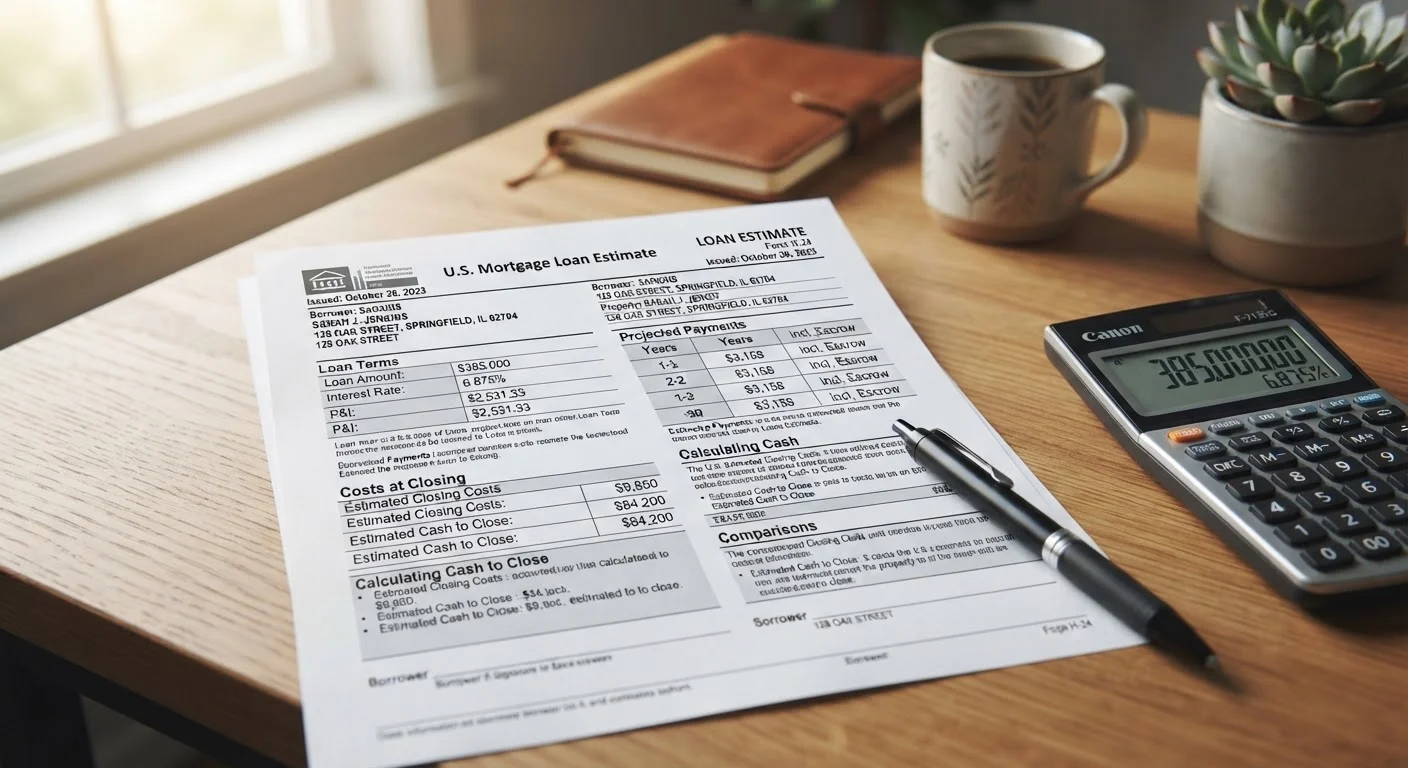
The Loan Estimate (LE) is a federally mandated form created under the Truth in Lending Act and RESPA, standardized by the Consumer Financial Protection Bureau (CFPB). Every lender offering a residential mortgage must deliver the same three-page format within three business days of receiving your application - which means you can hold lenders to identical information side by side.
Before this form existed, mortgage disclosures varied widely between lenders, making meaningful comparisons nearly impossible. Understanding the LE helps you move from confusion to confidence. For a refresher on terms you'll encounter throughout this process, see our real estate terms guide.
What you will need
What Each Page of the Loan Estimate Tells You
Page 1: The Loan at a Glance
The top of Page 1 confirms the basics: loan amount, loan term, product type (e.g., 30-year fixed, 5/1 ARM), and the purpose (purchase, refinance). Below that are two numbers that demand your attention:
- Interest Rate - the annual cost of borrowing, expressed as a percentage, not counting fees.
- Annual Percentage Rate (APR) - the interest rate plus most lender fees, spread over the loan term. This is the better comparison tool across lenders.
The Projected Monthly Payment section breaks your payment into principal and interest, mortgage insurance (if applicable), and estimated escrow for taxes and homeowner's insurance.
Request Estimates on the Same Day
Mortgage rates can change daily, so requesting Loan Estimates from competing lenders on the same day creates the most accurate comparison. Even a one-day gap can introduce rate movement that skews the numbers. Tell each lender you are shopping multiple offers - this is standard practice and will not negatively affect how they treat your application.
Page 2: The Closing Cost Details
This page is where many buyers feel overwhelmed. It divides costs into two columns: Section A covers origination charges - fees the lender controls (origination fee, points). Sections B and C cover third-party services; some you can shop for (title insurance, settlement agents), and those you cannot. At the bottom, "Cash to Close" totals what you'll need at the closing table.
Page 3: Comparisons and Contact Information
The Comparisons table projects the total interest paid, APR, and principal paid over five years - useful for evaluating short-term vs. long-term cost. The Other Considerations section flags prepayment penalties and late-payment policies. Lender and loan officer contact details round out the page.
Costs That Can Change - and Costs That Cannot
The CFPB's tolerance rules govern how much certain fees can increase between the Loan Estimate and the final Closing Disclosure you receive before settlement.
- Zero tolerance: Origination charges and transfer taxes cannot increase at all.
- 10% tolerance: Fees for required third-party services you cannot shop for (e.g., appraisal, credit report) can increase only up to 10% collectively.
- Unlimited tolerance: Prepaid items like homeowner's insurance and property taxes are estimates and can change based on actuals.
Watch for Fee Increases Before Closing
Lenders are required to honor the tolerance limits set at the Loan Estimate stage, but fee increases outside those tolerances do occur - often attributed to changed loan terms or new information. Review your Closing Disclosure carefully when it arrives at least three business days before closing. If you spot a fee that has increased beyond its allowed tolerance, raise it with your lender immediately.
If your Closing Disclosure shows fees that exceed their allowed tolerance, your lender is required to reimburse the difference. Keep your Loan Estimate until after closing.
The same discipline that applies to reading a loan estimate applies when reviewing any contract involving your money - including a lease. See how to read a lease agreement without missing what matters if you're weighing renting versus buying.
How to Compare Multiple Loan Estimates Effectively
Request Loan Estimates from at least two or three lenders on the same day, for the same loan amount and property. Because rates can shift daily, same-day requests put each estimate on equal footing. Then compare in this order:
- APR - a higher APR relative to the interest rate signals heavier upfront fees.
- Origination charges (Section A) - these are fully negotiable and vary widely between lenders.
- Loan terms - confirm that loan amount, type, and term match across all estimates.
- Cash to Close - factor in how long you plan to stay; buying down the rate with points makes sense only if you'll hold the loan long enough to recoup the cost.
Credit score plays a direct role in the interest rate you're quoted. If you want to understand the mechanics behind that relationship, our guide on how credit scores affect loan rates - written for auto loans but grounded in the same underwriting principles - provides useful context.
For broader context on what's happening in the housing market when you apply, reading a housing market report will help you interpret the data behind lender pricing decisions.
This article is for general informational and educational purposes only and does not constitute personalized financial, legal, or mortgage advice. Consult a licensed mortgage professional, financial adviser, or attorney for guidance specific to your situation.
The content on this site is provided for informational purposes only and should not be considered a substitute for professional advice. While we strive to provide accurate and up-to-date information, we make no guarantees regarding its completeness or accuracy. Always consult a qualified professional for advice specific to your circumstances before making any decisions.