

Why a Seasonal Approach Pays Off
A roof is your home's first line of defense against wind, rain, snow, and heat. But because it's out of sight, it's easy to ignore until something goes wrong - and by then, a small fix has often become a large one. Water that enters through a cracked shingle can damage insulation, rot the sheathing (the wooden boards beneath the shingles), and eventually compromise interior ceilings and walls.
A seasonal maintenance rhythm keeps small vulnerabilities from compounding. Think of it the same way you'd approach staying ahead of other systems around the house - just as a quarterly home organization checklist keeps clutter manageable, a quarterly roof check keeps repair costs predictable.
Most seasonal roof checks don't require climbing on the roof. Binoculars from the ground, a camera on a pole, and a careful look inside the attic can reveal the majority of problems before they worsen.
Season-by-Season Inspection Guide
Spring
Winter is hard on roofing materials. After the last frost, inspect for shingles that have cracked, curled, or gone missing. Check flashing - the thin metal strips that seal joints around chimneys, skylights, and roof valleys - for lifting or gaps in sealant. Clear gutters of debris left over from winter so spring rains drain freely.
Inside the attic, look for daylight coming through the roof boards, water stains on the decking, or damp insulation. Any of these indicate water infiltration that needs immediate professional evaluation.
Summer
Heat and UV exposure degrade asphalt shingles over time, causing them to lose granules (the small mineral particles embedded on their surface). Check gutters and downspouts for an accumulation of granules - a sign that shingles are nearing the end of their useful life. Trim back tree branches that overhang the roof; constant abrasion from branches wears down shingle surfaces and deposits debris that holds moisture.
Fall
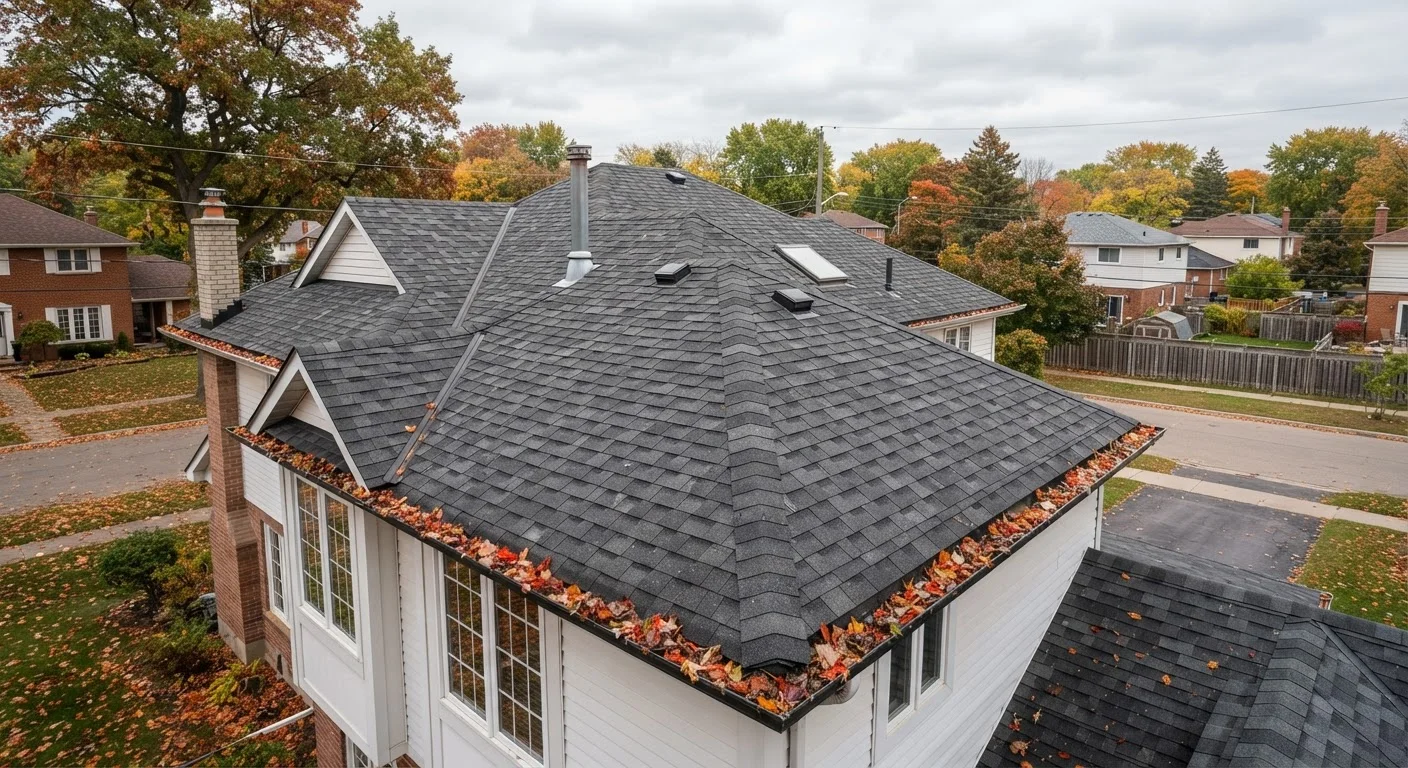
Fall is the most important season for roof preparation. Clear gutters thoroughly after leaves have finished falling so winter ice and snowmelt drain properly. Clogged gutters can cause ice dams - ridges of ice at the roof's edge that back water up under shingles. Inspect flashing sealant and reapply roofing caulk where gaps appear. This is also a good time to schedule a professional inspection before severe weather arrives.
Winter
In most climates, winter calls for observation rather than active work. After heavy snowfall, use a roof rake (a long-handled tool designed for this purpose) to pull snow back from the eave edge, reducing ice dam risk. Never climb on a snow- or ice-covered roof. If you notice interior ceiling stains appearing during or after a storm, mark the location and arrange a professional assessment as soon as conditions allow.
When to Call a Licensed Roofing Professional
Homeowner inspections are valuable for identifying visible warning signs, but certain situations require a licensed roofing contractor: active leaks, damaged structural decking, widespread shingle failure, or any work near electrical service lines. In many jurisdictions, roof replacement also requires a permit and inspection - check your local building department's requirements before authorizing major work. Never attempt to walk on a steep or wet roof without appropriate safety equipment and training.
Quick Wins You Can Act On Today
Not every improvement requires a ladder or a contractor. Several small actions can meaningfully reduce roof risk with minimal effort. The same principle applies to many home systems - consistent, modest attention avoids the large bills that follow neglect, whether you're dealing with a roof or, as this overview of overlooked maintenance tasks illustrates, a vehicle.
When in doubt about the condition of your roof, consult a licensed roofing contractor. Many offer free or low-cost inspections, and an independent professional assessment gives you an accurate picture of what actually needs attention.
The content on this site is provided for informational purposes only and should not be considered a substitute for professional advice. While we strive to provide accurate and up-to-date information, we make no guarantees regarding its completeness or accuracy. Always consult a qualified professional for advice specific to your circumstances before making any decisions.