

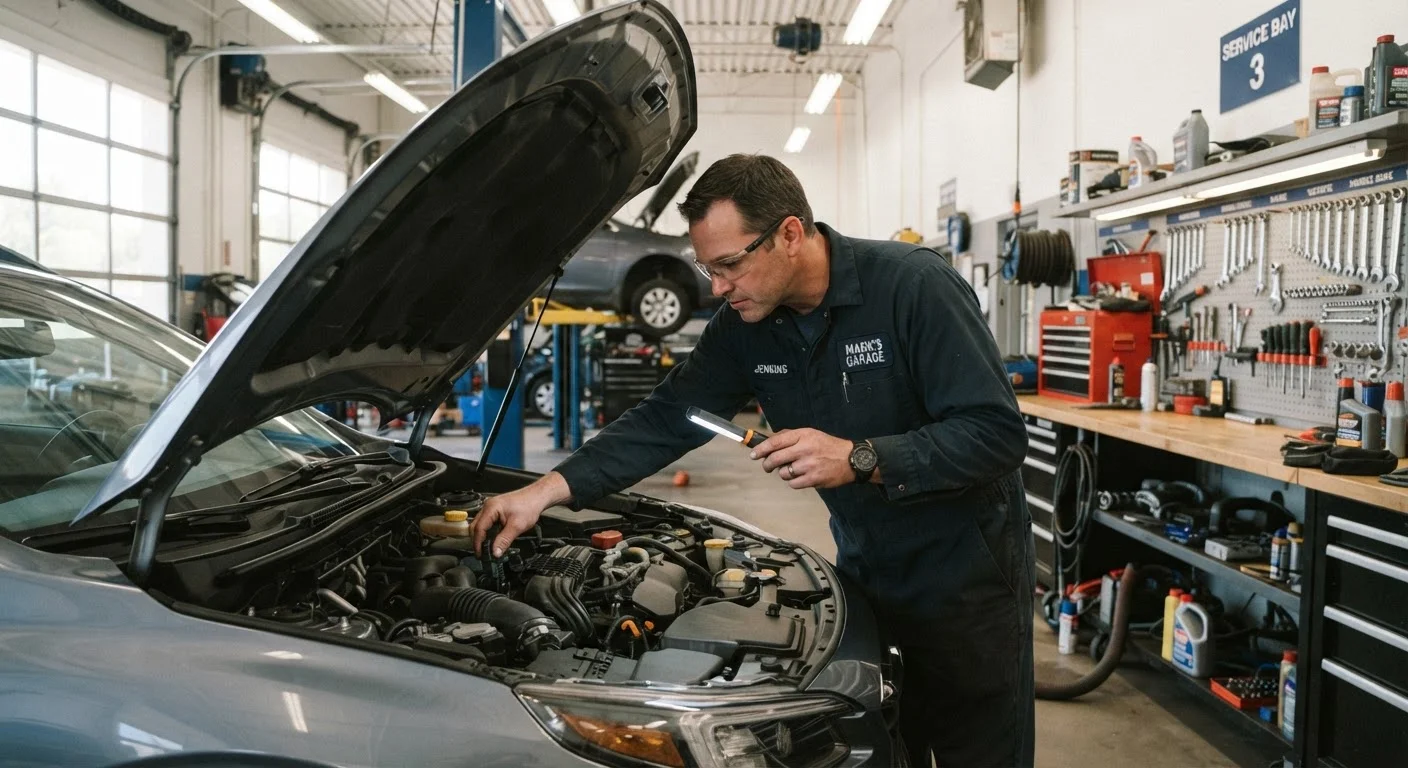
Why Small Jobs Have Outsized Consequences
Most major repair bills don't start with a dramatic failure. They start with a $25 filter that wasn't replaced, or a fluid flush that kept getting postponed. The relationship between deferred maintenance and expensive repairs is well-documented by automotive technicians - small neglect compounds quietly until something significant breaks.
Understanding which tasks carry the highest hidden risk is the first step to keeping repair costs manageable. Our guide to scheduled maintenance vs. reactive repairs explains how these two categories differ in cost and consequence - a useful frame for everything below.
Skipping coolant flushes because the engine "seems fine."
Why it happens: Coolant degradation is invisible to the naked eye. Because the temperature gauge appears normal, most drivers assume the cooling system is healthy.
Never replacing the cabin air filter.
Why it happens: Cabin air filters are out of sight and rarely mentioned at quick-lube stops. Many drivers don't know they exist.
Ignoring brake fluid changes on a set schedule.
Why it happens: Brake fluid looks clear for a long time, and the brakes continue to "work," so drivers assume nothing is wrong.
Delaying transmission fluid changes until symptoms appear.
Why it happens: Transmission service is expensive upfront, so drivers put it off, especially when the vehicle shifts smoothly.
Neglecting serpentine belt inspection until it breaks.
Why it happens: The serpentine belt isn't part of routine oil-change conversations, and cracking or fraying is hard to spot without lifting the hood.
Treating tire rotation as optional.
Why it happens: Tires wear gradually, so uneven wear goes unnoticed until the difference is severe or a blowout occurs.
The Statistics Behind Deferred Maintenance
Skipping maintenance isn't just a personal risk - it's a widespread pattern. Industry data consistently shows that a significant portion of vehicles on American roads are operating outside their recommended service windows for at least one critical system.
77%
Vehicles with at least one needed service
According to the Car Care Council, roughly 77% of vehicles inspected at car care events need some form of maintenance or repair.
$1,200+
Average unexpected repair bill
AAA estimates the average unexpected vehicle repair costs between $500 and $1,200, with major system failures running considerably higher.
3x
Cost multiplier of deferred maintenance
Industry technicians commonly note that deferred maintenance repairs cost three times or more compared to the preventive service that would have avoided them.
When a repair does hit, the financial impact can be jarring. If your budget isn't built to absorb a sudden $800 or $1,500 repair bill, the guidance on handling unexpected expenses is worth reading alongside this article. Prevention and financial flexibility work best together.
Building a Maintenance Habit That Actually Sticks
The most effective maintenance strategy is a calendar-based one - not a memory-based one. Waiting until something feels wrong is, by definition, reactive. Your owner's manual lists service intervals for every critical system; treating those intervals as non-negotiable appointments rather than suggestions is the practical difference between a car that serves you for 200,000 miles and one that needs a new engine at 90,000.
Don't Rely on Dashboard Lights Alone
Warning lights are a last resort, not an early-warning system. Many critical maintenance needs - degraded coolant, worn brake fluid, a cracking serpentine belt - produce no dashboard alert until serious damage has already occurred. Scheduled inspections by a qualified mechanic are the only reliable safety net for these systems.
Pairing this article with our seasonal vehicle readiness checklist gives you a structured, year-round schedule to work from. And if you're deciding which tasks to handle yourself, our DIY car maintenance guide offers a balanced look at where the line between safe and risky falls.
Even drivers who rarely use their vehicles aren't off the hook - as low-mileage vehicle maintenance explains, sitting idle creates its own set of problems. Maintenance is time-dependent as much as it is mileage-dependent.
This article is for general informational purposes only. Always consult a qualified mechanic or your vehicle's owner's manual for guidance specific to your vehicle's make, model, and condition.
The content on this site is provided for informational purposes only and should not be considered a substitute for professional advice. While we strive to provide accurate and up-to-date information, we make no guarantees regarding its completeness or accuracy. Always consult a qualified professional for advice specific to your circumstances before making any decisions.