

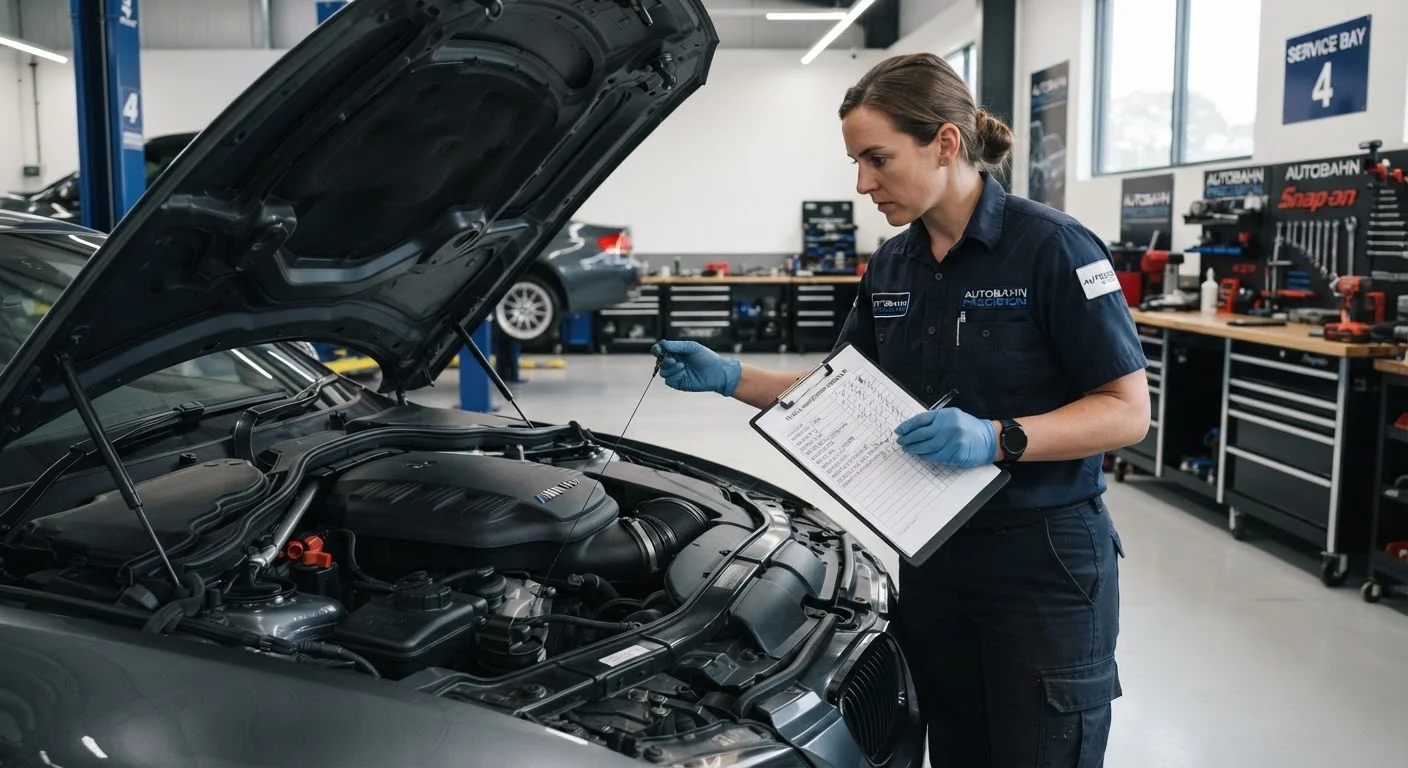
Option A
Scheduled Maintenance
The planned, preventive approach to keeping your vehicle running.
Best for: Drivers who want predictable costs, longer vehicle life, and fewer roadside surprises.
Option B
Reactive Repairs
Unplanned fixes triggered by a component that has already failed.
Best for: Addressing immediate mechanical failures when prevention wasn't possible or was missed.
What Each Approach Actually Means
The distinction between scheduled maintenance and reactive repairs sounds simple, but it shapes how much you spend, how long your vehicle lasts, and how much stress you absorb as an owner.
Scheduled maintenance - sometimes called preventive or routine maintenance - refers to the services your vehicle manufacturer specifies at set mileage or time intervals. These include oil and filter changes, tire rotations, spark plug replacements, brake fluid flushes, transmission service, and similar tasks. They're designed to replace or refresh components before those components degrade to the point of failure. Your owner's manual is the definitive reference for which services apply to your specific make and model, and when they're due.
Reactive repairs, by contrast, happen after something has already broken or stopped working correctly. A failed alternator, a snapped serpentine belt, a seized brake caliper - these aren't anticipated; they require immediate diagnosis and replacement to get the vehicle back in safe, operable condition. Reactive repairs are inherently unplanned, which is exactly what makes them disruptive and expensive.
For a broader foundation on how these concepts fit into overall ownership, see our practical primer for new car owners.
How They Compare Side by Side
Looking at both approaches across the same criteria makes the practical differences clear.
| Criterion | Scheduled Maintenance | Reactive Repairs |
|---|---|---|
| Timing | Planned ahead by mileage or calendar | Unplanned; triggered by failure |
| Typical cost | Predictable, usually lower | Variable, often significantly higher |
| Driver control | High - scheduled in advance | Low - dictated by the failure |
| Impact on vehicle lifespan | Extends longevity consistently | Neutral if fixed promptly; harmful if delayed |
| Risk of secondary damage | Minimized by staying current | Higher if repair is delayed |
| Guided by | Owner's manual and service intervals | Symptoms, warning lights, inspection |
Cost is one of the starkest contrasts. A routine brake inspection might cost $30-$60 at most shops. Replacing a damaged rotor and worn caliper after a brake failure can run several hundred dollars - for a single axle. The same gap holds for cooling system service versus a blown head gasket, or a transmission fluid change versus a full transmission rebuild.
Timing is the other critical dimension. Scheduled maintenance is planned and fits into your calendar and budget. Reactive repairs arrive without warning - often during a commute, a road trip, or in weather that makes waiting for a tow genuinely miserable.
~$1,200
Average annual vehicle maintenance cost per U.S. driver
AAA regularly surveys vehicle ownership costs and finds routine maintenance is a fraction of the cost of reactive repairs for comparable work.
35%
Share of vehicle breakdowns linked to battery or electrical issues
AAA roadside assistance data indicates battery failure is one of the most common reactive repair triggers, often preventable through periodic battery testing.
Why Skipping Maintenance Creates Repair Bills
Most reactive repairs have a paper trail that leads back to a skipped or delayed maintenance task. Engine sludge from infrequent oil changes accelerates internal wear. Ignored coolant flushes allow corrosion that eventually compromises the radiator or water pump. Old brake fluid absorbs moisture, lowering its boiling point and contributing to brake fade or caliper failure over time.
The connection isn't always direct or immediate - which is why many drivers underestimate the risk. A missed transmission service rarely causes instant failure; it gradually reduces fluid quality, accelerates clutch pack wear, and eventually produces symptoms that require expensive diagnosis and repair.
Our editorial team has covered the specific tasks most commonly overlooked, and the consequences they produce - see overlooked maintenance tasks that lead to expensive repairs for a detailed rundown.
The practical implication is straightforward: reactive repairs are often the downstream cost of deferred preventive work. Treating them as separate, unrelated events makes it harder to see the full financial picture of vehicle ownership.
Making Both Work Together
Staying on your manufacturer's maintenance schedule doesn't eliminate the possibility of reactive repairs - components can fail even in well-maintained vehicles - but it substantially reduces their frequency and severity. The two approaches aren't competing strategies; they work in tandem.
When a warning light activates or you notice an unusual sound, vibration, or handling change, responding promptly is itself a form of damage control. A reactive repair addressed early is almost always less expensive than the same problem caught after it has cascaded into surrounding systems. A small coolant leak ignored for weeks, for example, can lead to engine overheating and damage that costs many times more to address.
Your Owner's Manual Sets the Standard
Manufacturer-specified maintenance intervals in your owner's manual are based on engineering data for your specific engine, drivetrain, and operating conditions. Third-party recommendations can vary - when in doubt, the manual is the authoritative baseline. If you no longer have a physical copy, most manufacturers publish digital versions of their owner's manuals on their official websites.
Keeping a simple log of services performed - dates, mileage, what was done - makes it much easier to stay on schedule and to communicate clearly with any mechanic who works on your vehicle. Digital apps and dealer service portals can automate reminders, but a paper record in your glove box works just as well.
For a season-by-season maintenance framework that helps you stay proactive throughout the year, our year-round maintenance checklist is a practical companion resource. And if you're weighing which maintenance tasks you can handle yourself, our guide on DIY car maintenance covers where it makes sense and where it doesn't.
The content on this site is provided for informational purposes only and should not be considered a substitute for professional advice. While we strive to provide accurate and up-to-date information, we make no guarantees regarding its completeness or accuracy. Always consult a qualified professional for advice specific to your circumstances before making any decisions.